


Join Cultural Samvaad’s WhatsApp Community
The tenth Guru of the Sikhs and the founder of the Khalsa, Guru Gobind Singhji was a visionary saint, a brave warrior, a consummate poet and an ardent scholar who knew at least four languages. His contributions to India, to the Sikhs and the establishment of Dharma cannot be extolled enough.
Guru Gobind Singh’s Parkash at Patna
Born as Gobind Rai in Patna in December 1666 CE to the ninth Guru, Guru Tegh Bahadurji and Mata Gujari, he spent the first few years of his life in the city of his birth before his family moved back to the hills of Punjab. and then to their ancestral home at Anandpur where he received his formal education.
Know more about the 10 Sikh Gurus
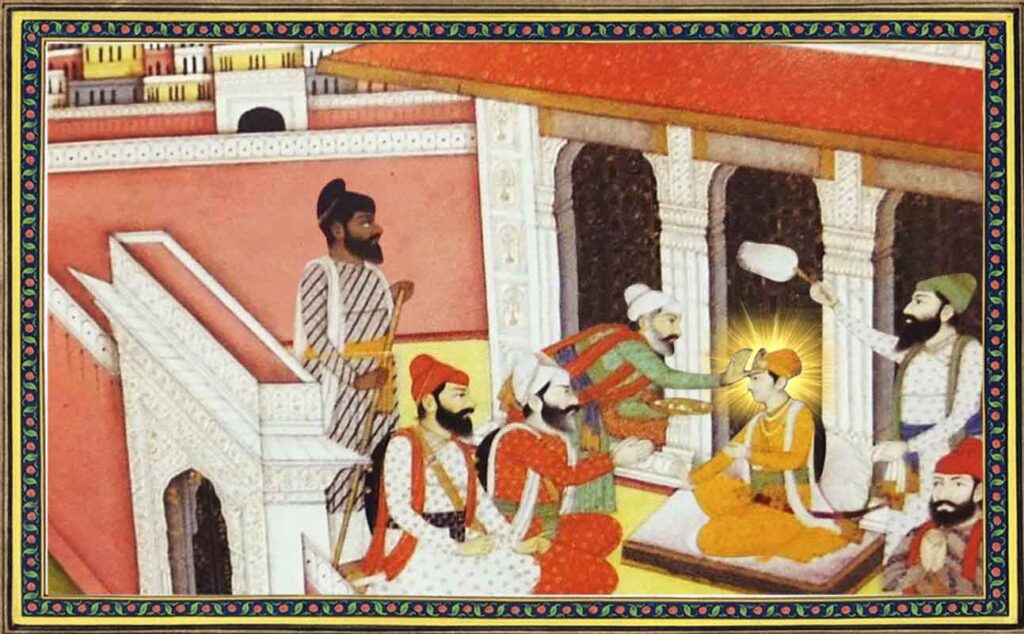
Anointment as the 10th Guru of the Sikhs after the Martyrdom of Guru Tegh Bahadurji
In 1675 CE, Guru Tegh Bahadurji was publicly beheaded by Aurangzeb for giving protection to Kashmiri Hindus At the tender age of 9, Gobind Rai cremated his martyred father’s sheesh at Anandpur. The next year on Baisakhi, he was anointed as the tenth guru of the Sikhs.
Clarion Call for Dharmayuddha
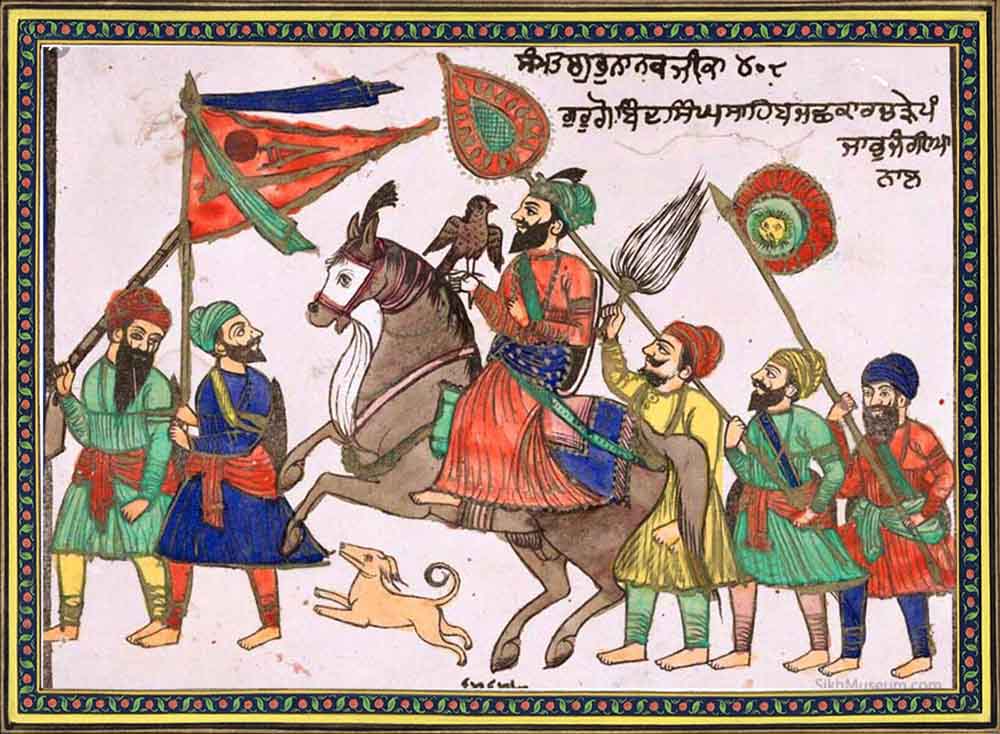
The tenth Guru was not only a tall and popular spiritual leader who wrote extensively, patronised poets and philosophers and gave a final shape to the Guru Granth Sahibji but was also a great warrior who fought over 20 wars against the Mughals and the Hill Rajas in his lifetime. He wrote in the Zafarnama: “When all other means have failed, it is permissible to draw the sword.” His battles were akin to Dharmayuddha, wars that allow righteousness to live.
Institutionalisation of the Khalsa
In 1699 CE, Guru Gobind Singhji invited his followers to congregate at Anandpur on the day of Baisakhi. It was on this auspicious day that he initiated the Panj Piyare, the five volunteers from various castes, and founded the Khalsa or the pure. The names of the Panj Piyare were changed and they adopted the title – Singh (Bhai Daya Singh, Bhai Dharam Singh, Bhai Himmat Singh, Bhai Muhkam Singh and Bhai Sahib Singh). He also announced the Khalsa code of conduct and the Five Ks(Kesh – unshorn hair, Kangha – a wooden comb, Kara – a bracelet made of iron or steel, Kirpan – a sword and Kashera- underwear) were institutionalised as the markers of this new warrior community. His words, ‘Waheguru ji ka Khalsa, Waheguru ji ki fateh’ continue to reverberate and inspire centuries later.
Martyrdom of Chaar Sahibzade
Guru Gobind Singhji had three wives and four sons who are referred to as the chaar sahibzaade. Jujhar Singh, Zorawar Singh and Fateh Singh were born to Mata Jito and Ajit Singh was born to Mata Sundari. Mata Sahib Dewan was proclaimed as the Mother of the Khalsa.
In December 1704 CE, the chaar sahibzaade and the Guru’s mother were sacrificed at the altar of the great Dharamyuddha. The two elder Sahibzade were martyred at the Battle of Chamkaur which was fought against the Mughals while the two younger Sahibzade who were just 9 and 7 respectively, were captured by the Nawab of Sirhind and executed in the most dastardly manner.
Anointment of Adi Granth as the eternal Guru
Just four years later, Guru Gobind Singhji was stabbed by Jamshed Khan. The wounds proved fatal and he breathed his last on October 7, 1708 CE at Nanded. Before leaving the mortal world, he proclaimed that the Adi Granth would henceforth be the Guru for all Sikhs – ‘Guru manayo Granth’ and heralded a new order.
Guru Gobind Singh: An Inspiration for All Indians
Guru Gobind Singhji was a thinker par excellence who believed in the equality of all human beings and a warrior par excellence who did not hesitate to raise arms in defence of Dharma. His life was an epitome of chardi kala or buoyant hope and his teachings and his words live on and inspire all Indians and all Sikhs.


Add comment