
Eid-al-Fitr or Eid-ul-Fitr is celebrated to mark the end of weeks of ritual fasting during the holy month of Ramzaan or Ramadan and is the most important festival in the Islamic calendar. In India, the festival is also referred to as ‘meethi Eid’ which can be translated as ‘sweet Eid’. At Cultural Samvaad, we decided to put together some stunning old paintings from India and on India which capture the spirit of this grand celebration. And yes, while this note was put together as a run up to Eid, these timeless works of art are for all times.
This piece is work-in-progress, and we welcome suggestions from scholars, art connoisseurs and readers on how we can enrich the note and on the paintings that should make their way into it.
Holy Qur’an, Manuscript from Kashmir
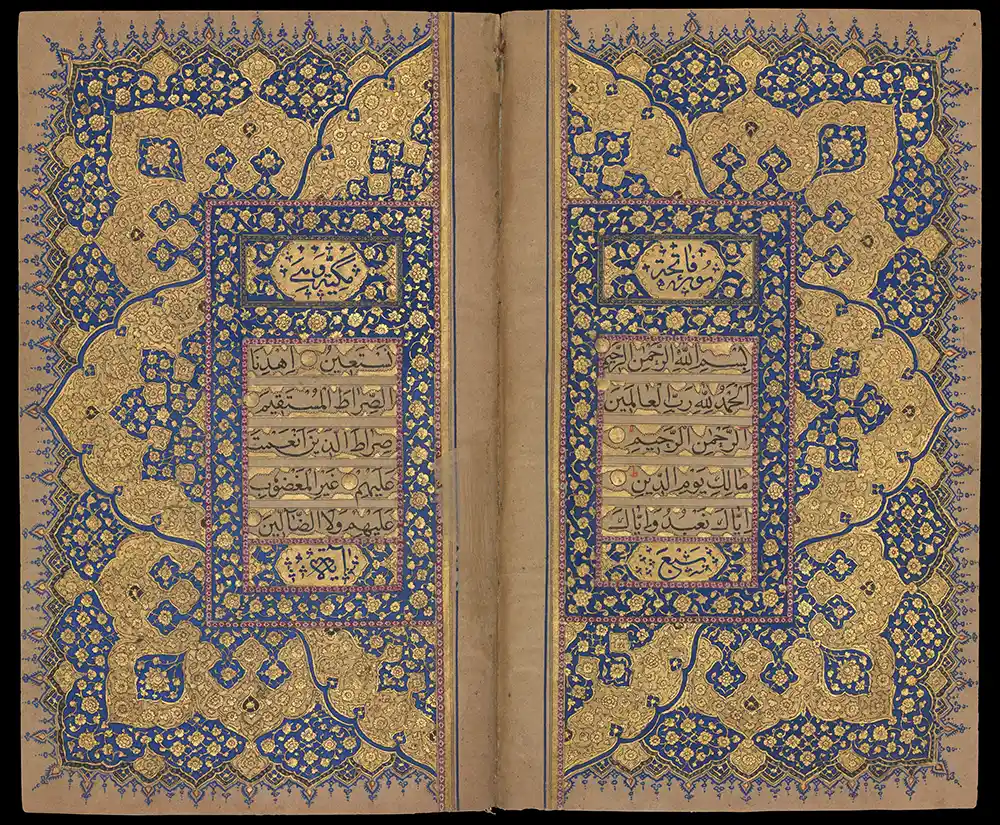
An outstanding example of a Qu’ran from Kashmir, this manuscript written in fine naskhi script is currently housed in the Met Museum. Produced in the late eighteenth or early nineteenth century, the opening to nine of the suras, or chapters are lavishly illuminated in a blue and gold palette that is characteristic of the production of Kashmir.
Jama Masjid, Delhi
The iconic Jama Masjid (Masjid-i-Jehan-Numa) in Delhi is one of the largest living mosques in India and was built by the Mughal ruler Shah Jahan in the 17th century CE (1644-1656). An artists’ delight, it has found its way into many art albums on India by foreign artists.
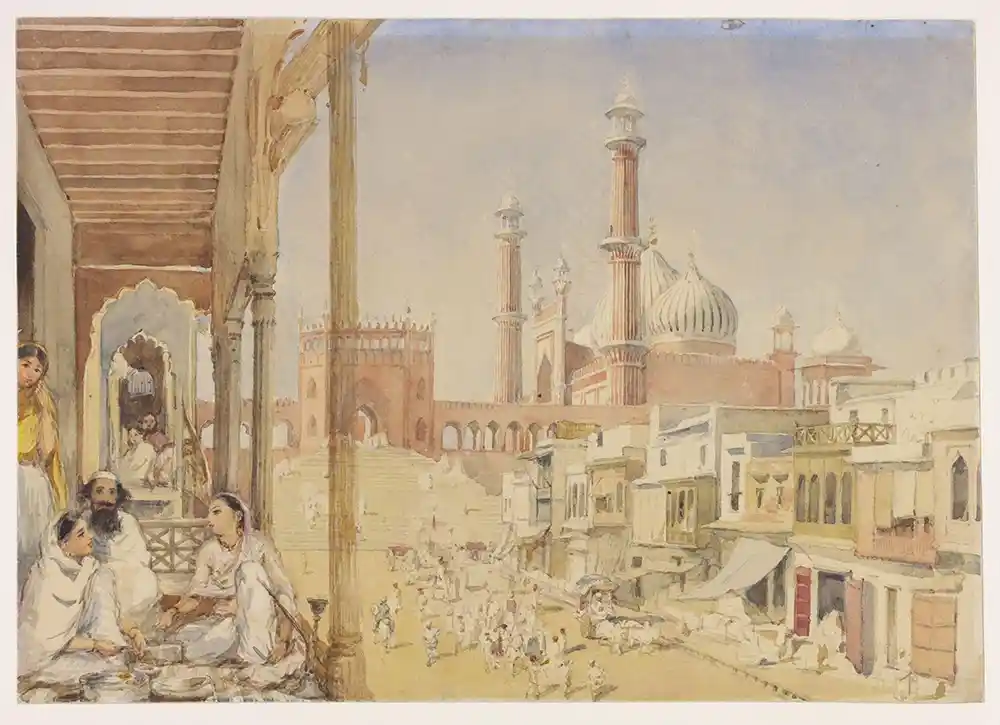
Titled ‘The Jumma Musjid at Delhi’ by William Carpenter, this painting was probably made in 1852 and is housed at the V&A South Kensington, UK. It shows a view of the Masjid as seen from the upstairs balcony of a grand house, which overlooks the street leading to the north entrance.
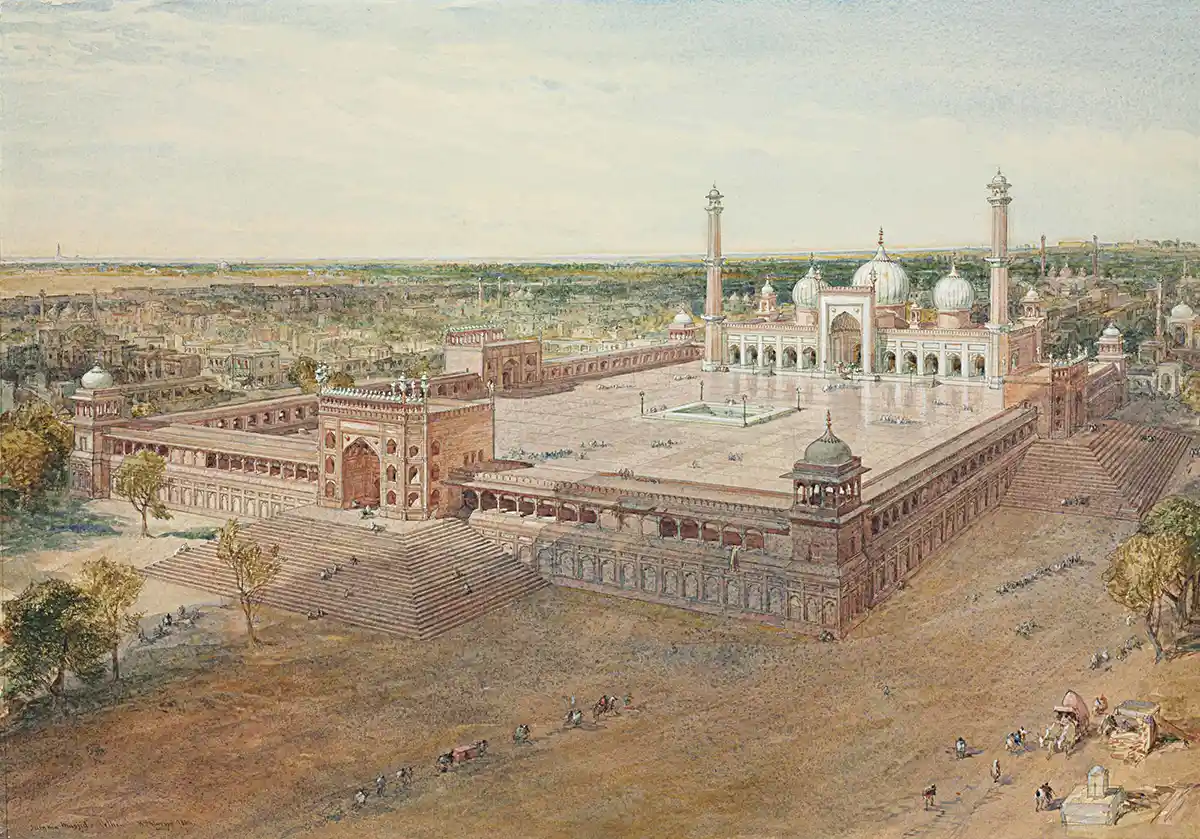
William Simpson’s, ‘Jumma Musjid, Delhi’ is a vivid watercolour painting that is dated to 1864 and captures the vastness and the grandeur of this medieval Indian monument.
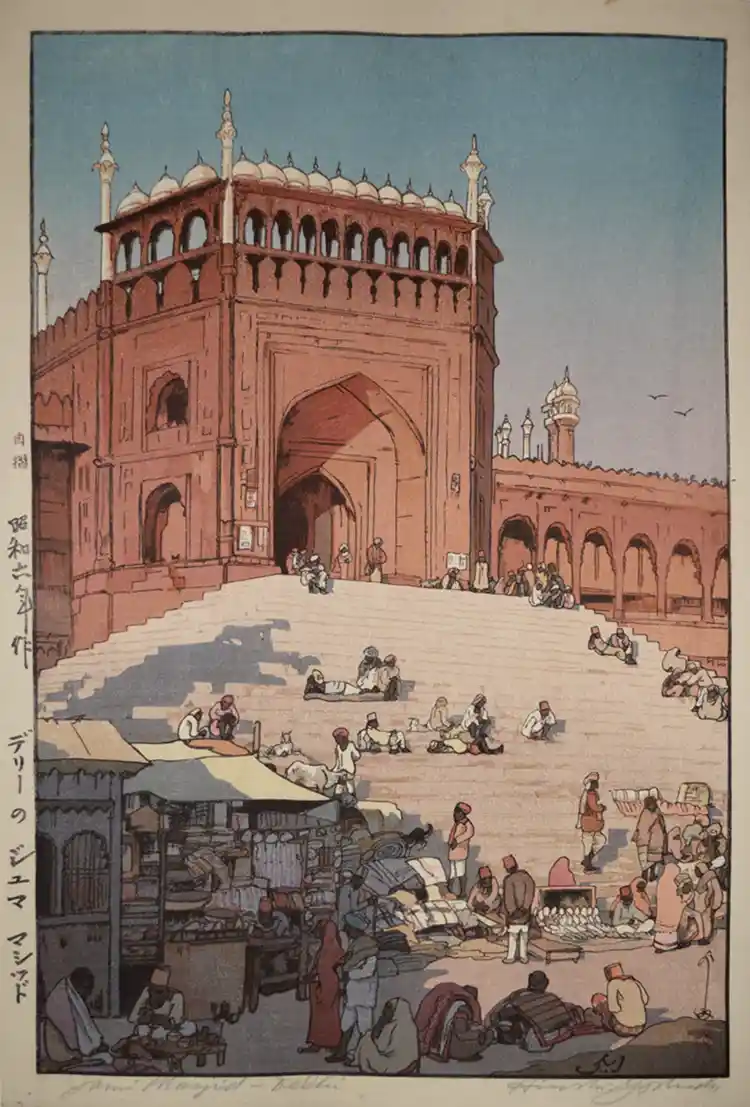
‘Jami Masjid, Delhi’ by the formidable Japanese artist, Yoshida Hiroshi puts the spotlight on the outer sandstone gateway to the Jama Masjid which is embellished by white marble domes. This 1931 painting also encompasses the market stalls in the foreground and includes many visitors resting on the brightly sunlit stairs and is currently housed at the Arthur M. Sackler Gallery, National Museum of Asian Art, Washington.
Idgah (Eidgah) and Offering Namaz
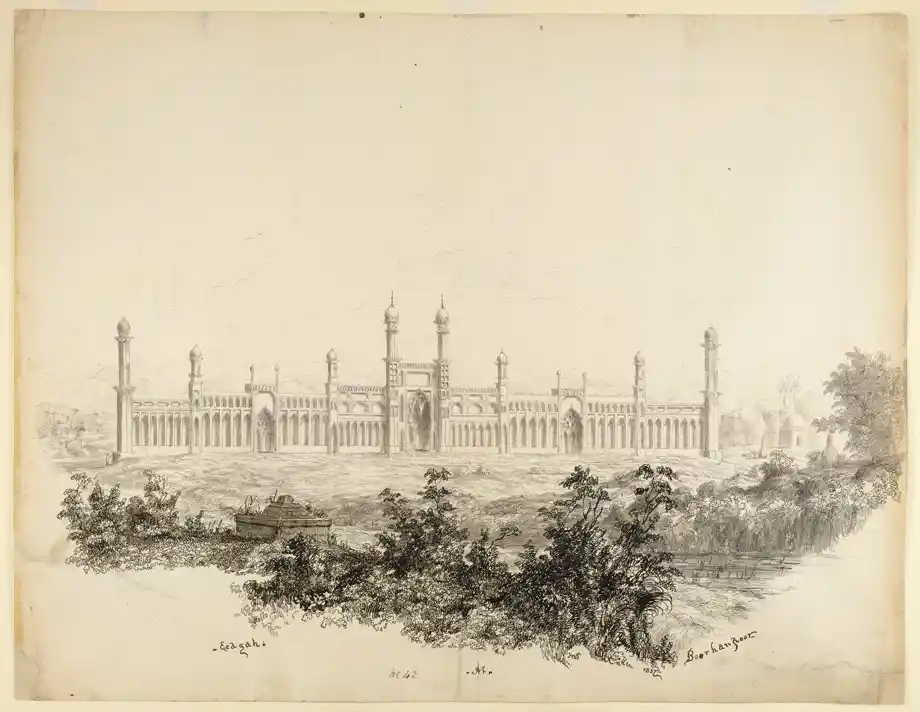
This exquisite pen sketch of the ‘Eidgah’ at Burhanpur in Madhya Pradesh made by the British administrator Philip Meadows Taylor in 1837 evocatively captures the vast Mughal monument and its sylvian surroundings where thousands gather to offer namaz.
Large Eidgahs dot many cities of India and one of Munshi Premchand’s timeless stories in Hindi which captures the spirit of Eid is also called ईदगाह (Eidgah).
Read : Revisiting Munshi Premchand’s ‘Idgah’
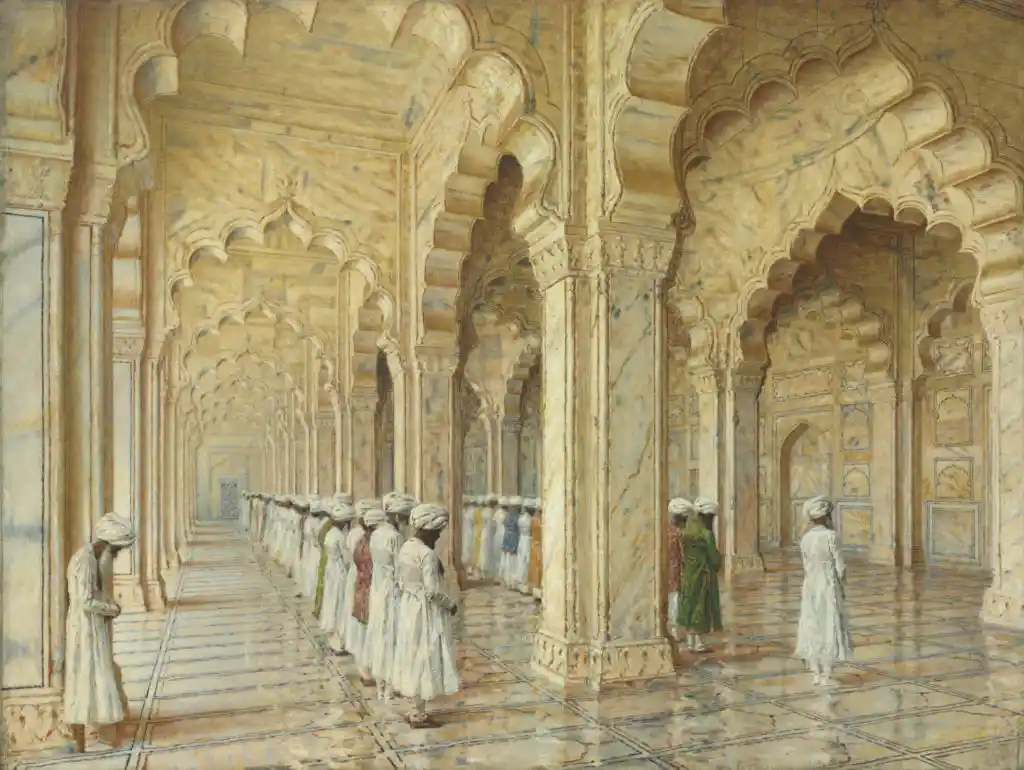
Vasily Vereshchagin’s, ‘The Pearl Mosque in Agra’, is dated to the 1870s and this inspired Russian artist seems to have captured the exalted spirit of the offering of namaz at this serene marble mosque.
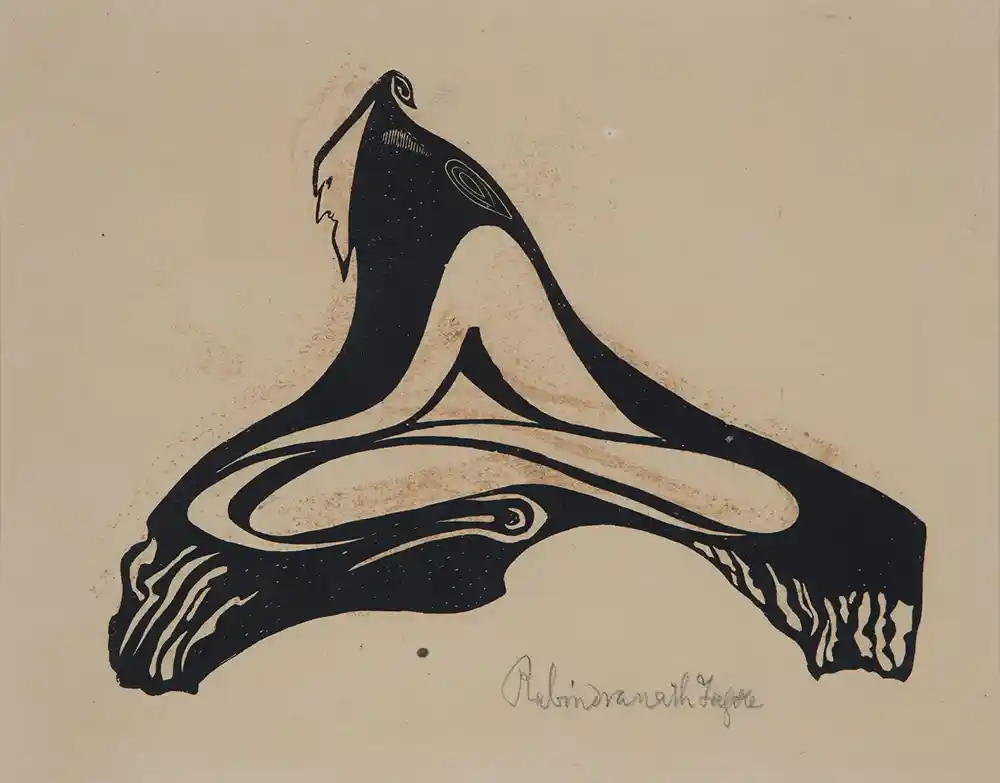
Gurudev Rabindranath Tagore’s, ‘Untitled (Namaz)’ is a doodle and the suggestive human form seems to be imbued with spirituality.
Eid ka Chand, Sighting the Moon
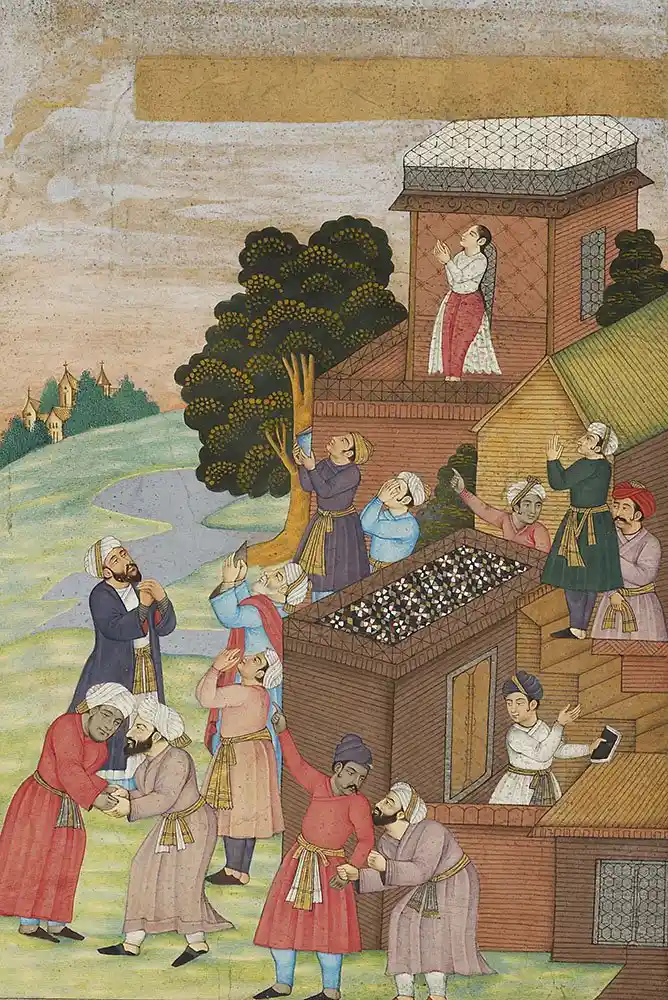
This 19th-century gouache painting from India shows the rejoicing at the end of Ramzaan or Ramadan after the moon has been sighted. The sighting of the moon brings an end to days of fasting and heralds a time for celebrations, prayers and feasting. The paintingis currently housed at the Ashmolean Museum.
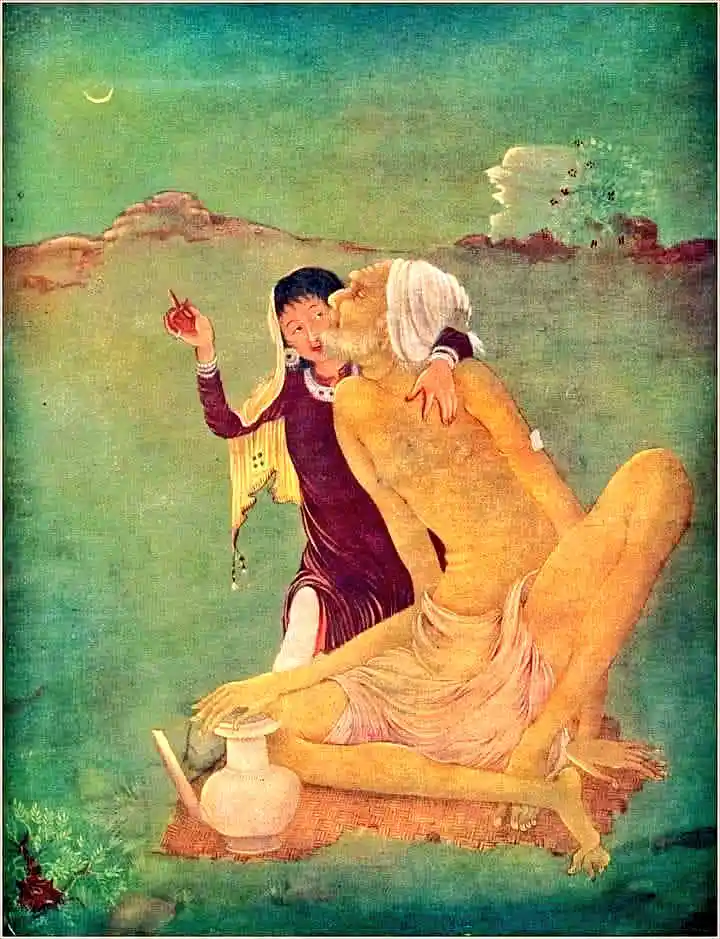
A 20th-century painting by artist Sarada Ukil, this evocative work of art captures not only the captivating moon but the unbridled spiritual joy of its arrival.
Royal Eid Celebrations
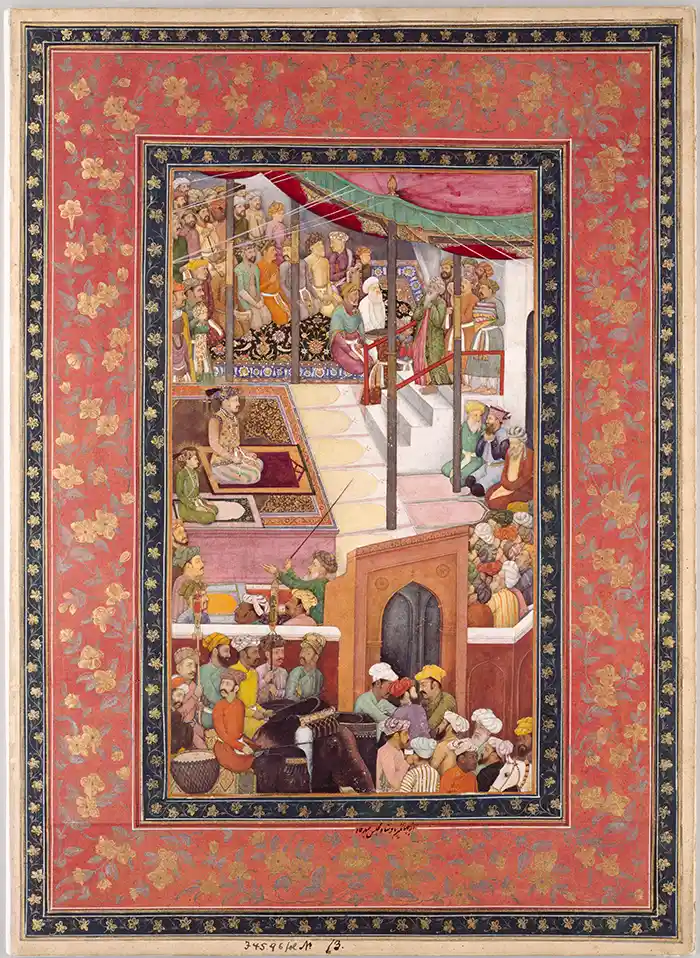
Titled ‘Emperor Jahangir at a gathering to break the fast’, this ornate album leaf from an illuminated manuscript from the Mughal atelier also depicts Prince Khurram. It is currently housed at the Staatliche Museen zu Berlin, Museum für Islamische Kunst.
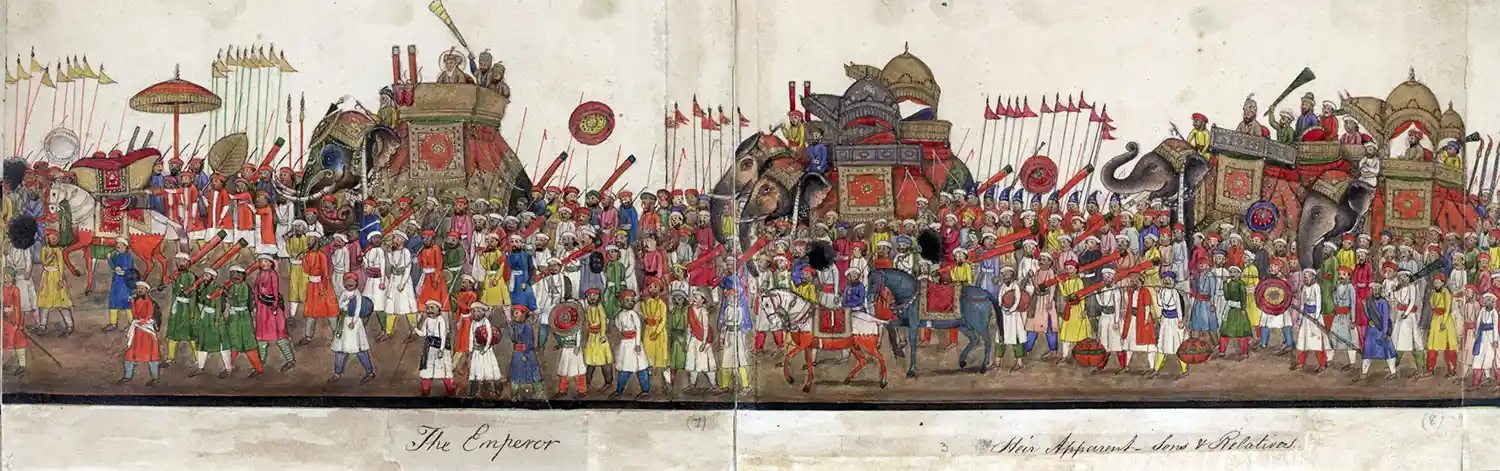
An impressive panorama attributed to Sir Thomas Metcalf, this painting is titled ‘The procession of Bahadur Shah to celebrate the feast of the ’Id’. Created in 1843, this exquisite work of art housed at the British Library and is testament to the grandeur of the Eid-al-fitr celebrations in pre-colonial India.
References
- https://www.metmuseum.org/
- https://collections.vam.ac.uk/
- https://www.christies.com/
- https://dagworld.com/
- https://www.tumblr.com/ashmoleanmuseum/
- https://www.dailyartmagazine.com/
- https://www.bl.uk/
- https://asia.si.edu/
- https://recherche.smb.museum/

Fascinating painting. Great article