

Join Cultural Samvaad’s WhatsApp Community
Mumbai, India. Every year in August/September.
The countdown begins months in advance…themes for pandals (mandals) and decorations are deliberated upon… the sculptors spend days and nights giving form to the one who is essentially formless…armies of people work relentlessly to meet the deadlines and everyone waits with bated breath…
As various forms of the One Divine (there is only one Supreme Being who is formless – human beings comprehend the Divine through different names – ekam satya vipra bahuda vadanti) in majestic splendour, make their way through snarling traffic and pouring rains, the city stops to shower its love and affection on its favourite deity during the Ganesha Mahotsava which commences on Ganesh Chaturthi.
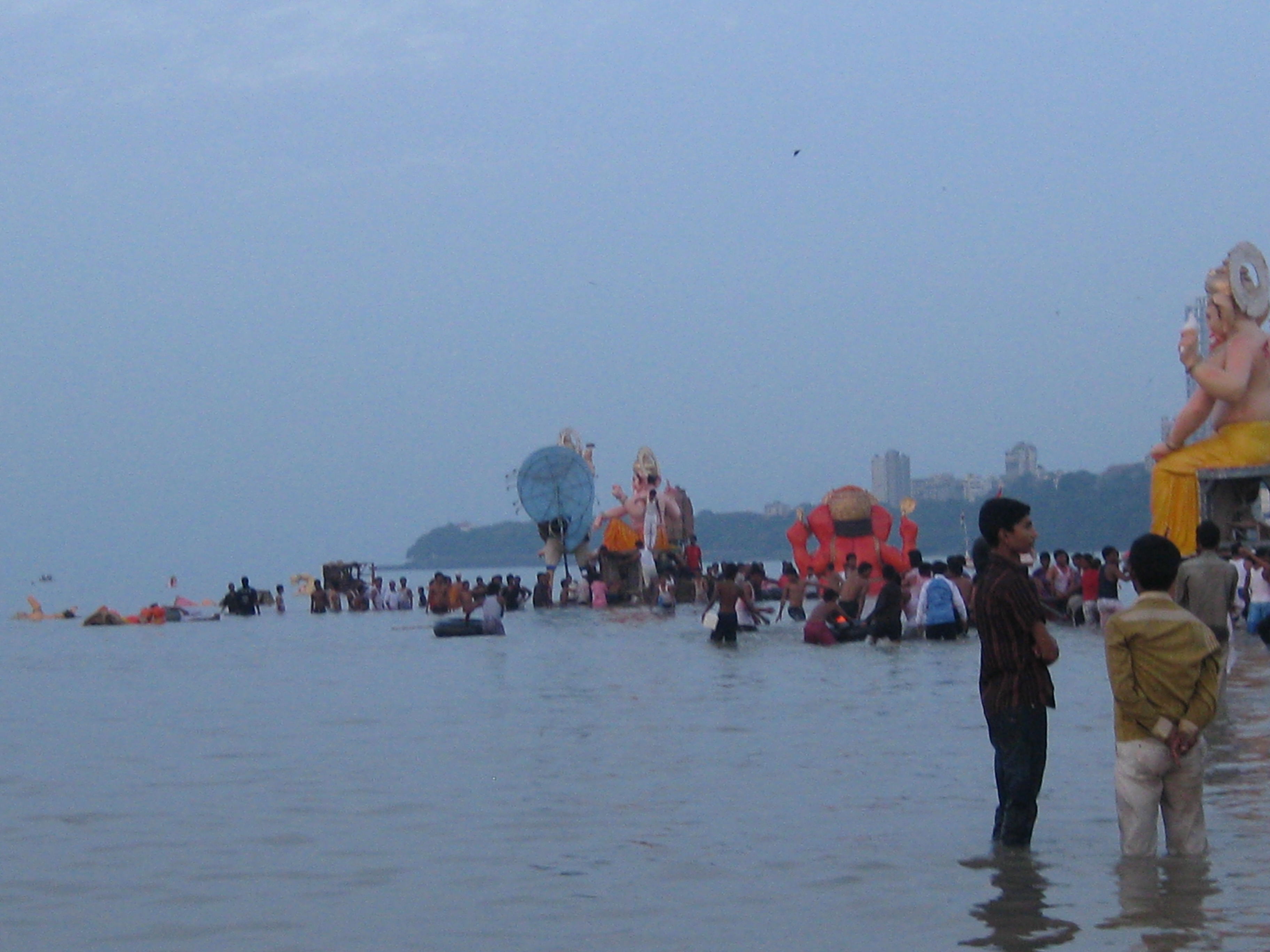
And then…within less than 24 hours of welcoming the ‘Leader of All’ (free translation of the word Ganapati)… the visarjan (विसर्जन) commences. Some forms of Ganapati during the Ganapati Mahotsava stay less than 24 hours…very few stay beyond 10 days…the fervour of months reaches a grand and befitting finale as Ganesha departs to his abode.
The sight of visarjan never fails to move me for a multitude of reasons. The environmental havoc that the exaggerated and unabashedly consumerist, modern festivities wreak, deserve special mention. We will however, leave the environmental challenges for another note and instead spend a few moments on the real symbolism and significance of the visarjan and the timeless lessons that it holds.
Ganapati Visarjan reminds us that there is a purpose for ‘being’ and a time for ‘being’.
Ganesha assumes the form of a ‘raja’ (king – in Mumbai most Ganpati forms are affectionately regarded as kings of the local society/area etc. which invoke them) to remove obstacles of his followers (‘vighnaharta’), to herald the season of plenty as the monsoons start receding and to set in motion – months of festivities.
- And there is a right time to move on.
Once he has fulfilled the current purpose of being invoked at a particular time of the year, the raja (राजा) moves on to allow his followers to cherish his blessings and welcome and worship other forms of the divine.
- If a material form of the Divine cannot last forever, then nothing that is material can last forever.
Even the divine ‘raja’ is invoked in a material form for a finite period of time and then the material form is allowed to depart. He lives on in the hearts and the minds of his followers but the adulation and the attention shift elsewhere.
What seems fairly matter-of-fact in the cycle of worship becomes hard to digest for leaders and organisations. Organisations led by their leaders struggle to cling to their successes. The success of products and adulation for leaders trick us into believing that both the success and the adulation will last forever.
Organisations can and should strategise for the long term but products and services need to be phased out at the right time or be completely reinvented for the changing times (innovate and disrupt). The same strategies do not work in every context. Orkut was phased out by Facebook and many FB killers are already challenging FB. A new iPhone will be released every year to eventually perish like the iPod… Leaders can leave behind legacies but the next leader is always in waiting…the adulation has to shift as soon as the current leader fulfills the purpose for which s(he) became a leader.
The baton has to be passed on.
Visarjan of material forms of the divine and the ritual in Sanatan Dharma itself is essentially a cultural symbol for exhorting leaders, humans and organizations alike to assess their purpose and relevance – to reinvent or to exit as necessary and to acknowledge their inevitable mortality.
Just a last note before I sign off…as divinity personified Ganapati, promises us that he will be back next year (‘pudchya varshi lavkar aahe’ पुढच्या वर्षी लवकर या in Marathi– loosely translated – come back soon next year) …as humans we need not despair too…there is always another coming…in another time…in another context… and that is the timeless message of Indic thought in general and Hindu thought in particular.
Note:
- Ganapati and Ganpati are both accepted spellings in the Roman script though the former is phonetically more correct.
- Ganapati Visarjan or the Ganesh Utsav is not limited to Mumbai. The author resides in Mumbai where this festival has a special significance and charm.

[…] Kerala and Tamil Nadu, the domestic worship of Ganapati is typically for a shorter period. The festival culminates with the visarjan of the idols of Gajanan. The other important Chaturthi of the Shukla Paksha of the month of Magh (January – February) […]