
Join Cultural Samvaad’s WhatsApp Community
Well, we know the title sounds clichéd. So, let us go with the flow and use this opportunity to state another cliché. Over the last few years, Diwali has transformed from just being one of India’s biggest and greatest festivals to also being one of India’s biggest and greatest shopping seasons. It is beyond our remit (for this piece) to discuss how you should make large purchases on Diwali. We are merely focused on exhorting you to buy from your neighbourhood craftspeople and vendors this Diwali.
Buying local is not just about unfounded patriotism as some would like to believe, but about a unique Indian aesthetic that characterises the festival. It is also about supporting the local economy and about giving handicrafts and handlooms a fillip. It is about bringing light to the lives of those who keep our heritage alive. And if that is not enough, remember that every time you buy local, you contribute to saving the environment because your product has added less carbon footprint than it would have, if it had crossed the oceans to reach you.
How can you Go Local this Diwali?
Yes, we know we have preached enough. So how does one go local and reduce carbon footprint? Here are 5 ideas to try this Diwali. Please feel free to add your suggestions to this list.
- Use clay or earthen diyas to light up your home and workplace. Remember the festival is called Deepawali – the word ‘deep‘ is an integral part of the name itself. Clay diyas are eco-friendly – they are made from the earth and return to the earth. Every time you light a lamp made of clay, you bring a smile to a potter’s face. And there are enough and more beautiful, decorative diyas or lamps made of clay available in the local market. Incidentally, quite a few organisations now create diyas from cow-dung – another eco-friendly option that you may want to try.
Why do we light Diyas?
- If you worship Lakshmiji and/or Ganeshji during Diwali and buy idols every year, then choose handmade clay idols created by local craftspeople. Clay make the divine come alive. A handmade murti has far more character than mass-produced, foreign idols flooding the market. And yes, needless to say, clay is eco-friendly.
Do You Know: Why is Diwali celebrated?
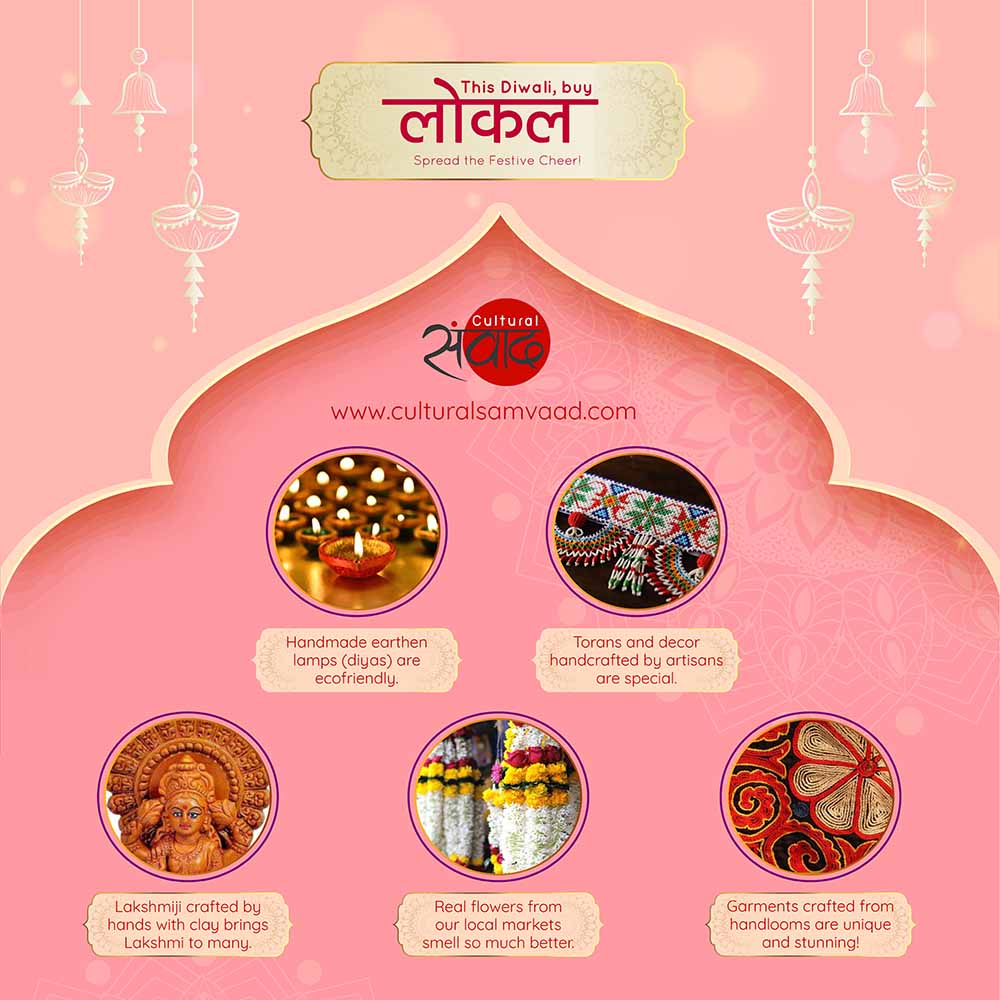
- Diwali is the time to deck up your home. From torans (hangings on the door) and decorative hangings to kandeels (lanterns) and knick-knacks, each home has a festive look. Our markets are again flooded with cheap, plastic, foreign decorations and yet there are craftspeople who still craft exquisite decorations by hand. You may want to choose that eye-catching toran from Kutch over that plastic toran from a factory.
- Most Indian festivals are incomplete without flowers and leaves. Diwali, especially, is a riot of colours. Over the years, many of us have acquired a taste for non-native flowers and our Instagrammable homes are modelled around European homes. This Deepawali, bring home the marigolds and the local roses and the jasmines and the mango leaves and allow their aromas to enthrall your senses. This Diwali, Instagram with a difference.
- Diwali is the time when people don their finest, traditional clothes to welcome prosperity to their homes and professional establishments. This Diwali, make sure that your garments reflect the rich and diverse handloom heritage of India. This Diwali, make sure that your outfit ushers in prosperity for the millions of weavers who have kept our glorious traditions alive.
Read our piece on the Handlooms of India for some suggestions.
We hope that we have set you thinking. Take some time out and stroll down your neighbourhood market.
Buy local, buy eco-friendly and celebrate a traditional Diwali.
शुभ दीपावली!
आप इस लेख को हिन्दी में भी पढ़ सकते हैं|
More: Diwali wishes in Sanskrit with meanings in Hindi and English.
Note:
The following words have been used interchangeably in the note above.
- Diya (दीया), Deepak (दीपक) and lamp.
- Diwali and Deepawali
- Idol and murti (मूर्ति)

[…] This Diwali, Buy Local […]