


Join Cultural Samvaad’s WhatsApp Community
‘Crisis in Civilisation’ was Gurudev Rabindranath Tagore’s last public address delivered on 14 April, 1941 when his 80th birthday was celebrated at Santiniketan on Poila Baisakh or Bengali New Year’s Day. Originally in Bengali, it was titled ‘Sabhyatar Samkat’. Its English translation was prepared by Kshitis Roy and revised by Krishna Kripalani and Tagore himself. The text which has been reproduced below was first published in Visva-Bharati News (Vol. IX, No. ii) and in The Modern Review (May 1941). We have made certain spelling and punctuations edits to ensure uniformity and highlighted certain portions that are a must read.
While this address has sometimes been referred to (rather uncharitably) as the ‘rambling of an old man’, it seems to be the opposite. This speech is a masterpiece in the current context. When he wrote and delivered this speech, Tagore was horrified and devastated by the pitiable predicament of his motherland – India. It was also evident to him that he would not live to see either India’s independence or the end of the cataclysmic World War II. However, he had not lost hope. His final remarks echo Bharat’s timeless faith in the eventual victory of Dharma over Adharma and the essential humanity of human beings.
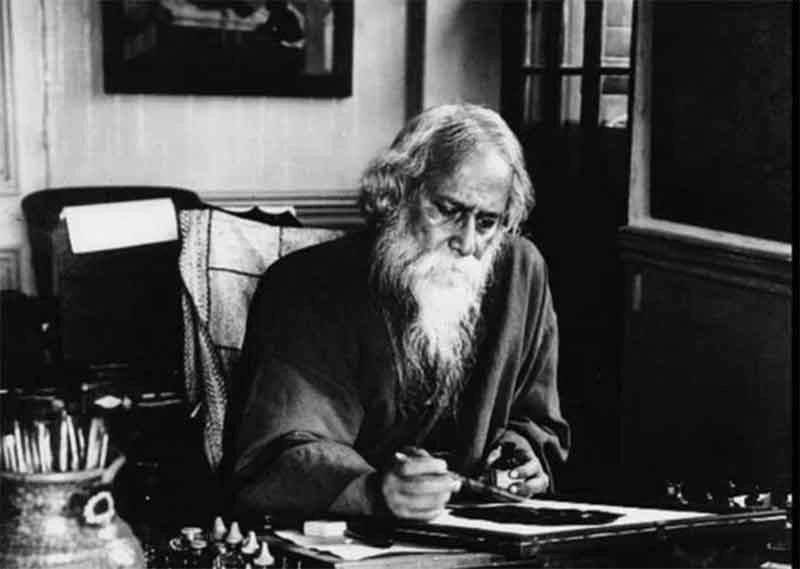
Tagore offers a scathing critique of British imperialism but admits with candour that he and many of his peers were bewitched by the eloquence and sublimity of British literature. They were tricked into believing in the essential generosity of the English and that this imperialist power which they had ‘set in the throne of their hearts’, would ‘of his own grace pave the path of freedom for the vanquished.’ This train of thought which is evident in the writings of that period had deep ramifications for the early years of India’s freedom movement and the state of the nation when she achieved independence in 1947. While the British are to be blamed squarely for the ‘frightful’ state of affairs, Tagore does not exonerate all Indians and categorically states that this would have been impossible ‘but for the encouragement it has received from secret influences emanating from high places’. Gurudev’s observations on India and Indians provide profound insights into the working of the Indic mind, our people, and our civilisation that are true even today.
‘Crisis of Civilisation’ is not a speech just about India. The discerning reader cannot afford to gloss over his remarks on Asian civilisations and reflect on the changing fortunes of nations and the reality of the global order more than eight decades later. The transformation of China which was then shrouded in misery is too well documented to be explained. The unprecedented resolve and dedication of the people of Japan to build a prosperous nation finds mention in Tagore’s eloquent ruminations. No wonder, the Japanese survived the nuclear holocaust, rebuilt the country and continue to be one of India’s oldest civilisational partners. The paragraphs on the erstwhile USSR are of particular interest to those who wish to understand the early promise and success of communist and socialist ideas. The irony of Tagore’s remarks as one beholds the ancient kingdom of Afghanistan today is unmissable and heart rending.
Read : Tagore’s 5 Most Famous and Important Poems
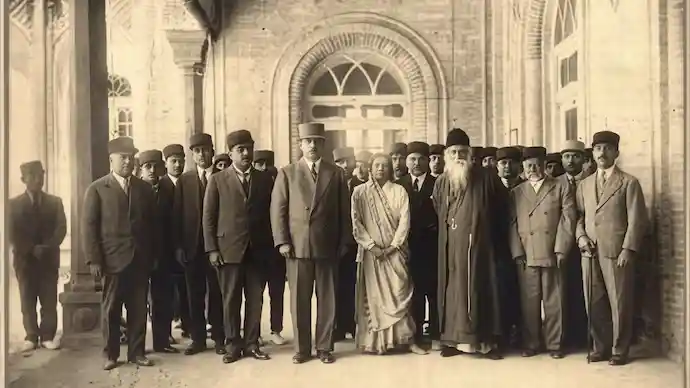
The one other country that he singles out in this speech for high praise is Iran. Rabindranath Tagore travelled to Iran twice, was a great admirer of the great prophet Zarathushtra and held the Persian civilisation in high regard. The people of Iran reciprocated in full measure, and he was widely read and respected in the nation. His exchanges with Iran have been part of a civilisational dialogue between India and Persia that have a documented history of over 2500 years and he says, ‘With all my heart I wish Iran well.’ A prophetic wish that one cannot but echo.
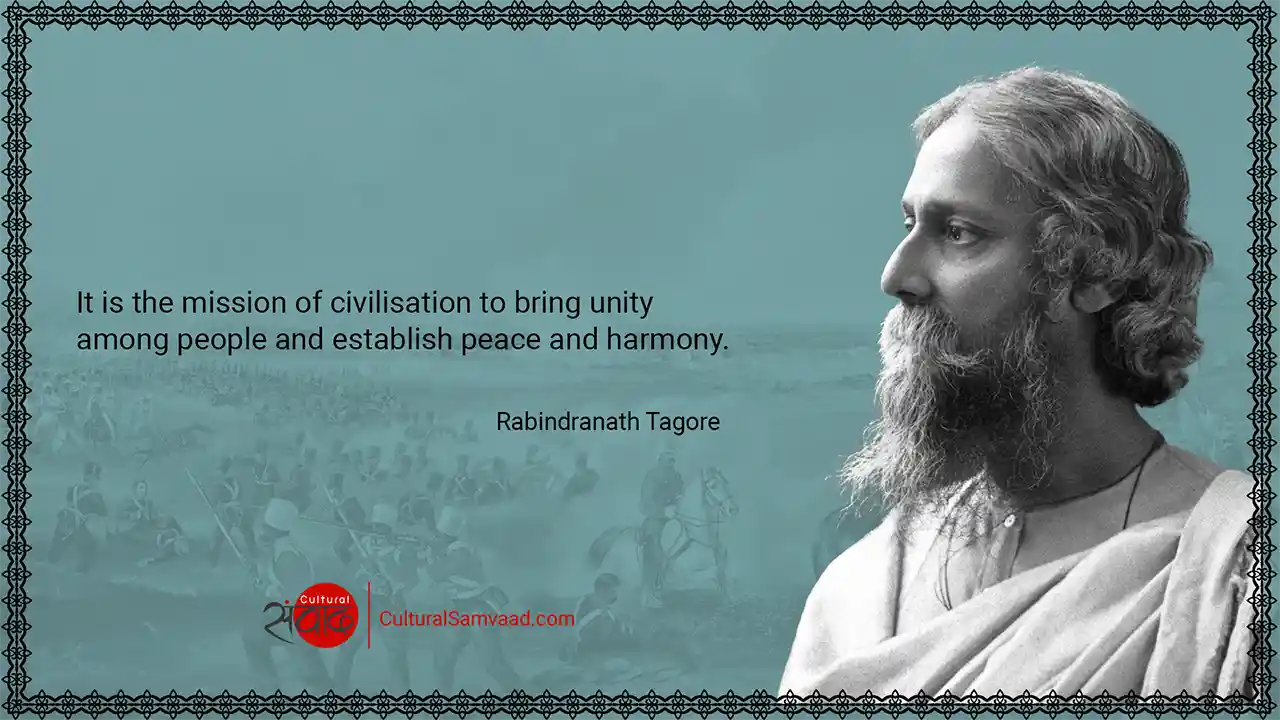
Gurudev proclaims that, ‘It is the mission of civilisation to bring unity among people and establish peace and harmony.’ Please do read the speech and if you cannot, do read the highlighted text as the crisis of civilisation continues unabated and threatens civilisation itself.
 Crisis in Civilisation – Text of the Address
Today I complete eighty years of my life. As I look back on the vast stretch of years that lie behind me and see in clear perspective the history of my early development, I am struck by the change that has taken place both in my own attitude and in the psychology of my countrymen – a change that carries within it a cause of profound tragedy.
Our direct contact with the larger world of men was linked up with the contemporary history of the English people whom we came to know in those earlier days. It was mainly through their mighty literature that we formed our ideas with regard to these newcomers to our Indian shores. In those days the type of learning that was served out to us was neither plentiful nor diverse, nor was the spirit of scientific enquiry very much in evidence. Thus, their scope being strictly limited, the educated of those days had recourse to English language and literature. Their days and nights were eloquent with the stately declamations of Burke, with Macaulay’s long-rolling sentences; discussions centred upon Shakespeare’s drama and Byron’s poetry and above all upon the large-hearted liberalism of the nineteenth-century English politics.
At the time though tentative attempts were being made to gain our national independence, at heart we had not lost faith in the generosity of the English race. This belief was so firmly rooted in the sentiments of our leaders as to lead them to hope that the victor would of his own grace pave the path of freedom for the vanquished. This belief was based upon the fact that England at the time provided a shelter to all those who had to flee from persecution in their own country. Political martyrs who had suffered for the honour of their people were accorded unreserved welcome at the hands of the English. I was impressed by this evidence of liberal humanity in the character of the English and thus I was led to set them on the pedestal of my highest respect. This generosity in their national character had not yet been vitiated by Imperialist pride. About this time, as a boy in England, I had the opportunity of listening to the speeches of John Bright, both in and outside Parliament. The large-hearted, radical liberalism of those speeches, overflowing all narrow national bounds, had made so deep an impression on my mind that something of it lingers even today, even in these days of graceless disillusionment.
Certainly, that spirit of abject dependence upon the charity of our rulers was no matter for pride. What was remarkable, however, was the wholehearted way in which we gave our recognition to human greatness even when it revealed itself in the foreigner. The best and noblest gifts of humanity cannot be the monopoly of a particular race or country; its scope may not be limited, nor may it be regarded as the miser’s hoard buried underground. That is why English literature which nourished our minds in the past, does even now convey its deep resonance to the recesses of our heart.
It is difficult to find a suitable Bengali equivalent for the English word ‘civilisation’. That phase of civilisation with which we were familiar in this country has been called by Manu ‘Sadachar’ (lit. proper conduct – सदाचार), that is, the conduct prescribed by the tradition of the race. Narrow in themselves these time-honoured social conventions originated and held good in a circumscribed geographical area, in that strip of land, Brahmavarta by name, bound on either side by the rivers Saraswati and Drisadvati. That is how a pharisaic formalism gradually got the upper hand of free thought and the ideal of ‘proper conduct’ which Manu found established in Brahmavarta steadily degenerated into socialised tyranny.
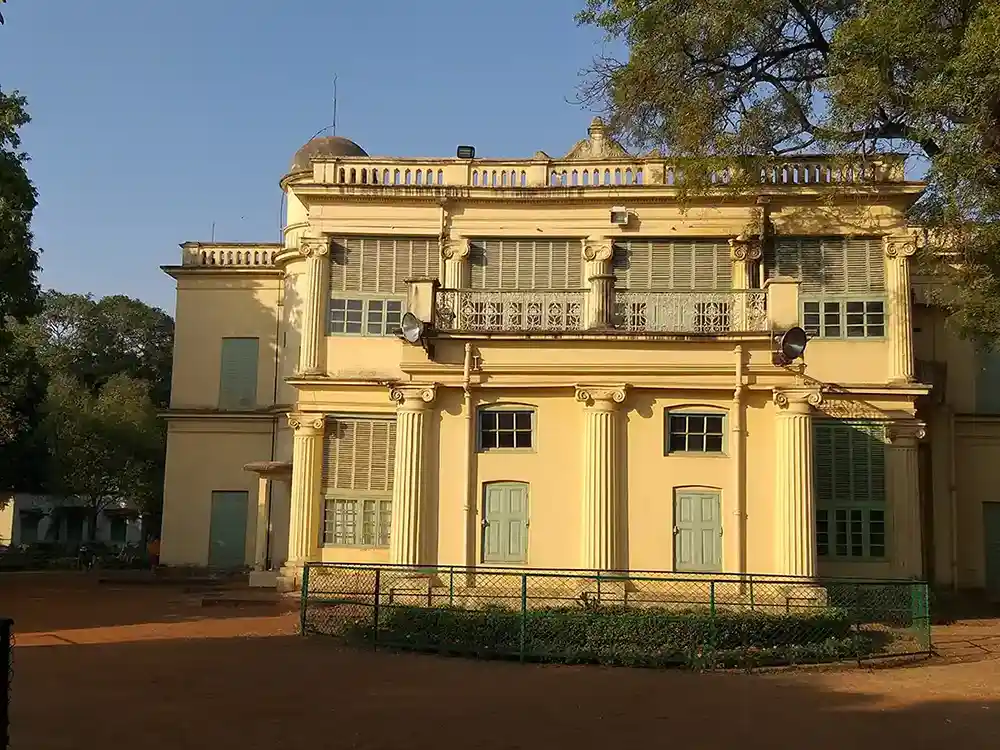
During my boyhood days the attitude of the cultured and educated section of Bengal, nurtured on English learning, was charged with a feeling of revolt against these rigid regulations of society. A perusal of what Rajnarain Bose has written describing the ways of the educated gentry of those days will amply bear out what I have said just now. In place of these set codes of conduct we accepted the ideal of ‘civilisation’ as represented by the English term.
In our own family this change of spirit was welcomed for the sake of its sheer rational and moral force and its influence was felt in every sphere of our life. Born in that atmosphere, which was moreover coloured by our intuitive bias for literature, I naturally set the English on the throne of my heart. Thus passed the first chapters of my life. Then came the parting of ways accompanied with a painful feeling of disillusion when I began increasingly to discover how easily those who accepted the highest truths of civilisation disowned them with impunity whenever questions of national self-interest were involved.
There came a time when perforce I had to snatch myself away from the mere appreciation of literature. As I emerged into the stark light of bare facts, the sight of the dire poverty of the Indian masses rent my heart. Rudely shaken out of my dreams, I began to realise that perhaps in no other modern state was there such hopeless dearth of the most elementary needs of existence. And yet it was this country whose resources had fed for so long the wealth and magnificence of the British people. While I was lost in the contemplation of the great world of civilisation, I could never have remotely imagined that the great ideals of humanity would end in such ruthless travesty. But today a glaring example of it stares me in the face in the utter and contemptuous indifference of a so-called civilised race to the well-being of crores of Indian people.
That mastery over the machine, by which the British have consolidated their sovereignty over their vast Empire, has been kept a sealed book, to which due access has been denied to this helpless country. And all the time before our very eyes Japan has been transforming herself into a mighty and prosperous nation. I have seen with my own eyes the admirable use to which Japan has put in her own country the fruits of this progress. I have also been privileged to witness, while in Moscow, the unsparing energy with which Russia has tried to fight disease and illiteracy, and has succeeded in steadily liquidating ignorance and poverty, wiping off the humiliation from the face of a vast continent. Her civilisation is free from all invidious distinction between one class and another, between one sect and another. The rapid and astounding progress achieved by her made me happy and jealous at the same time. One aspect of the Soviet administration which particularly pleased me was that it provided no scope for unseemly conflict of religious difference nor set one community against another by unbalanced distribution of political favours. That I consider a truly civilised administration which impartially serves the common interests of the people.
While other imperialist powers sacrifice the welfare of the subject races to their own national greed, in the USSR I found a genuine attempt being made to harmonise the interests of the various nationalities that are scattered over its vast area. I saw peoples and tribes, who, only the other day, were nomadic savages being encouraged and indeed trained, to avail themselves freely of the benefits of civilisation. Enormous sums are being spent on their education to expedite the process. When I see elsewhere some two hundred nationalities which only a few years ago were at vastly different stages of development, marching ahead in peaceful progress and amity, and when I look about my own country and see a very highly evolved and intellectual people drifting into the disorder of barbarism, I cannot help contrasting the two systems of governments, one based on co-operation, the other on exploitation, which have made such contrary conditions possible.
I have also seen Iran, newly awakened to a sense of national self-sufficiency, attempting to fulfil her own destiny freed from the deadly griding-stones of two European powers. During my recent visit to that country, I discovered to my delight that Zoroastrians who once suffered from the fanatical hatred of the major community and whose rights had been curtailed by the ruling power were now free from this age-long repression, and that civilised life had established itself in the happy land. It is significant that Iran’s good fortune dates from the day when she finally disentangled herself from the meshes of European diplomacy. With all my heart I wish Iran well.
Turning to the neighbouring kingdom of Afghanistan I find that though there is much room for improvement in the field of education and social development, yet she is fortunate in that she can look forward to unending progress; for none of the European powers, boastful of their civilisation, has yet succeeded in overwhelming and crushing her possibilities.
Thus, while these other countries were marching ahead, India, smothered under the dead weight of British administration, lay static in her utter helplessness. Another great and ancient civilisation for whose recent tragic history the British cannot disclaim responsibility, is China. To serve their own national profit, the British first doped her people with opium and then appropriated a portion of her territory. As the world was about to forget the memory of this outrage, we were painfully surprised by another event. While Japan was quietly devouring North China, her act of wanton aggression was ignored as a minor incident by the veterans of British diplomacy. We have also witnessed from this distance how actively the British statesmen acquiesced in the destruction of the Spanish Republic. On the other hand, we also noted with admiration how a band of valiant Englishmen laid down their lives for Spain. Even though the English had not aroused themselves sufficiently to their sense of responsibility towards China in the Far East, in their own immediate neighbourhood they did not hesitate to sacrifice themselves to the cause of freedom. Such acts of heroism reminded me over again of the true English spirit to which in those early days I had given my full faith and made me wonder how imperialist greed could bring about so ugly a transformation in the character of so great a race.
Such is the tragic tale of the gradual loss of my faith in the claims of the European nations to civilisation. In India, the misfortune of being governed by a foreign race is daily brought home to us not only in the callous neglect of such minimum necessities of life as adequate provision for food, clothing, educational and medical facilities for the people, but in an even unhappier form in the way the people have been divided among themselves. The pity of it is that the blame is laid at the door of our own society. So frightful a culmination of the history of our people would never have been possible, but for the encouragement it has received from secret influences emanating from high places.
One cannot believe that Indians are in any way inferior to the Japanese in intellectual capacity. The most effective difference between these two eastern peoples is that whereas India lies at the mercy of the British, Japan has been spared the shadow of alien domination. We know what we have been deprived of. That which was truly best in their own civilisations the upholding of the dignity of human relationship, has no place in the British administration of this country. If in its place they have established, with baton in hand, a reign of ‘law and order’, in other words a policeman’s rule, such mockery of civilisation can claim no respect from us. It is the mission of civilisation to bring unity among people and establish peace and harmony. But in unfortunate India, the social fabric is being rent into shreds by unseemly outbursts of hooliganism daily growing in intensity, right under the very aegis of ‘law and order’. In India, so long as no personal injury is inflicted upon any member of the ruling race, this barbarism seems to be assured of perpetuity, making us ashamed to live under such an administration.
And yet my good fortune has often brought me into close contact with really large-hearted Englishmen. Without the slightest hesitation I may say that the nobility of their character was without parallel-in no country or community have I come across such greatness of soul. Such examples would not allow me wholly to lose faith in the race which produced them. I had the rare blessing of having Andrews a real Englishman, a real Christian and a true man-for a very close friend. Today in the perspective of death, his unselfish and courageous magnanimity shines all the brighter. The whole of India remains indebted to him for innumerable acts of love and devotion. But personally speaking, I am especially beholden to him because he helped me to retain in my old age that feeling of respect for the English race with which in the past, I was inspired by their literature and which I was about to lose completely. I count such Englishmen as Andrews not only as my personal and intimate friends but as friends of the whole human race. To have known them has been to me a treasured privilege. It is my belief that such Englishmen will save British honour from shipwreck. At any rate if I had not known them, my despair at the prospect of western civilisation would be unrelieved.
In the meanwhile, the demon of barbarity has given up all pretence and has emerged with unconcealed fangs, ready to tear up humanity in an orgy of devastation. From one end of the world to the other the poisonous fumes of hatred darken the atmosphere. The spirit of violence which perhaps lay dormant in the psychology of the West, has at last roused itself and desecrates the spirit of Man.
The wheels of Fate will someday compel the English to give up their Indian empire. But what kind of India will they leave behind, what stark misery? When the stream of their centuries’ administration runs dry at last, what a waste of mud and filth they will leave behind them! I had at one time believed that the springs of civilisation would issue out of the heart of Europe. But today when I am about to quit the world that faith has gone bankrupt altogether.
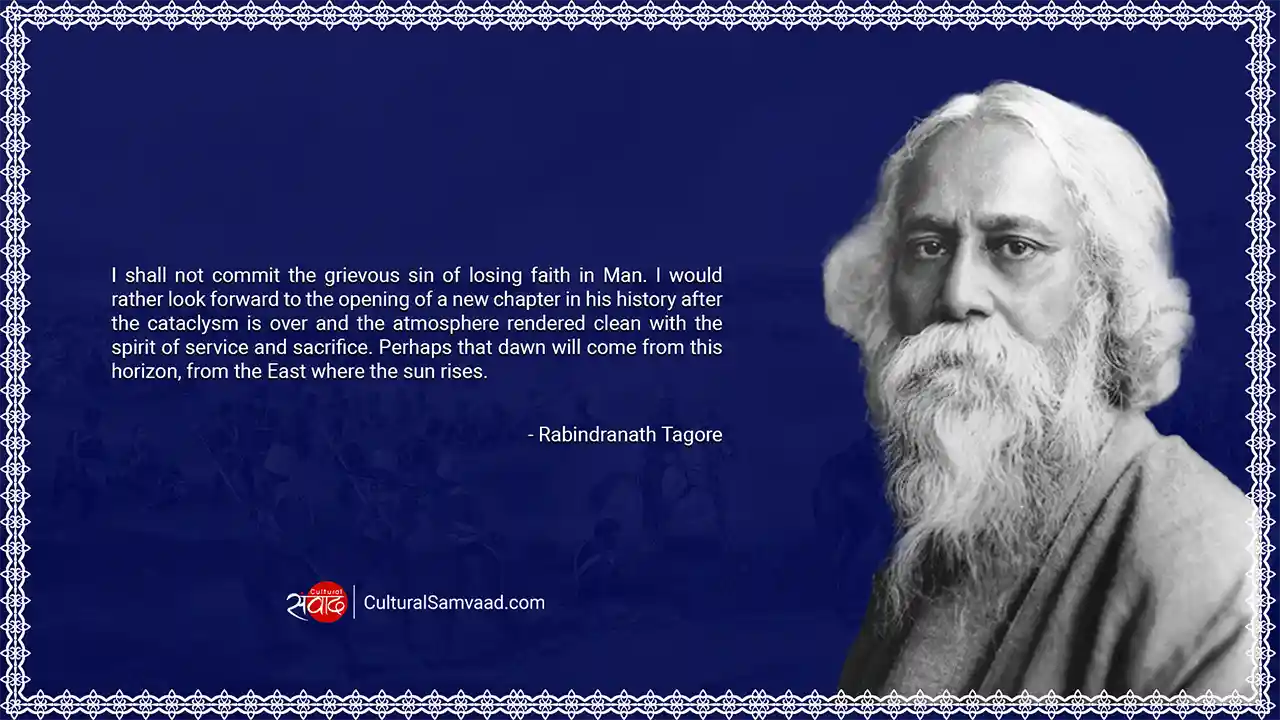
As I look around, I see the crumbling ruins of a proud civilisation strewn like a vast heap of futility. And yet, I shall not commit the grievous sin of losing faith in Man. I would rather look forward to the opening of a new chapter in his history after the cataclysm is over and the atmosphere rendered clean with the spirit of service and sacrifice. Perhaps that dawn will come from this horizon, from the East where the sun rises. A day will come when unvanquished Man will retrace his path of conquest, despite all barriers, to win back his lost human heritage.
Today we witness the perils which attend on the insolence of might; one day shall be borne out the full truth of what the sages have proclaimed: ‘By unrighteousness man prospers, gains what appears desirable, conquers enemies, but perishes at the root.’


Add comment