


Join Cultural Samvaad’s WhatsApp community
The Srimad Bhagavad Gita or the ‘Song of God’ is probably unparalleled not only in Indian thought but also across global philosophy. The 700 odd shlokas in Sanskrit that are in the form of a conversation between Bhagawan Shri Krishna (भगवान श्रीकृष्ण) and Arjuna on the battlefield of Kurukshetra in India’s timeless itihaas (इतिहास) or epic – the Mahabharata are akin to an unfathomable ocean of wisdom and are Bharat’s gift to the world. We have curated some of the most important and popular shlokas from the Gita that offer profound yet practical insights that even lay devotees can act upon as they go around discharging their duties and following their dharma. An oft quoted shloka from the Mahabharata states that it is the duty of human beings to read the Gita thoroughly, recite it, understand its meaning, and imbibe it with devotion.
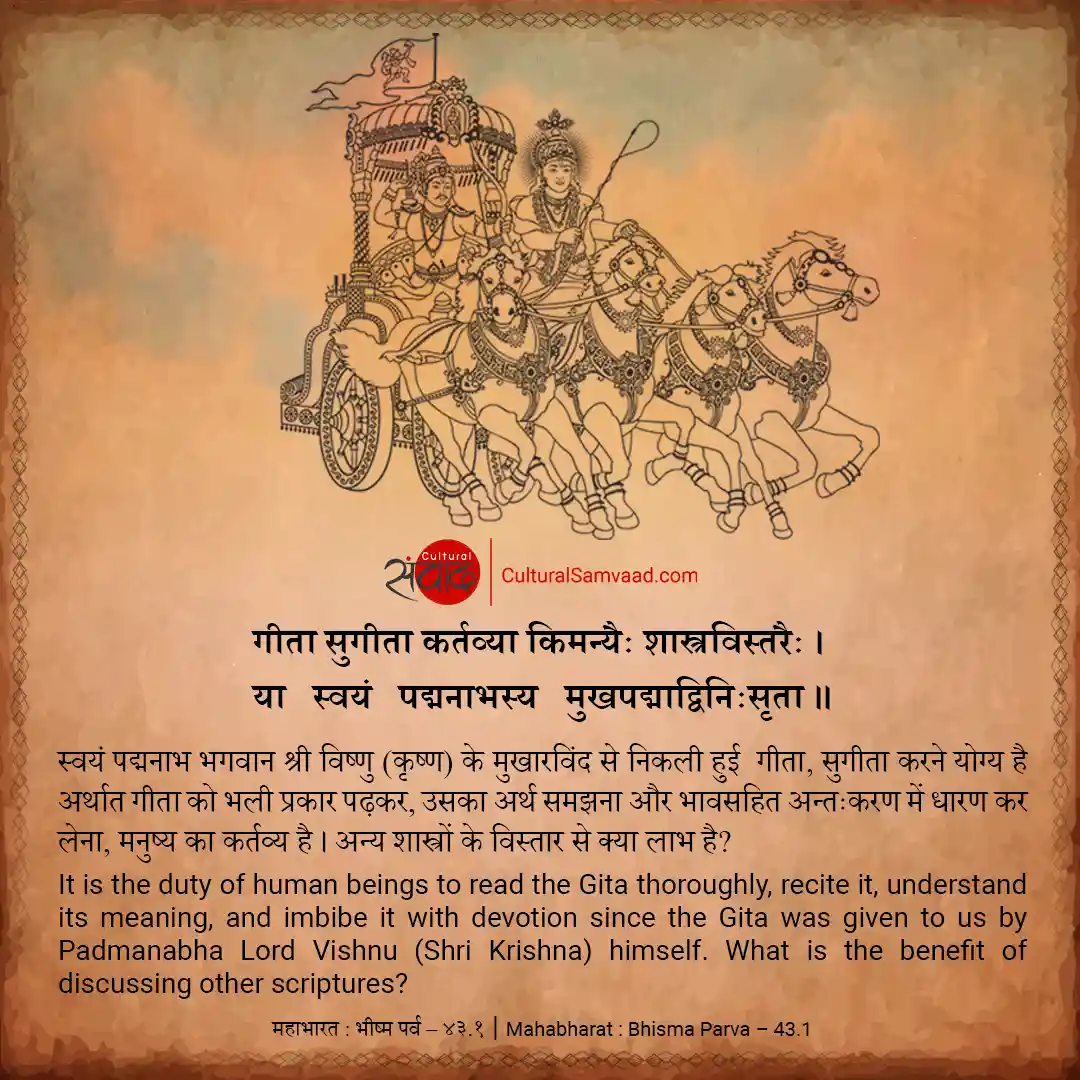
The translations of the 21 shlokas in this collection both in Hindi and English reflect the essence of the verse, i.e., they contain the भावार्थ and draw upon the commentaries and works of many enlightened luminaries from Shankaracharya and Ramanujacharya to Aurobindo and A. Parthasarthy. We have also referred extensively to https://www.gitasupersite.iitk.ac.in/ .
Download our e-Book – Bhagavad Gita : Important and Popular Shlokas
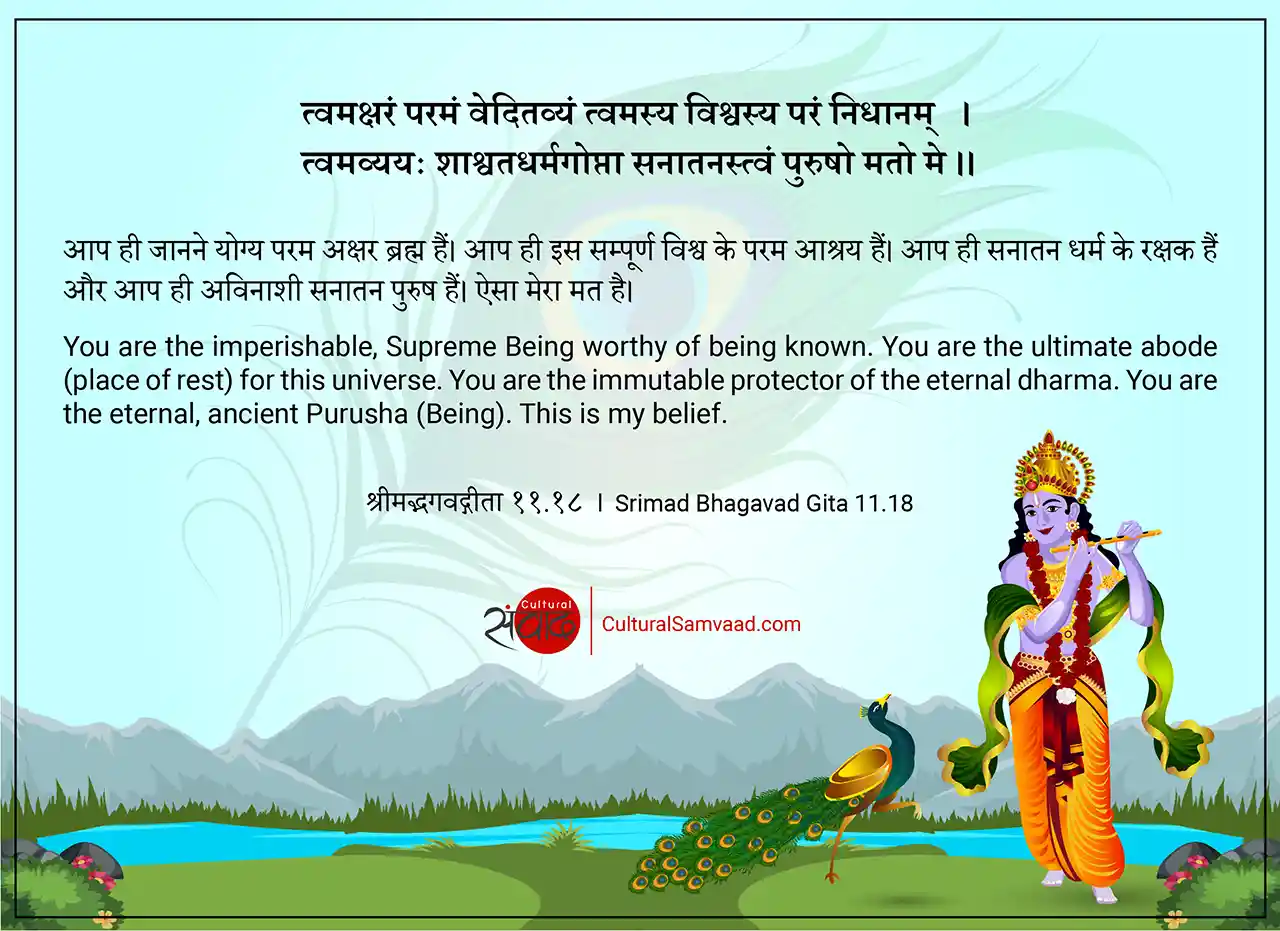
What is the nature of the Supreme Paramatma (परमात्मा), the all- encompassing Brahmana (ब्रह्मण) ?
श्रीमद्भगवद्गीता ११.१८ | Srimad Bhagavad Gita 11.18
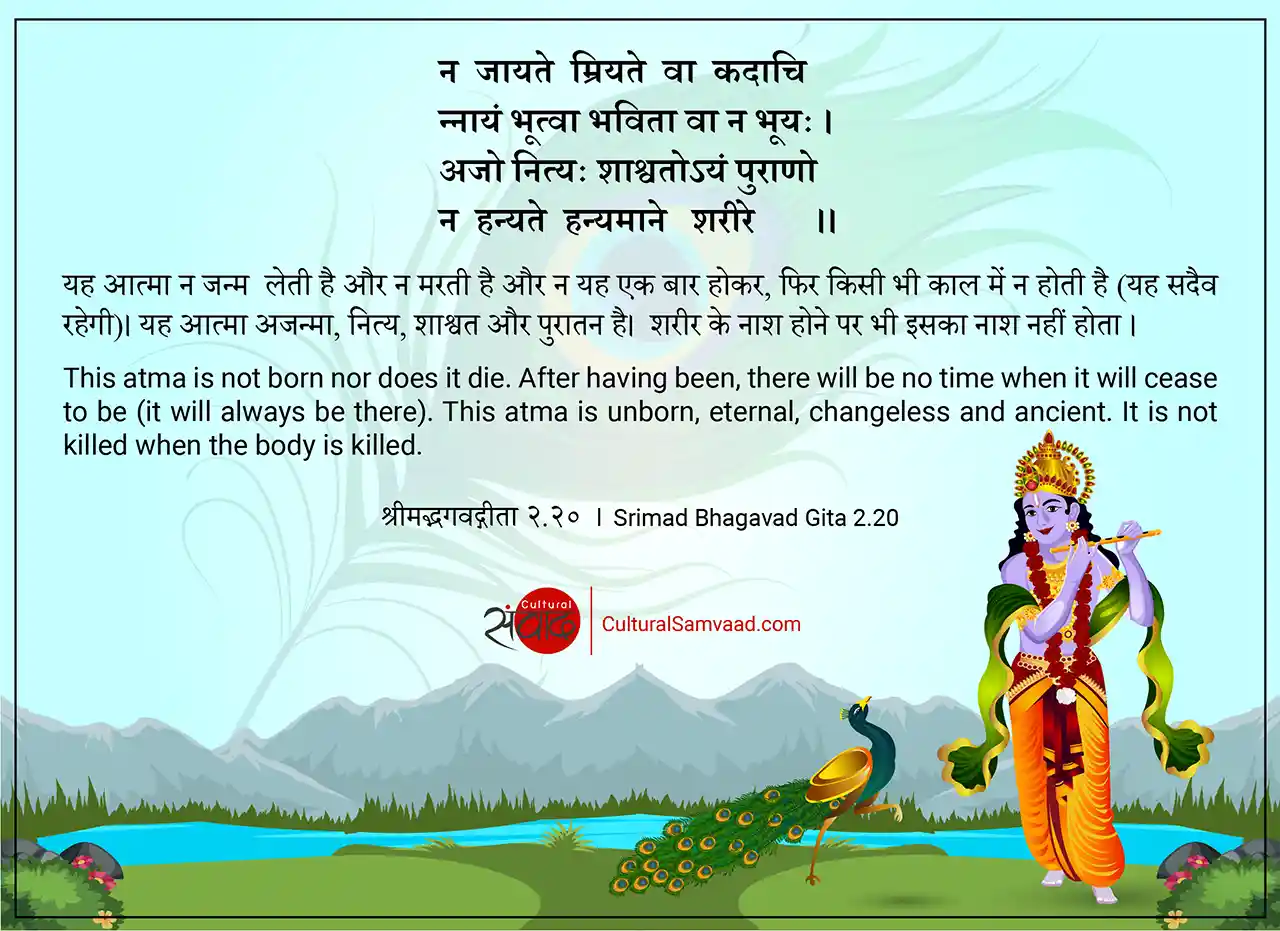
What is the nature of the Atma (आत्मा)?
श्रीमद्भगवद्गीता २.२० | Srimad Bhagavad Gita 2.20
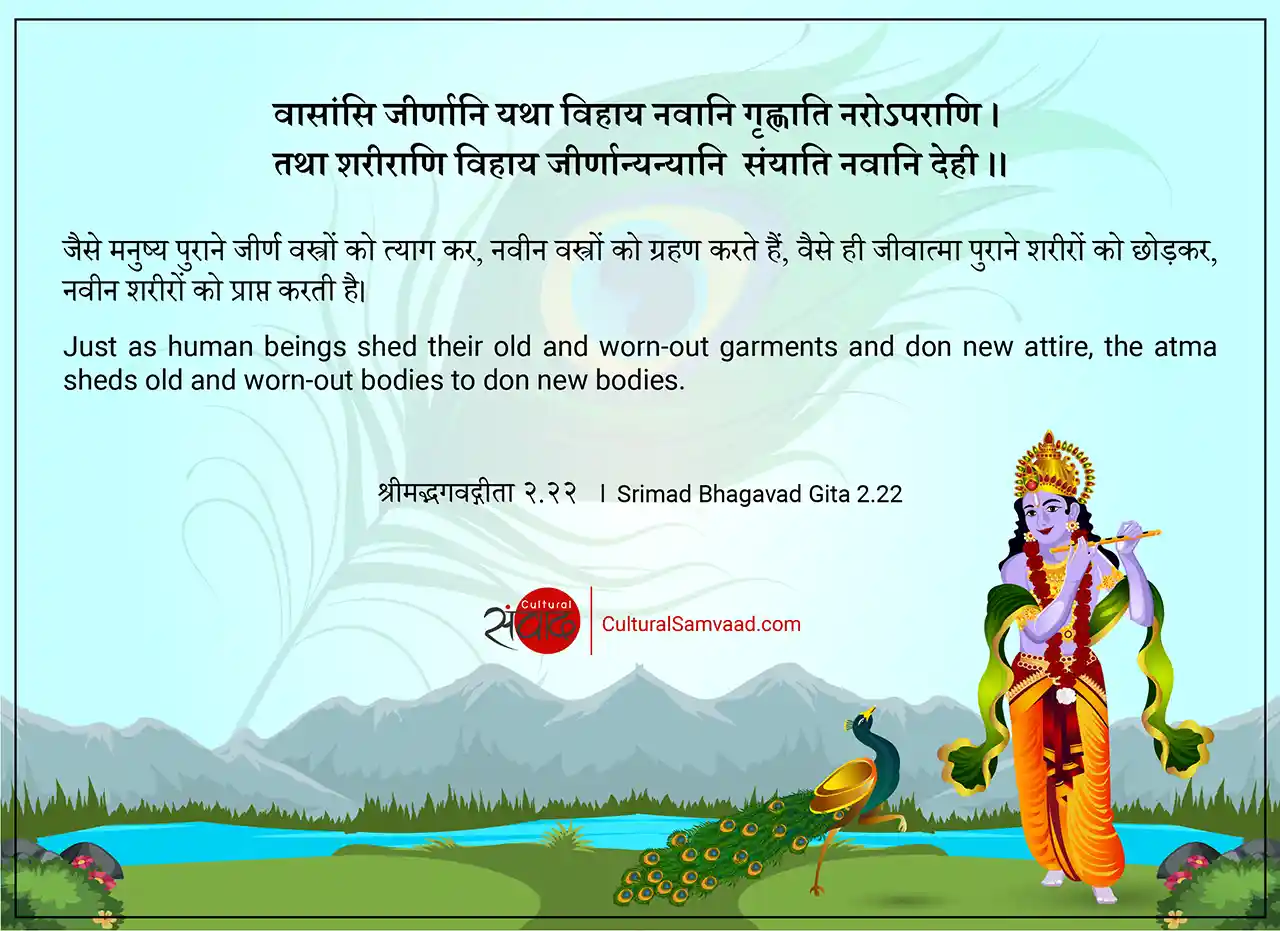
What is the nature of Death (मृत्यु) and Dying?
श्रीमद्भगवद्गीता २.२२ | Srimad Bhagavad Gita 2.22
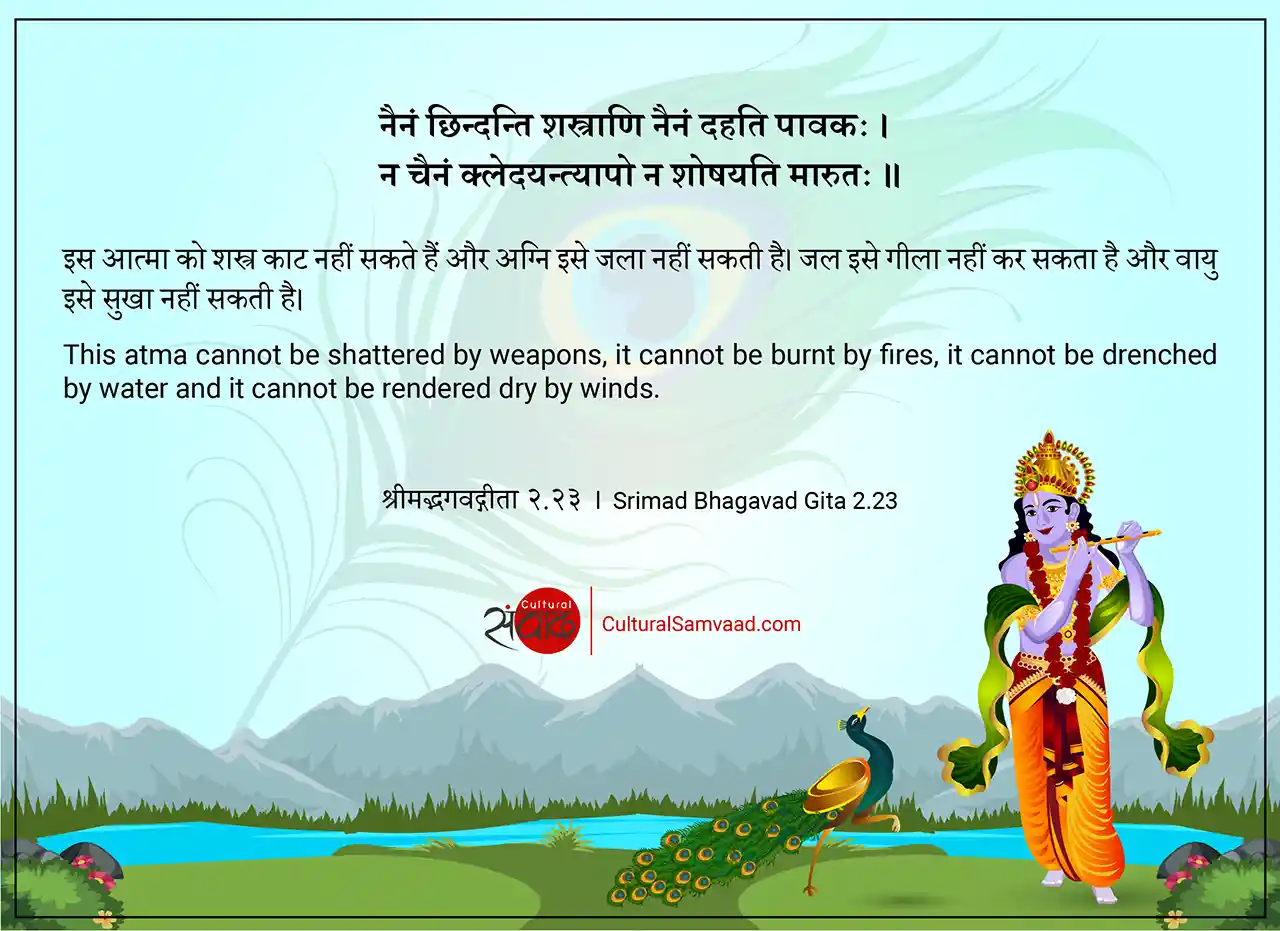
Can the atma (आत्मा) or Self be destroyed?
श्रीमद्भगवद्गीता २.२३ | Srimad Bhagavad Gita 2.23
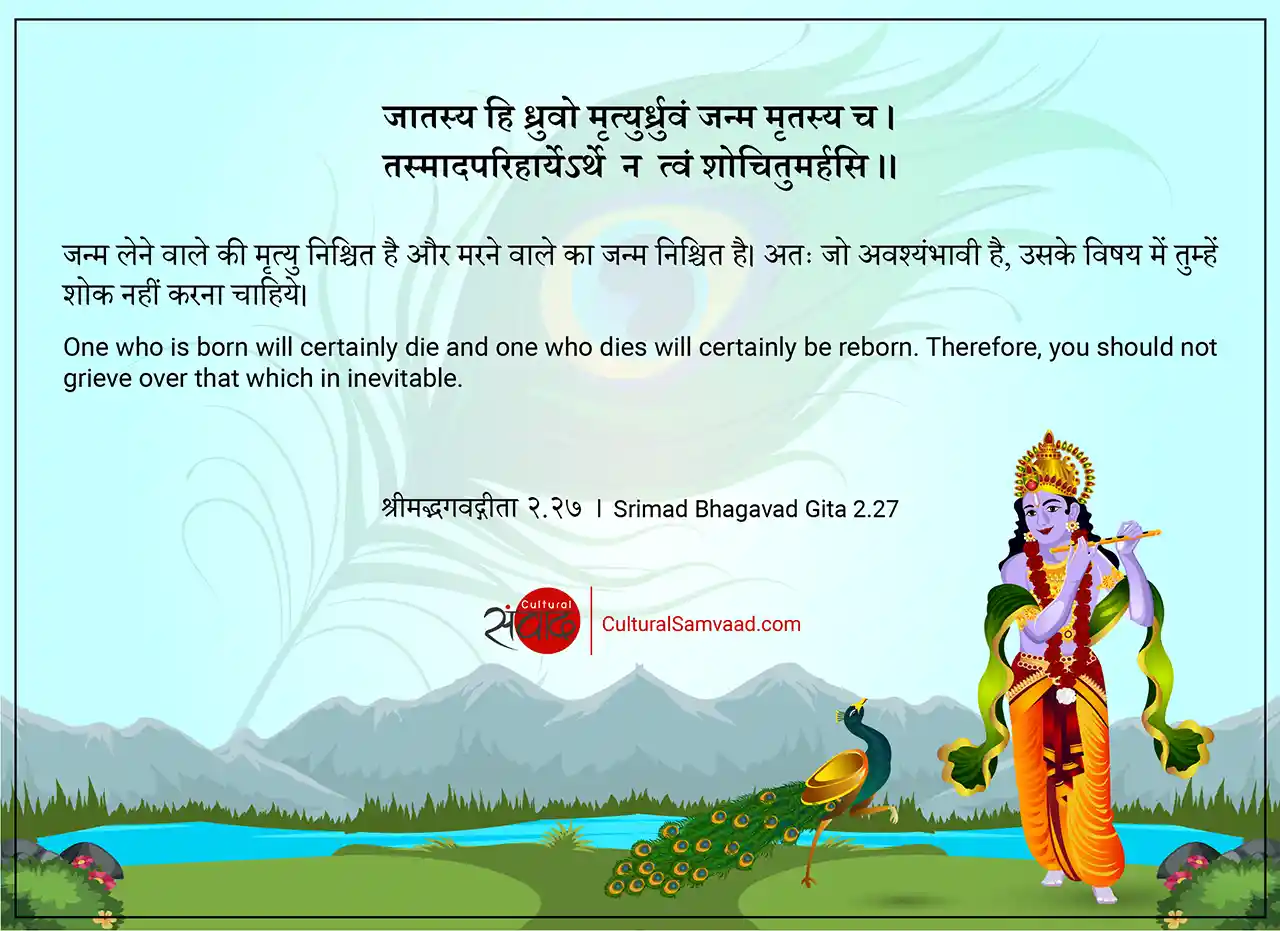
Can Death be conquered ?
श्रीमद्भगवद्गीता २.२७ | Srimad Bhagavad Gita 2.27
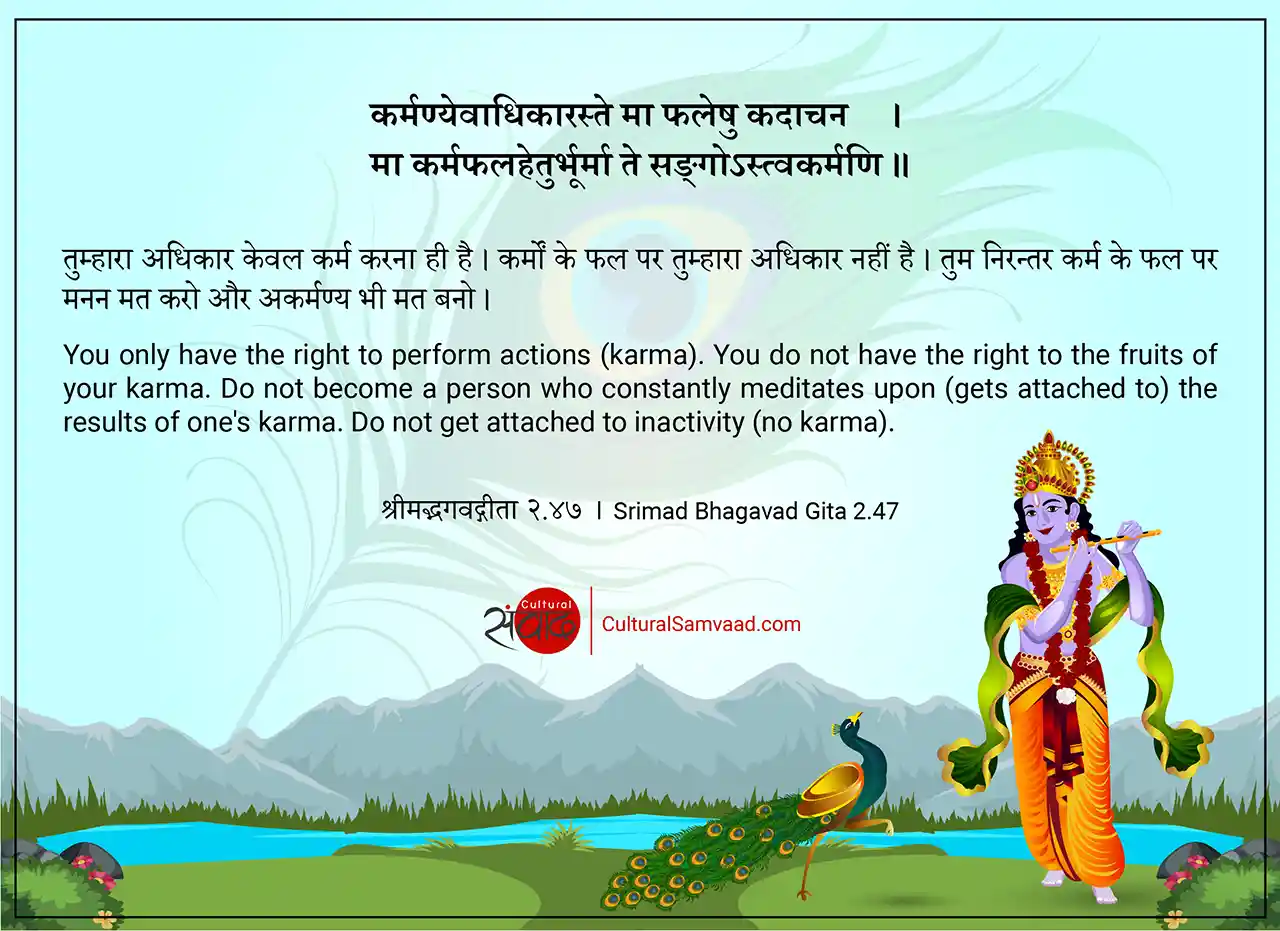
How do I practice Karma Yoga (कर्म योग) ? What is nishkama karma (निष्काम कर्म) ?
श्रीमद्भगवद्गीता २.४७ | Srimad Bhagavad Gita 2.47
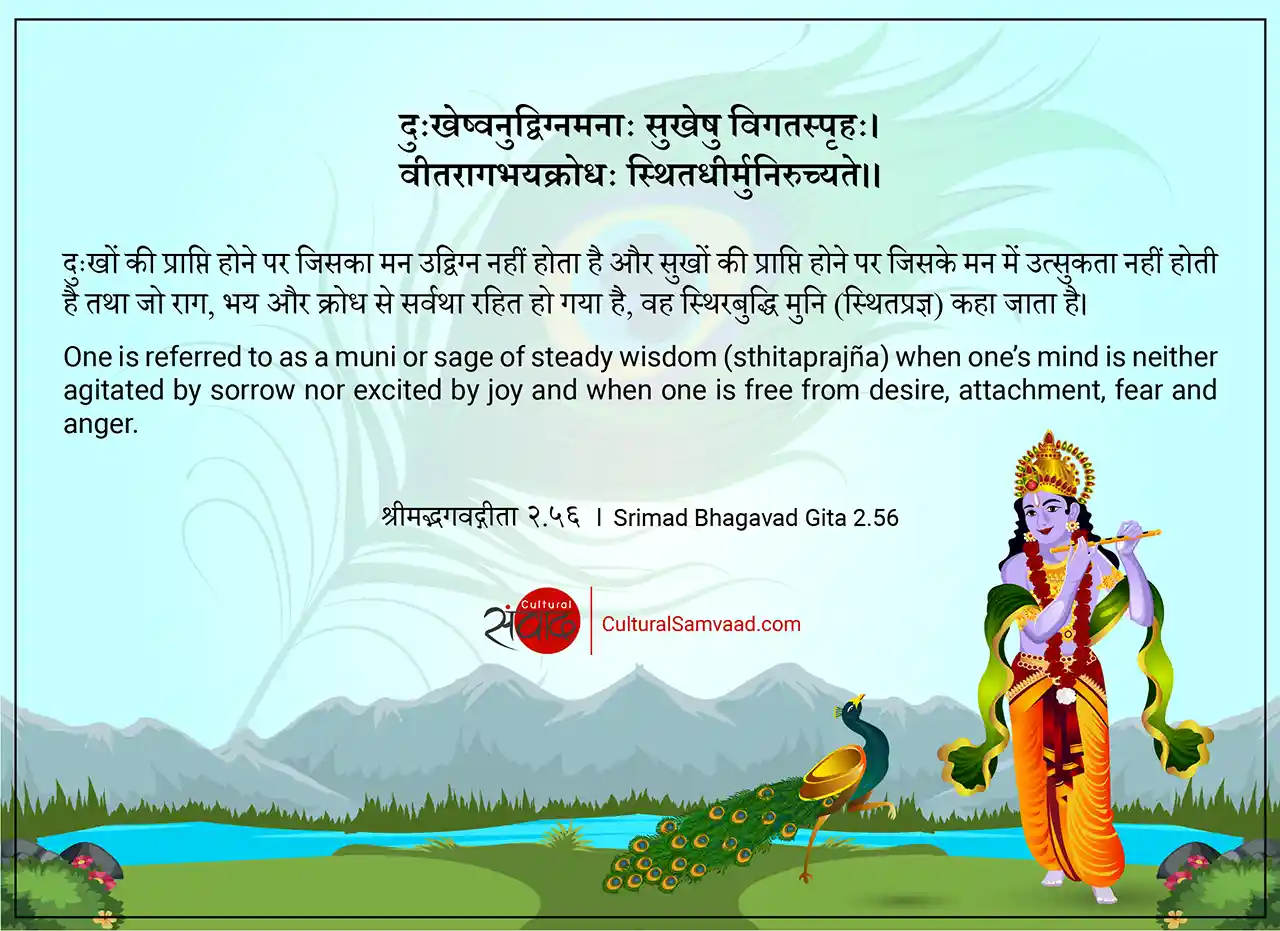
Who is a sage of steady wisdom (स्थितप्रज्ञ)?
श्रीमद्भगवद्गीता २.५६ | Srimad Bhagavad Gita 2.56
Why does the Supreme Being take avatar (अवतार)? How will Dharma (धर्म) conquer Adharma (अधर्म)?
श्रीमद्भगवद्गीता ४.७ & ४.८ | Srimad Bhagavad Gita 4.7 & 4.8
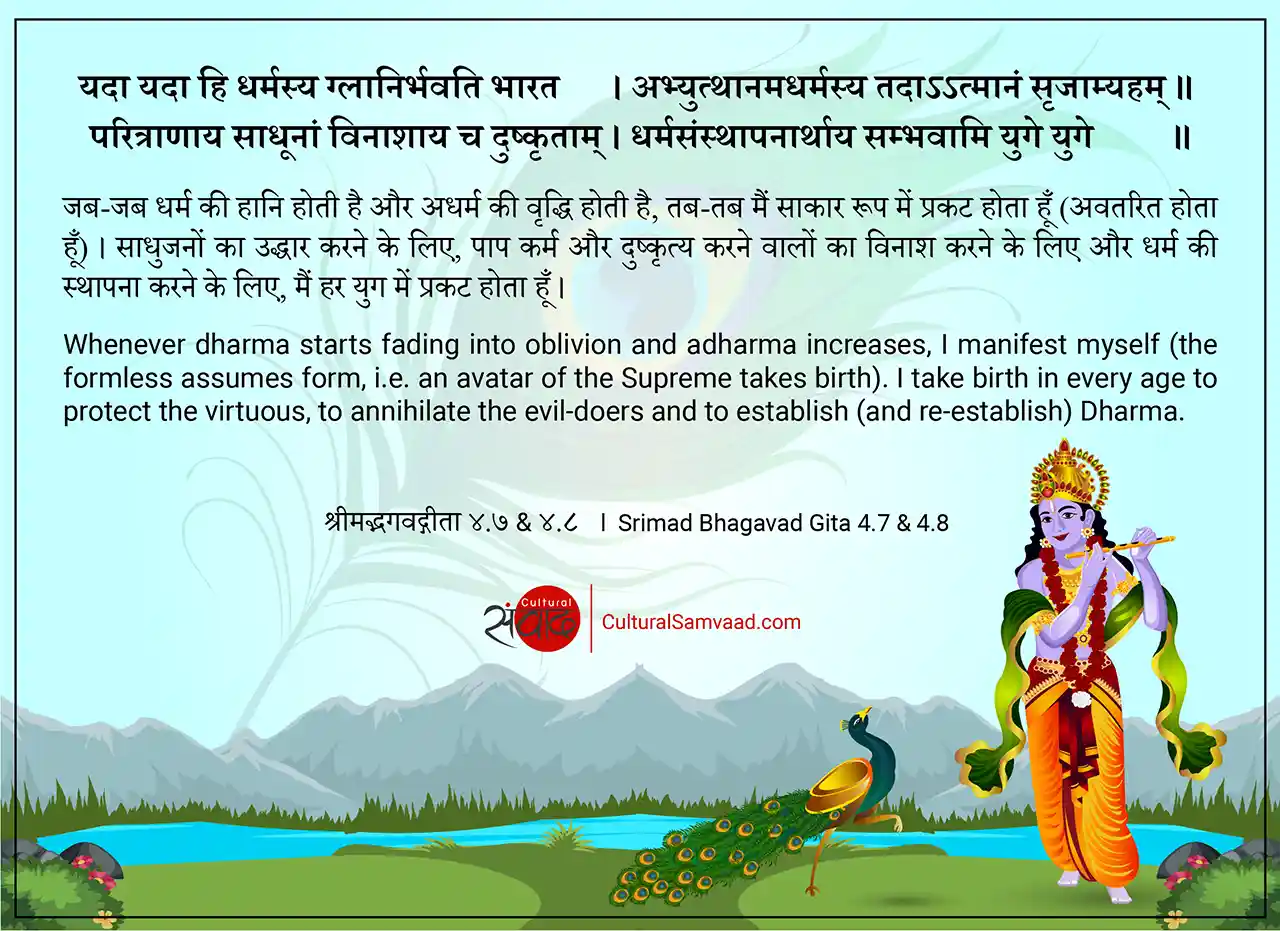
Should all human beings and living beings be treated as equal?
श्रीमद्भगवद्गीता ५.१८ | Srimad Bhagavad Gita 5.18
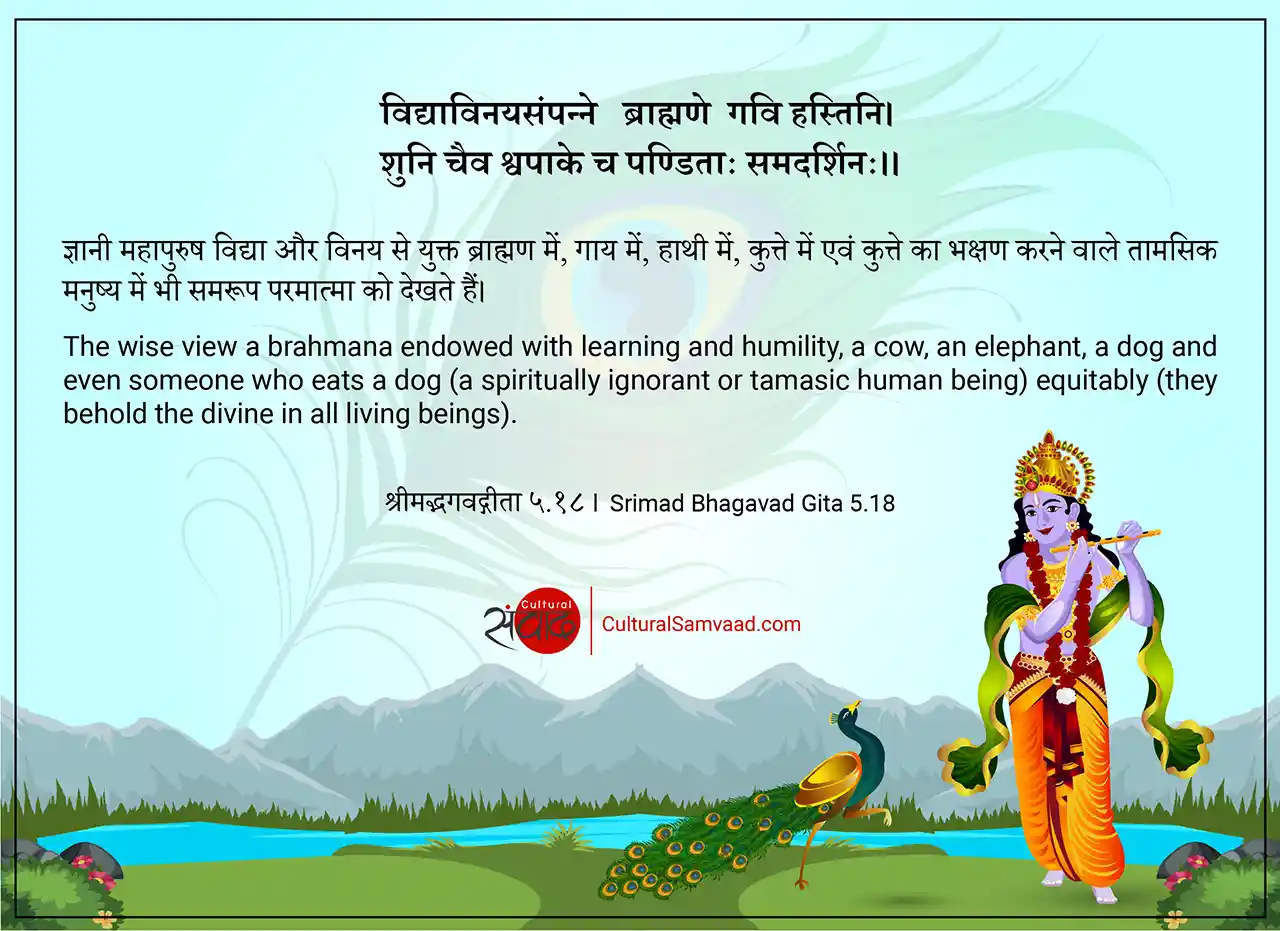
Who is our friend and our enemy both?
श्रीमद्भगवद्गीता ६.५ | Srimad Bhagavad Gita 6.5
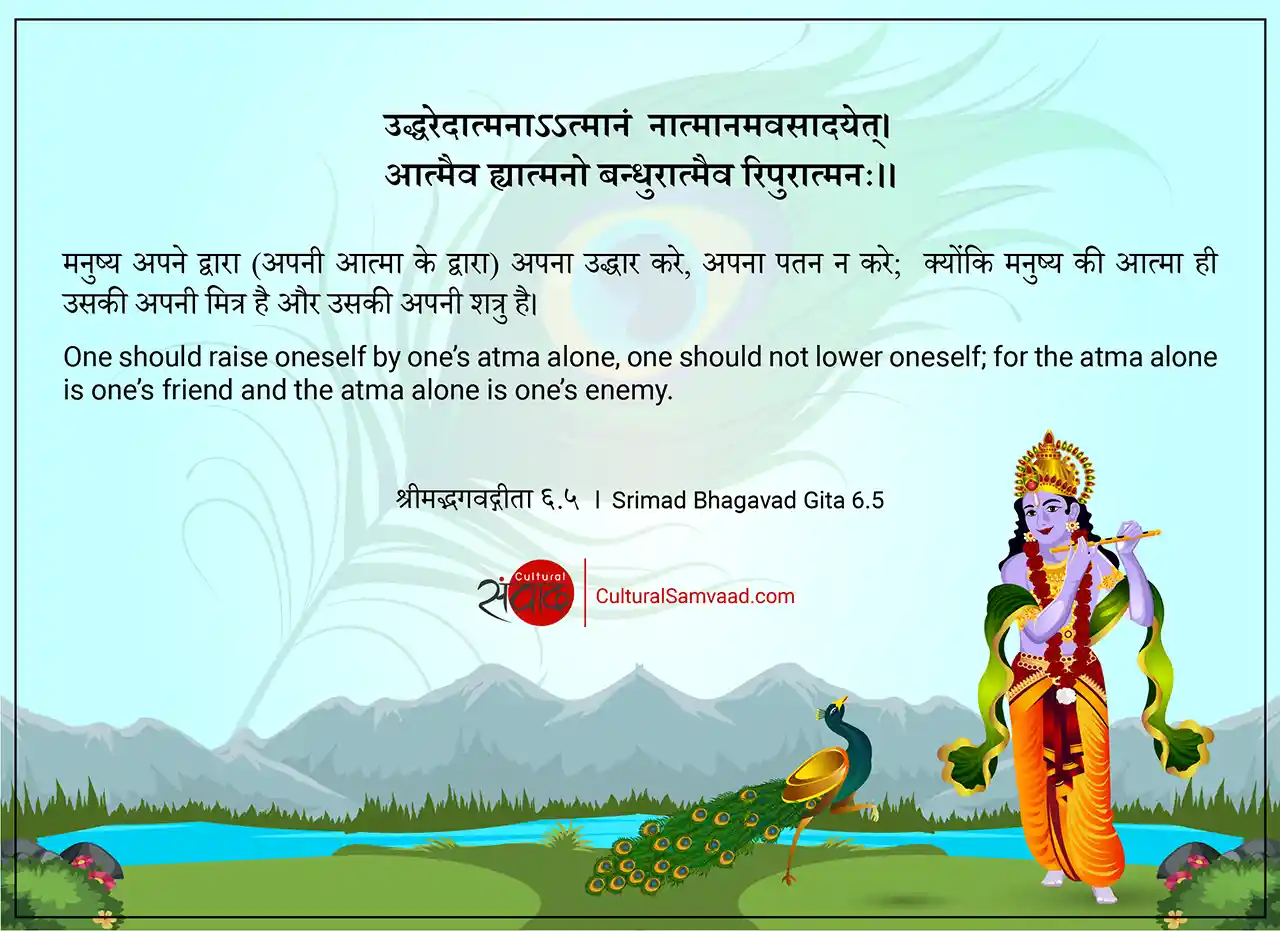
What is the importance of leading a moderate and balanced life?
श्रीमद्भगवद्गीता ६.१७ | Srimad Bhagavad Gita 6.17
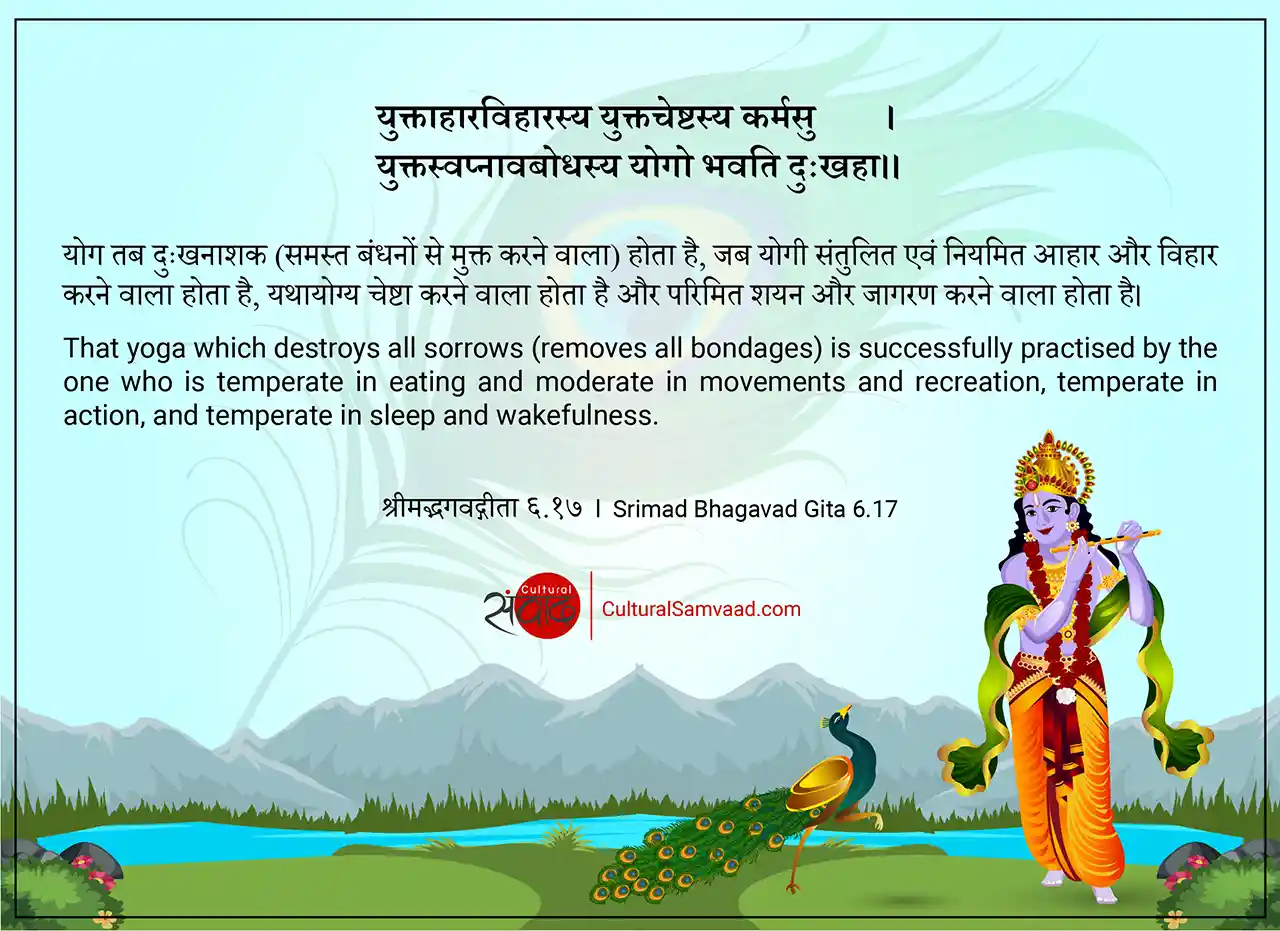
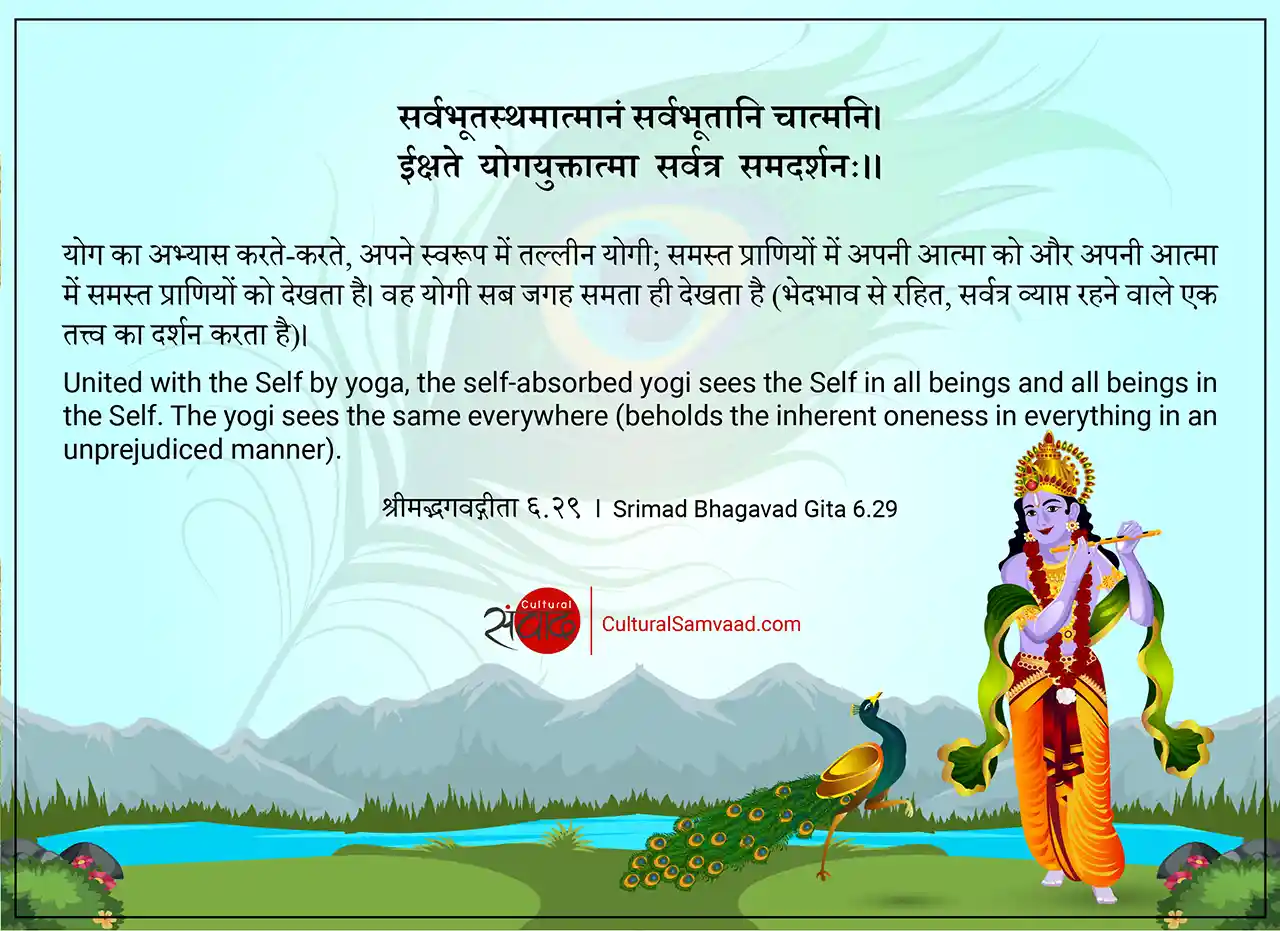
What is realisation? How does one rise above prejudices?
श्रीमद्भगवद्गीता ६.२९ | Srimad Bhagavad Gita 6.29
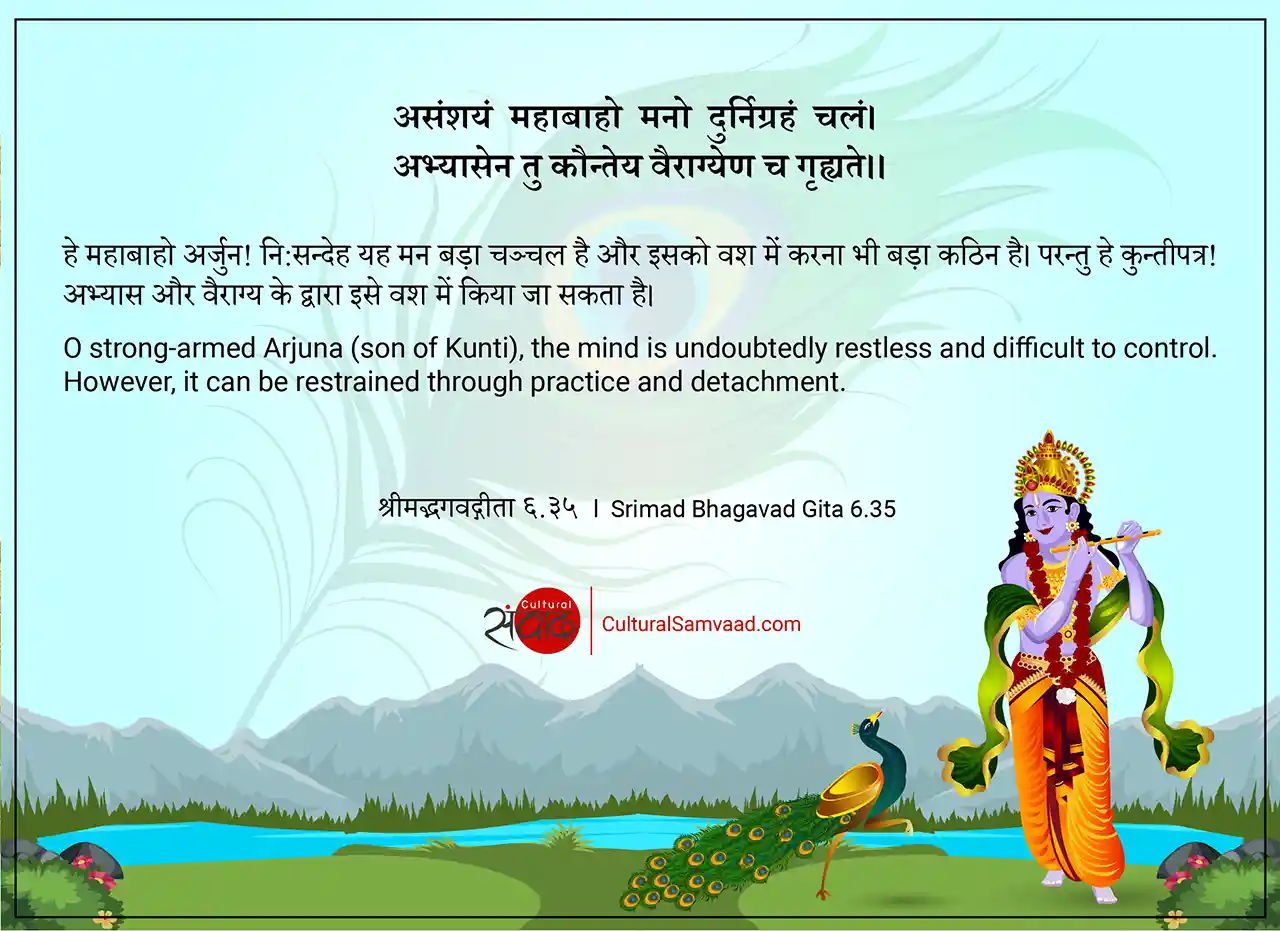
How can the mind be controlled?
श्रीमद्भगवद्गीता ६.३५ | Srimad Bhagavad Gita 6.35
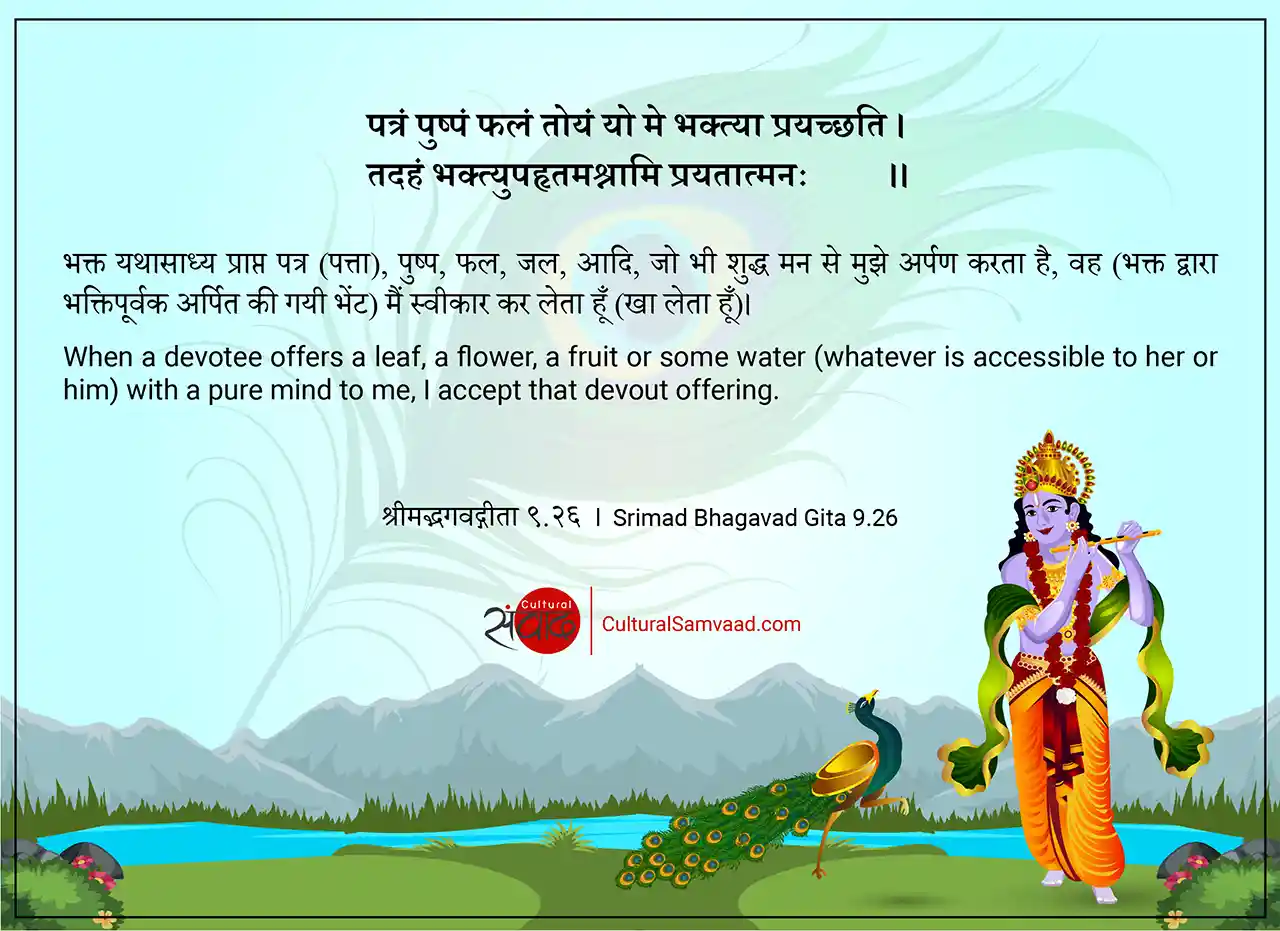
What gifts or offerings (चढ़ावा) will please Bhagawan (भगवान) or the Supreme God?
श्रीमद्भगवद्गीता ९.२६ | Srimad Bhagavad Gita 9.26
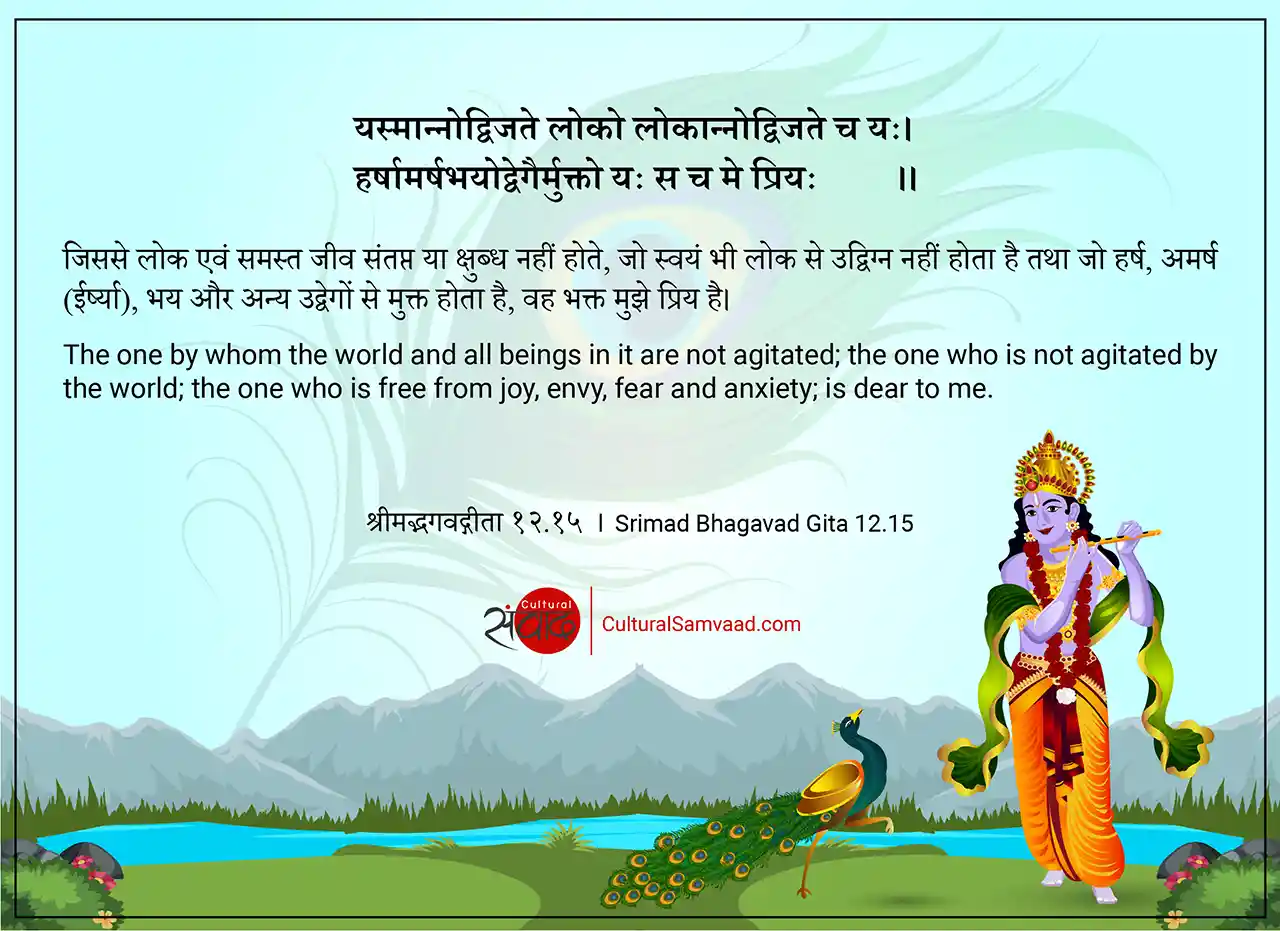
What are the characteristics of an ideal Bhakta (भक्त) and Yogi (योगी) ?
श्रीमद्भगवद्गीता १२.१५ | Srimad Bhagavad Gita 12.15
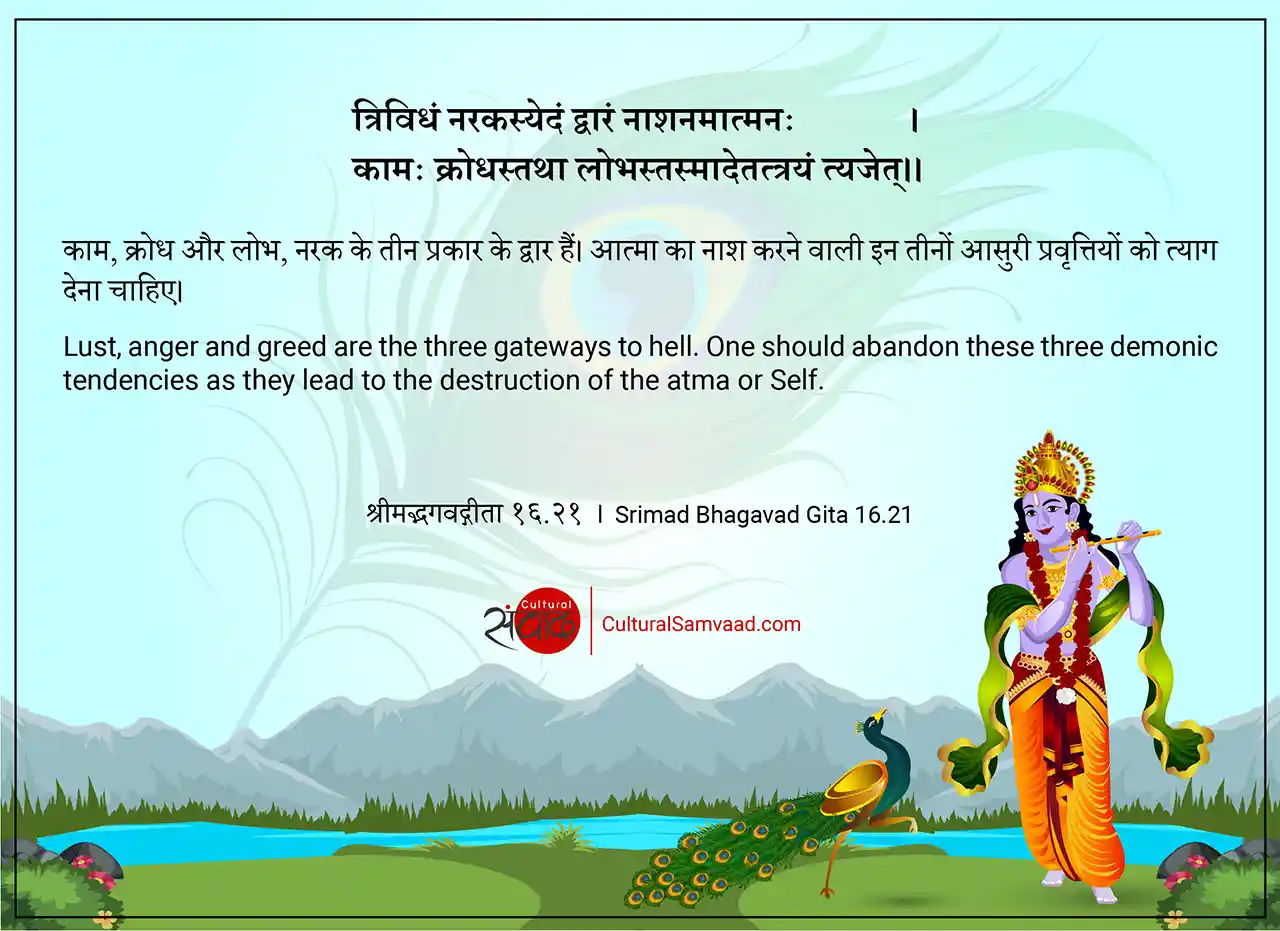
What tendencies should human beings avoid to stop becoming demons?
श्रीमद्भगवद्गीता १६.२१ | Srimad Bhagavad Gita 16.21
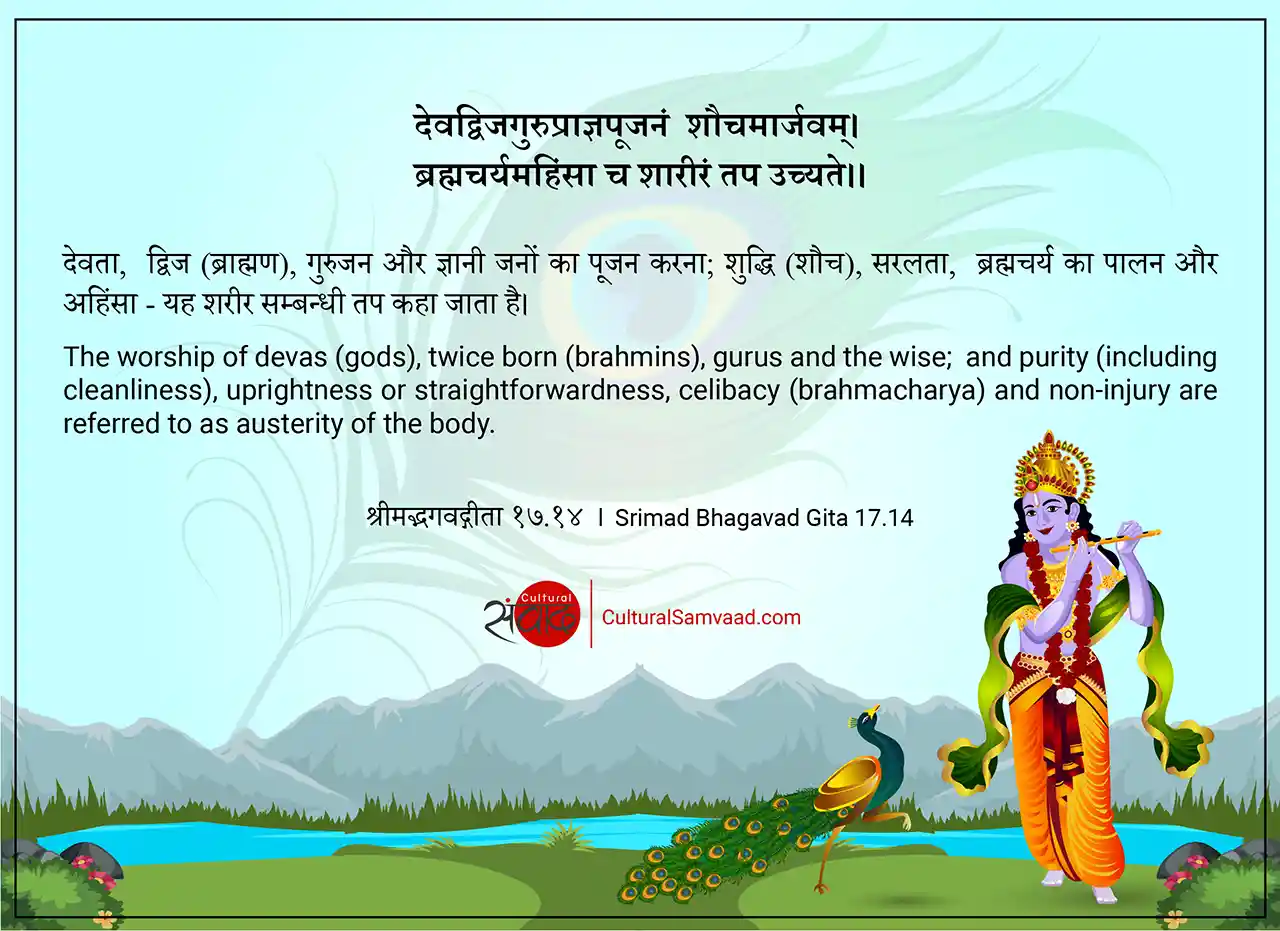
What is austerity of the body (शरीर सम्बन्धी तप)?
श्रीमद्भगवद्गीता १७.१४ | Srimad Bhagavad Gita 17.14
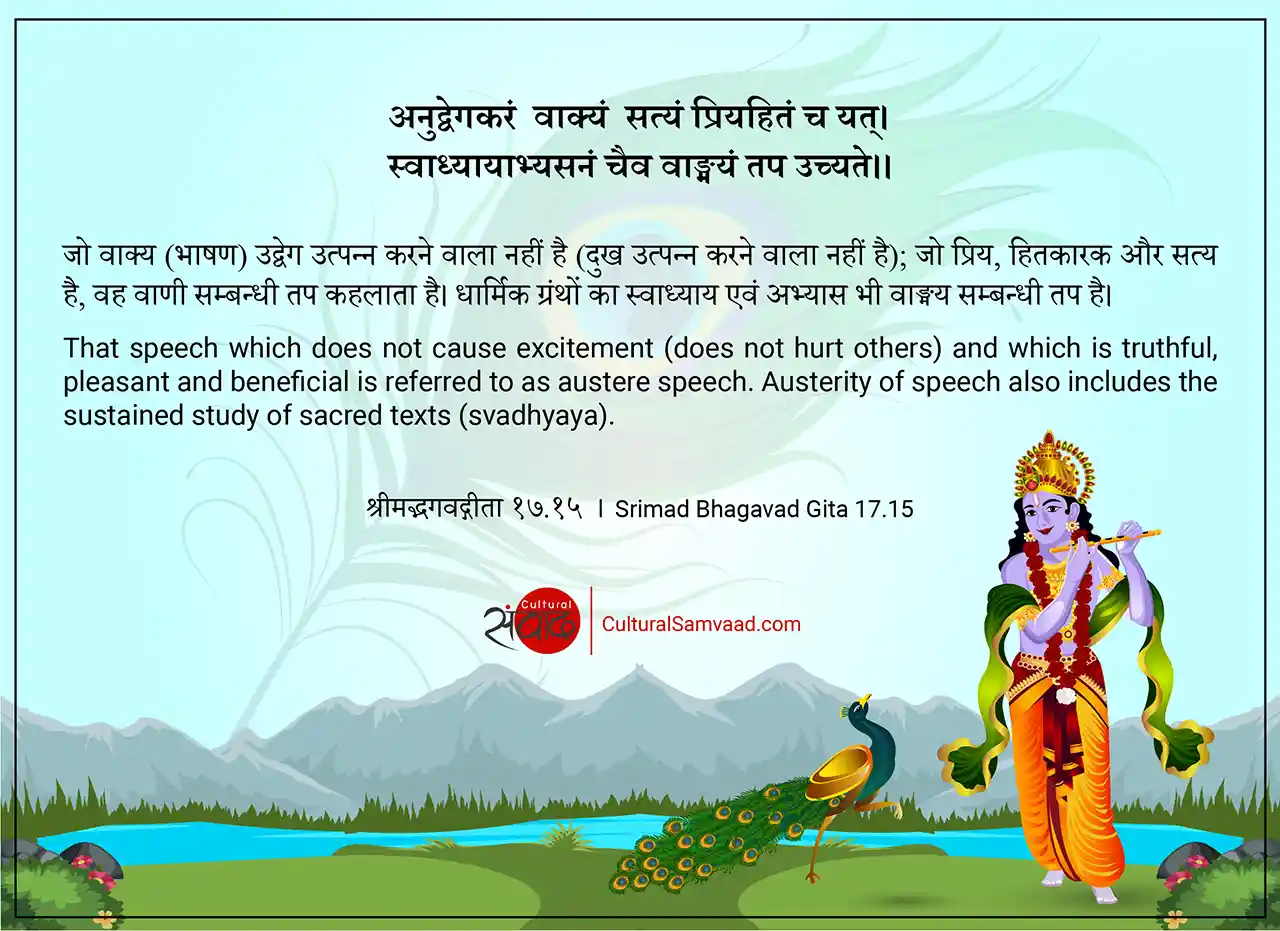
What is austerity of speech (वाणी सम्बन्धी तप)?
श्रीमद्भगवद्गीता १७.१५ | Srimad Bhagavad Gita 17.15
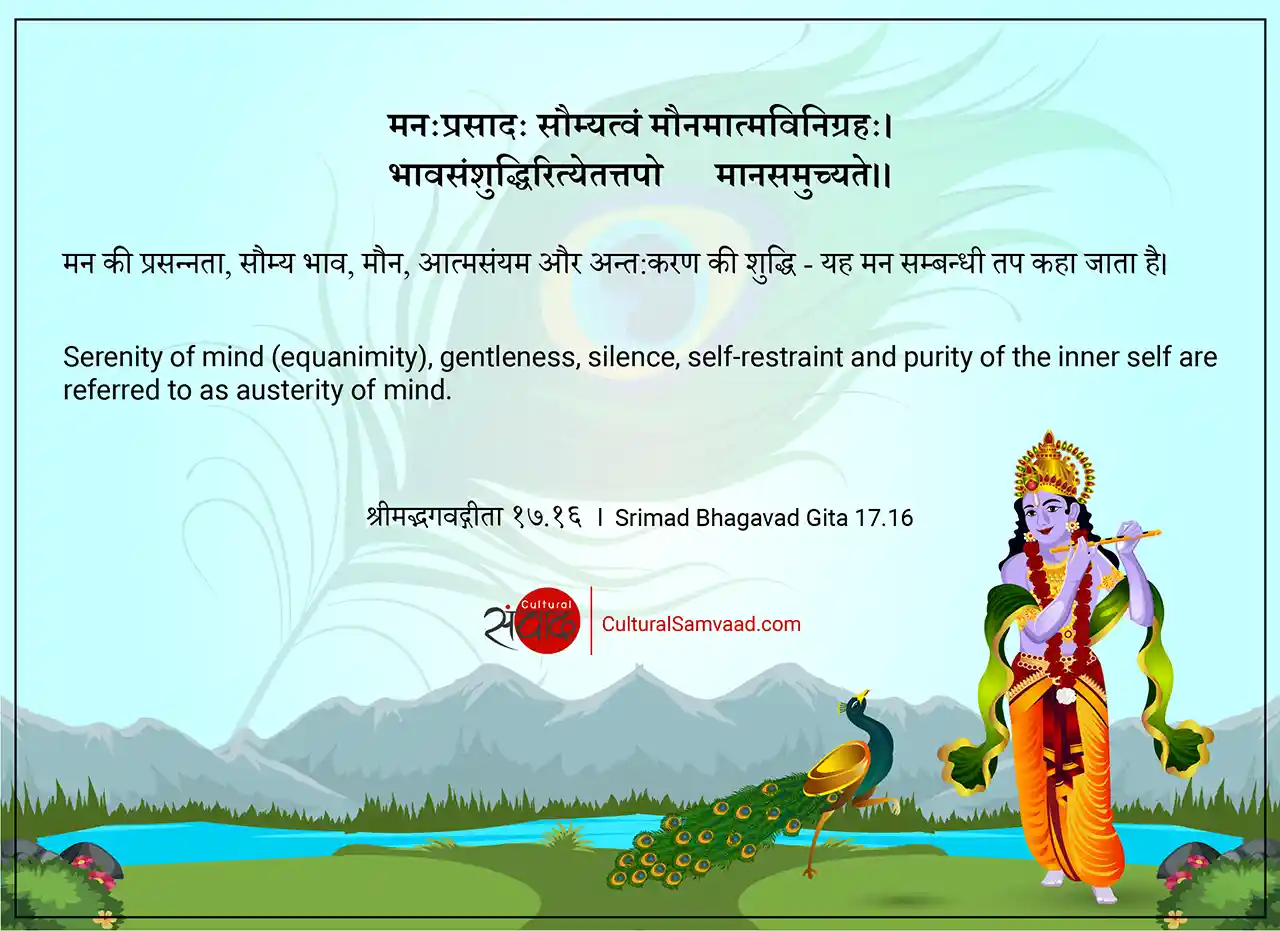
What is austerity of mind (मन सम्बन्धी तप)?
श्रीमद्भगवद्गीता १७.१६ | Srimad Bhagavad Gita 17.16
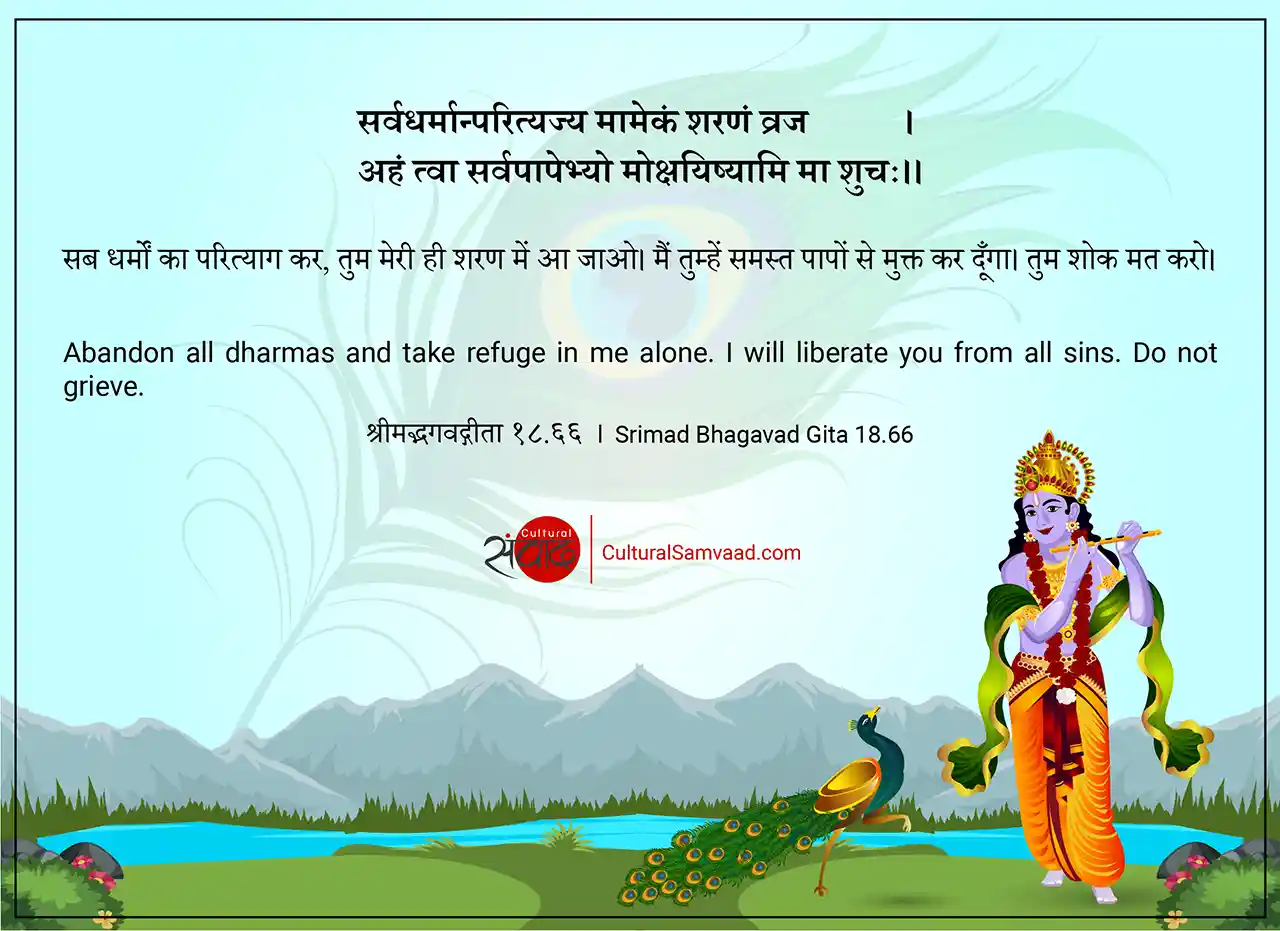
What should the confused, tired and grieving devotee (भक्त) do?
श्रीमद्भगवद्गीता १८.६६ | Srimad Bhagavad Gita 18.66
Notes on Life and Leadership from the Bhagavad Gita

Garima jee,
Your introduction reveals that you are multitasking entity. Appreciate your passion for understanding /serving Indian culture /religion. Sanatan Dharmavalambiyo ki jai ho . People like you deserve sadhuvad/dhanyawad. Your zeal to serve would be your satisfaction and true paramount achievement.
Thanks
Arvind Bhargava , Katni, MP
Please improve color combination. UX>>UI
Purple bf and small fonts don’t do justice to a very nice effort