

Join Cultural Samvaad’s WhatsApp Community
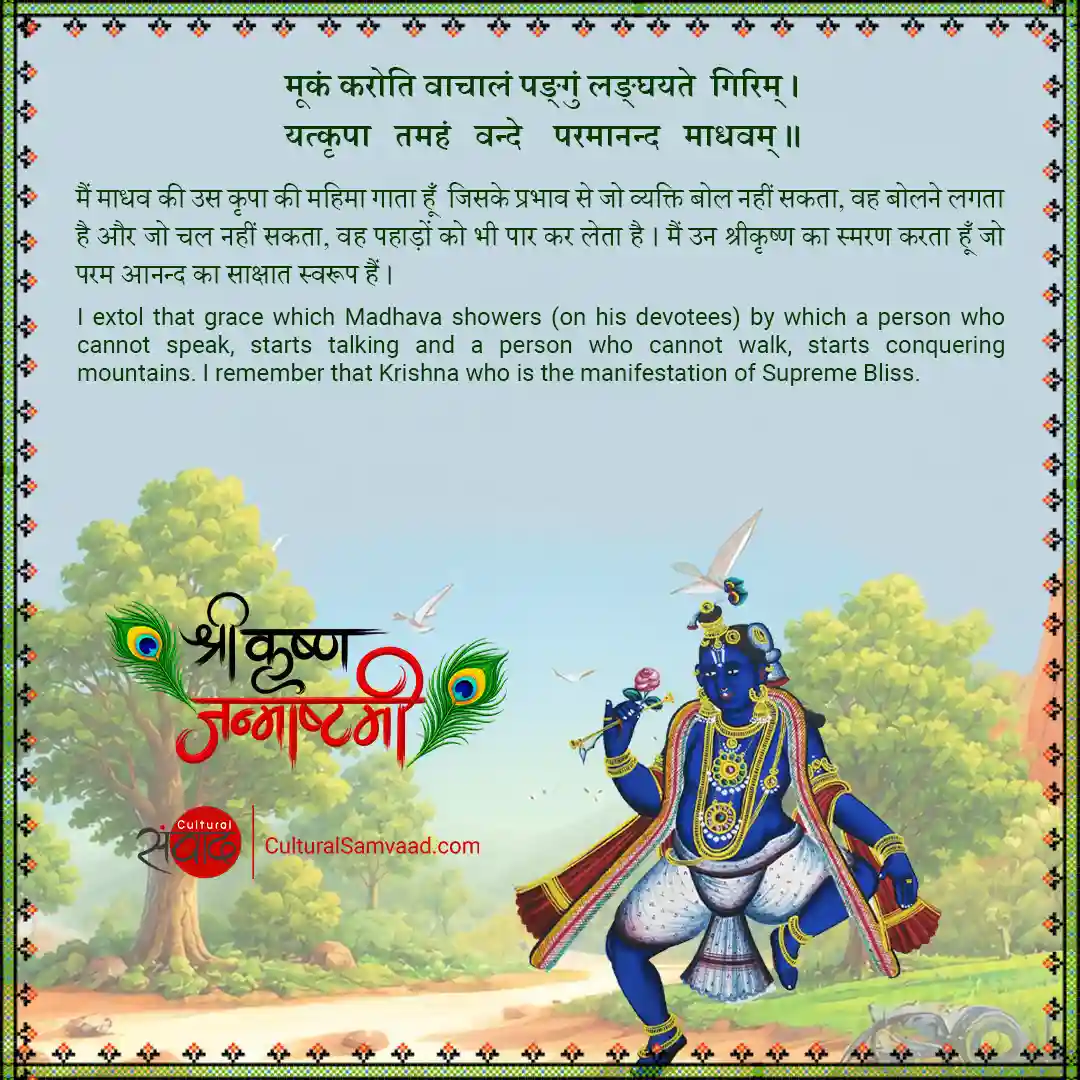
Krishna is the Supreme Bliss – मूकं करोति वाचालं – Sanskrit Quote for Janmashtami
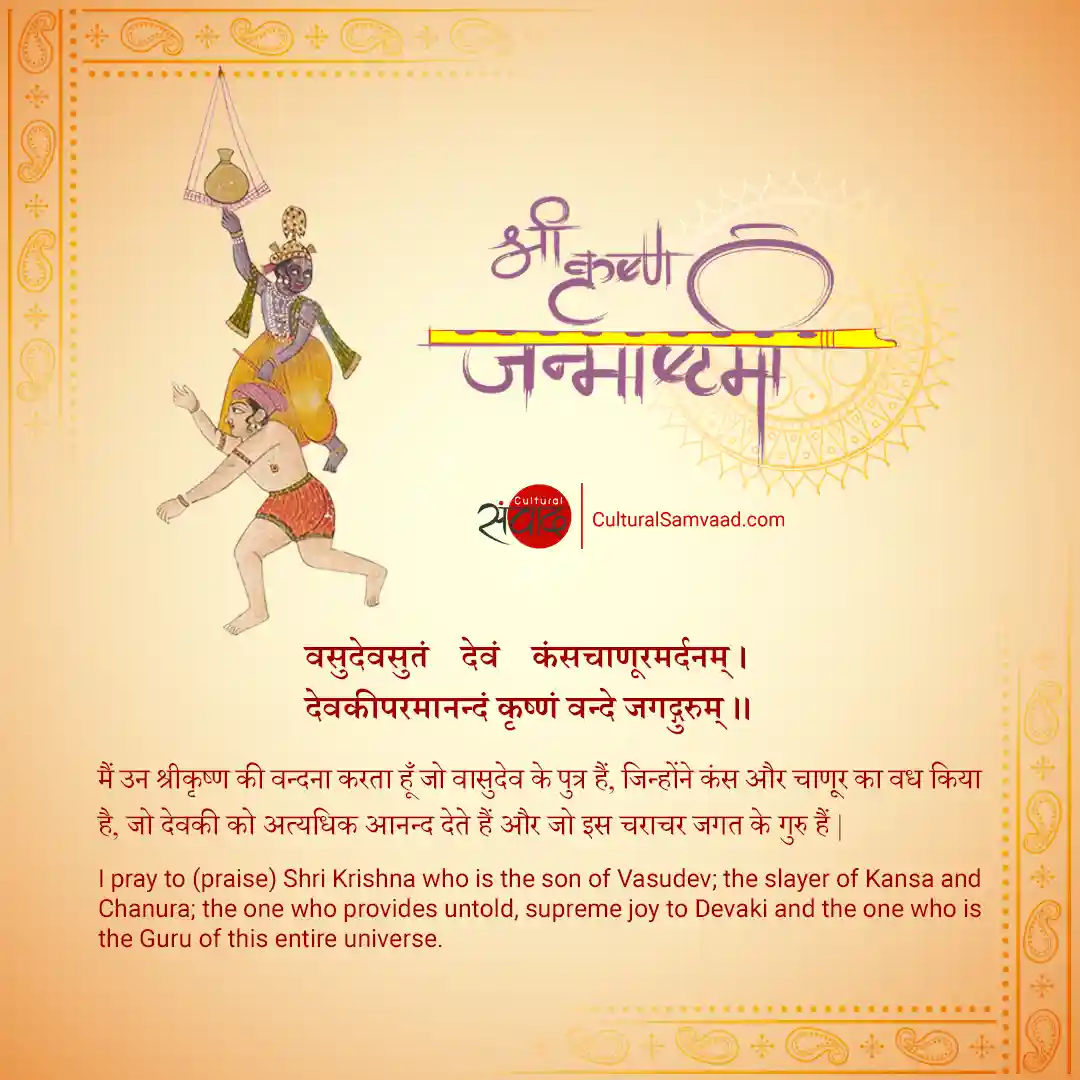
Krishna as the Guru of the Universe – वसुदेवसुतं देवं कंसचाणूरमर्दनम् – Famous Sanskrit Shloka for Janmashtami
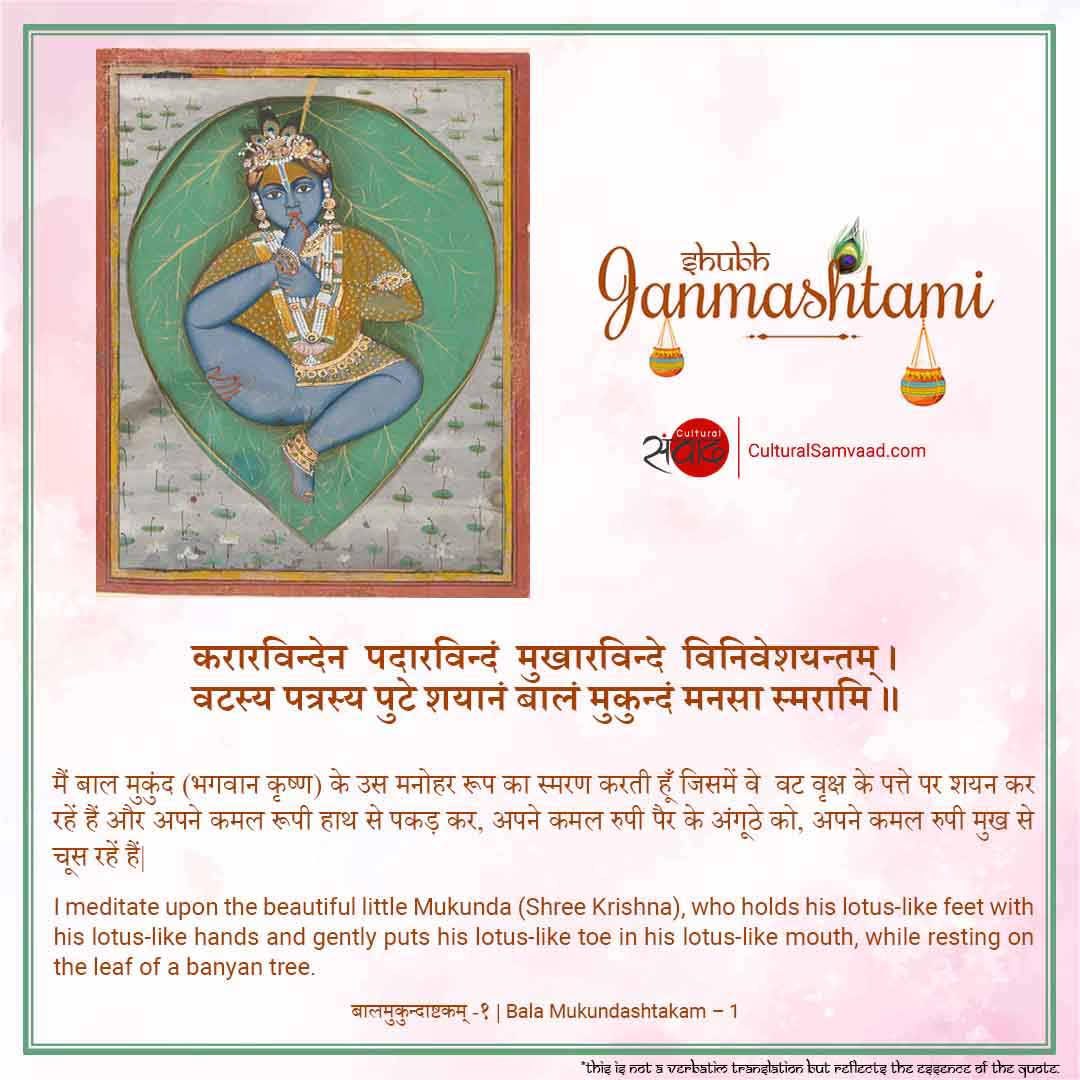
Baby Krishna on a Banyan Leaf (Vattapatrashayi) – करारविन्देन पदारविन्दं – Sanskrit Shloka for Janmashtami from Bala Mukundashtakam
Who is Krishna?
Krishna (कृष्ण) is the darling deity of the Hindus. Considered to be a perfect manifestation (पूर्ण अवतार) of Vishnu, he is worshipped in multifarious forms – as a young child or Balagopal, as He who loves butter or Makhanchor, as He who melodiously plays the flute, as Radha’s eternal companion, as He who is the favourite of all Gopis, as He who annihilates demons, as He who gave us the Bhagavad Gita and as He who is the King of Dwarka.
Read Popular Shlokas from the Bhagavad Gita with Meanings in English and Hindi
When and why is Janmashtami celebrated?
Janmashtami is celebrated to commemorate Krishna’s birth on the eighth (ashtami) day of the dark fortnight of the month of Bhadrapada (August–September). He was born in a prison in Mathura as the eighth child of Devki and Vasudeva and brought up by Yashoda and Nanda in Vrindavan.
Team Cultural Samvaad has put together some of the most famous shlokas in Sanskrit in honour of Shri Krishna with meanings in English and Hindi.
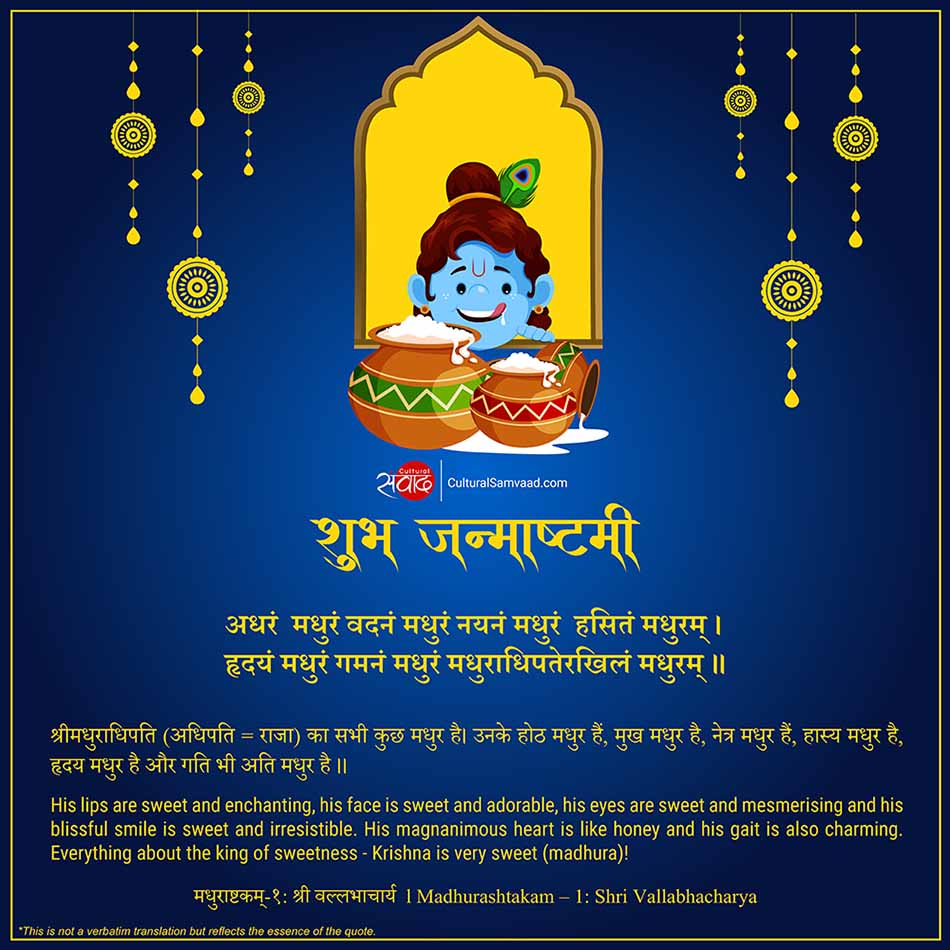
Krishna is the epitome of sweetness – अधरं मधुरं वदनं मधुरं – Sanskrit Shloka for Janmashtami from Madhurashtakam
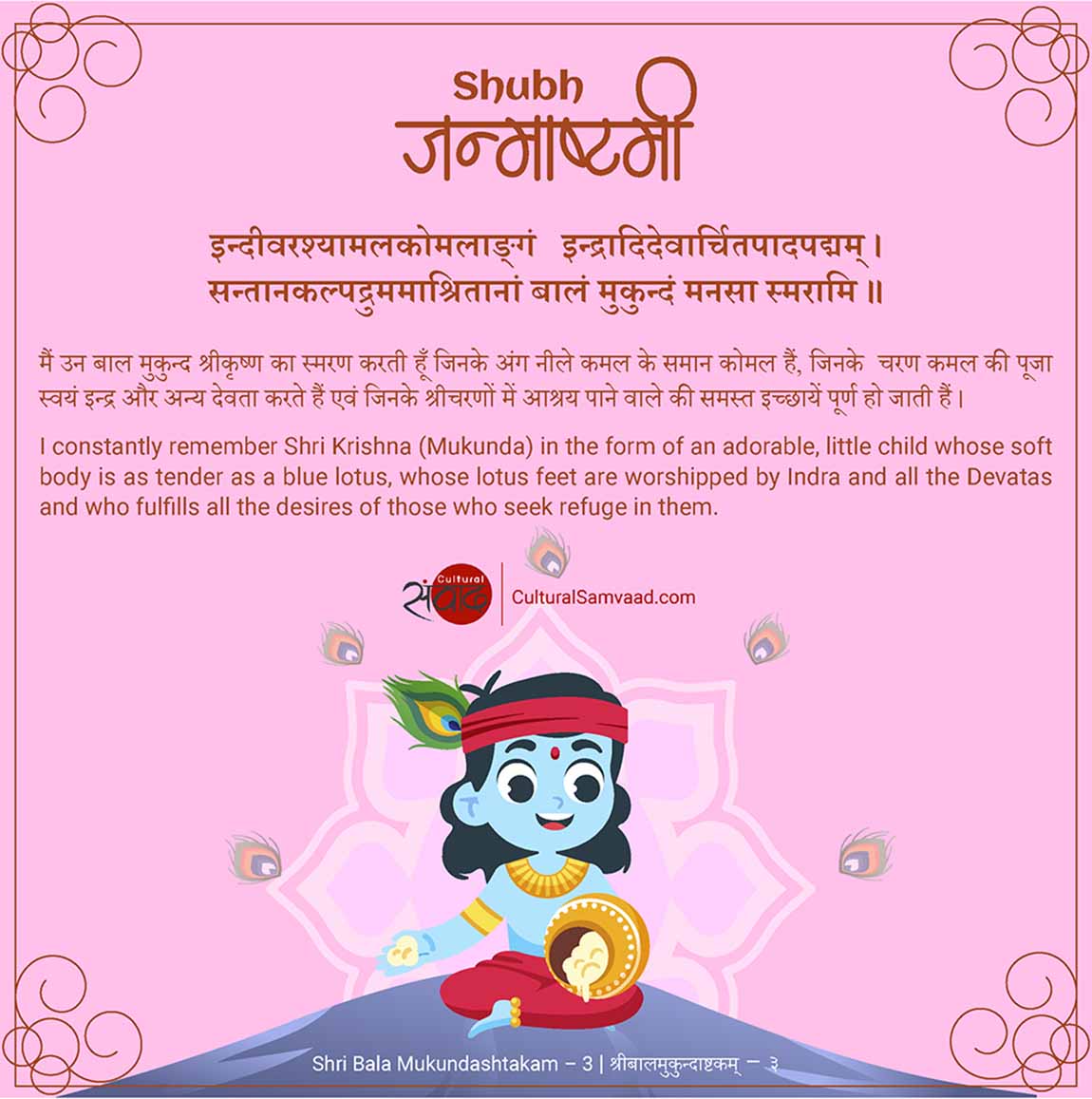
Makhanchora Bala Gopal – Sanskrit Wishes for Krishna Janmashtami from Bala Mukundashtakam – बालं मुकुन्दं मनसा स्मरामि
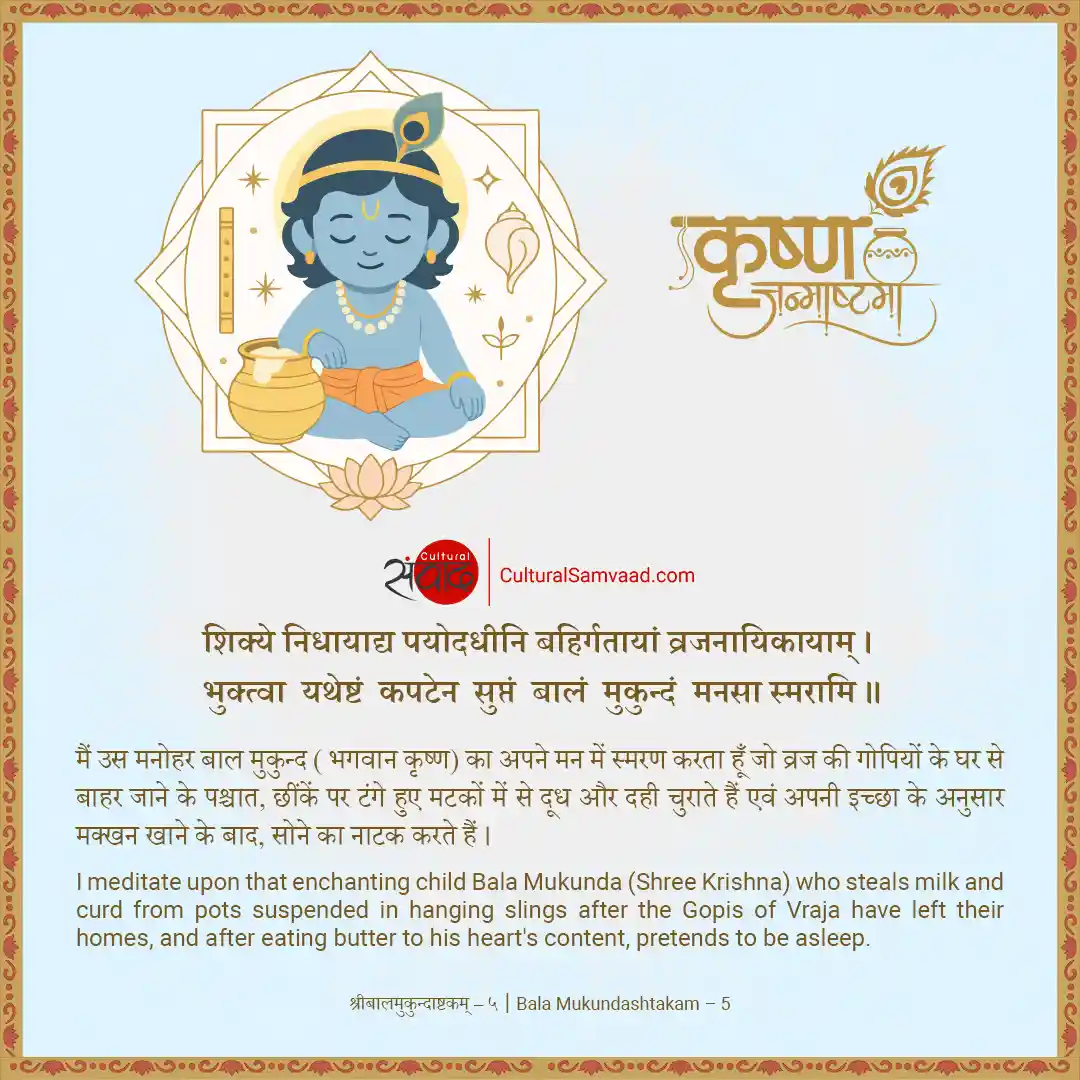
Makhanchora Bala Gopal – Sanskrit Greeting for Krishna Janmashtami from Bala Mukundashtakam
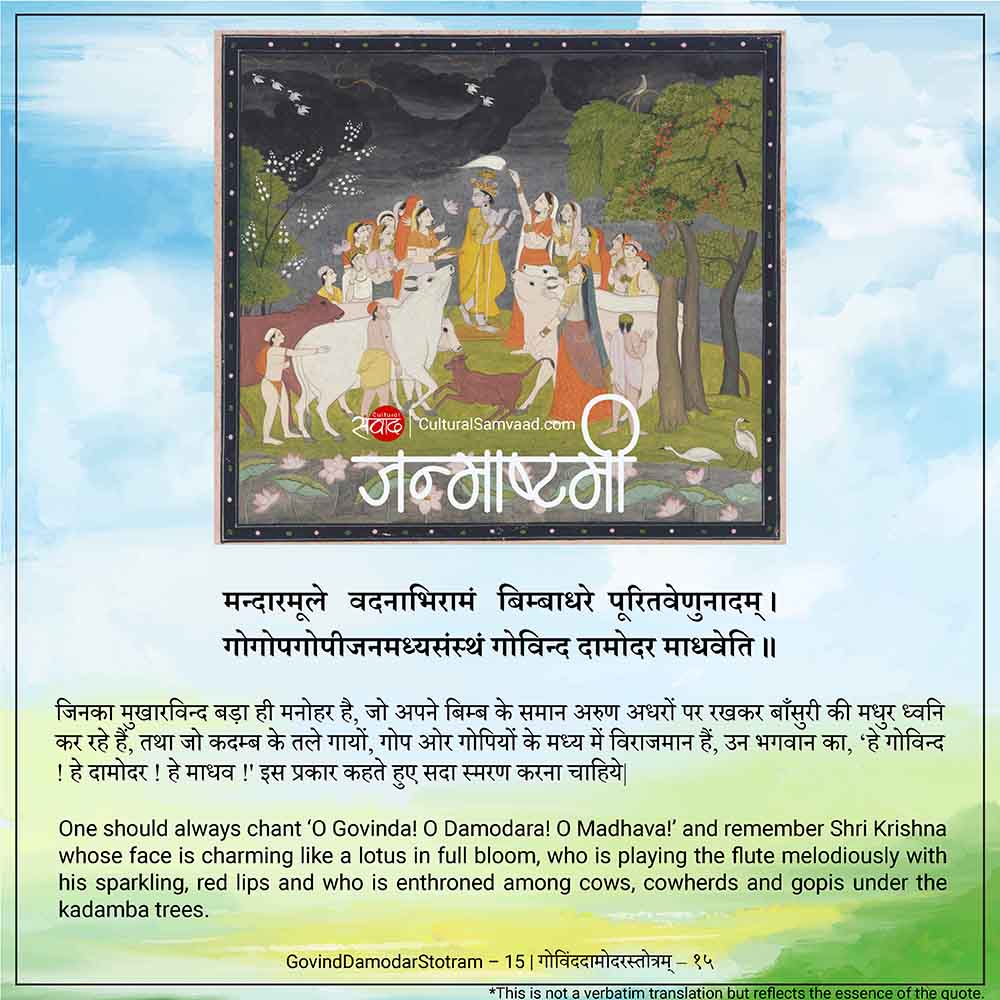
Krishna and the Gopis – मन्दारमूले वदनाभिरामं – Sanskrit Greeting for Janmashtami
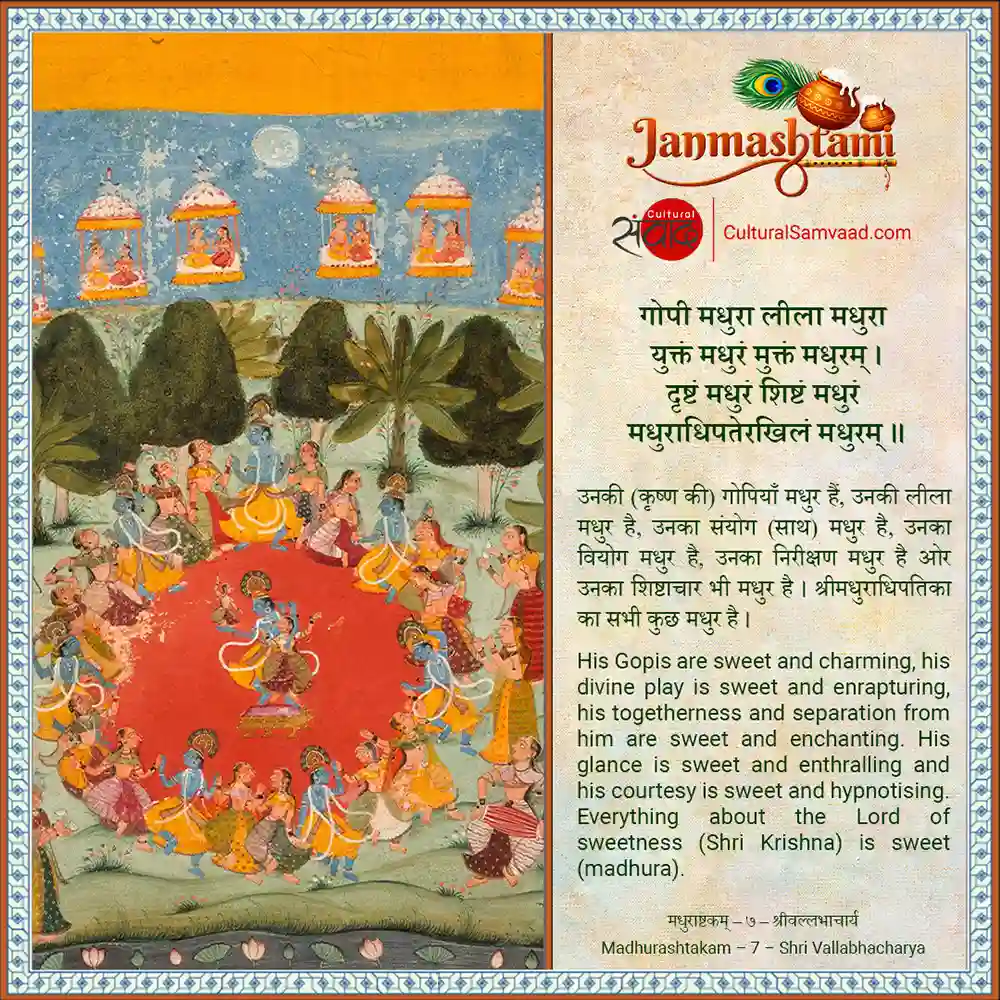
Krishna and the Gopis – गोपी मधुरा लीला मधुरा – Sanskrit Greeting for Janmashtami from Madhurashtakam
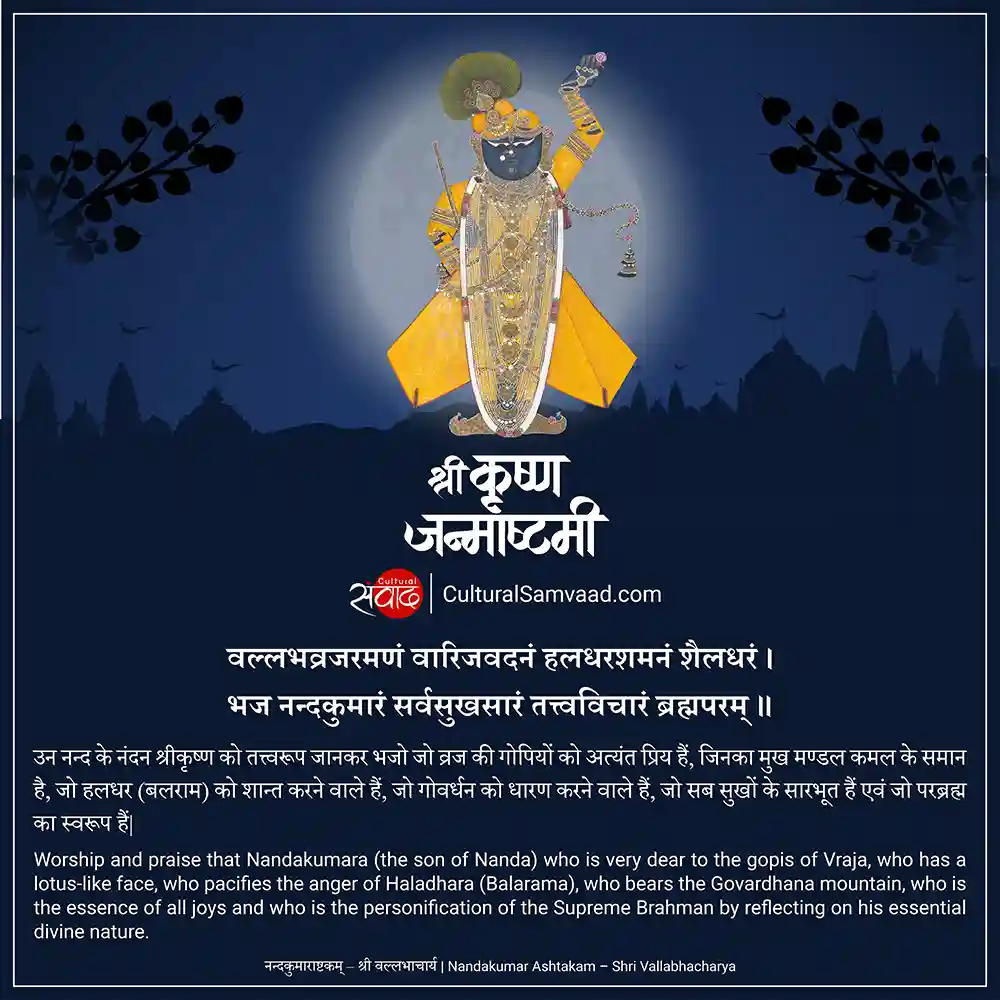
 Shrinathji – वल्लभव्रजरमणं वारिजवदनं – Sanskrit Greeting for Janmashtami from Nandakumar Ashtakam
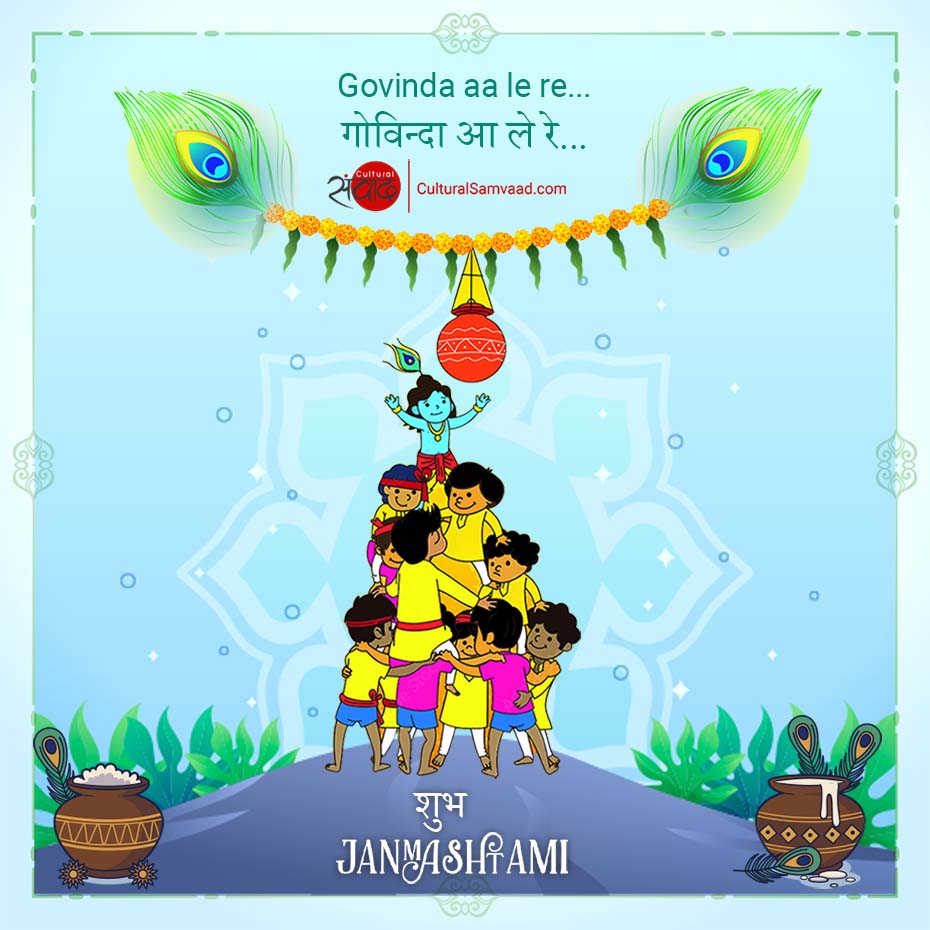
 Govinda aa le re – गोविन्दा आ ले re

Add comment