


Join Cultural Samvaad’s WhatsApp Community
Krishna is considered to be the eighth among the ten most important avatars of Vishnu. His story is narrated in many Puranas and also in the Harivamsa which is a part of the Mahabharata.
Story of Krishna’s Birth
Long, long ago, in the Dvapara Yuga, the earth was reeling under the weight of adharma. Shri Vishnu decided that it was time for his poorna avatar to reestablish the reign of Dharma. (See note on the theory of avatars or incarnation as explained in the Bhagavad Gita at the end of this piece.)
Mathura was a scenic city situated on the banks of the river Yamuna. It was ruled by a cruel King called Kansa who wanted to be invincible. He had imprisoned his own sister Devaki and her husband Vasudeva because he had been told that their son would annihilate him. As soon as a child was born to them, Kansa used to kill the infant In order to prevent the inevitable. He had already brutally killed six of their children. Through divine intervention, the seventh womb of Devaki was transferred to Rohini, Vasudeva’s first wife who was living in Vrindavana in the safety of Vasudeva’s friend Nanda’s house. She gave birth to Balarama who is regarded as an ansha or part avatar of Shri Hari.
Most Important and Popular Shlokas of Bhagavad Gita
On the eighth day of the dark fortnight in the month of Bhadrapada, at midnight, Devaki gave birth to her eighth child who was none other than Shri Vishnu. In order to allay his parent’s fears, Krishna, the infant showed them his real form of the all-encompassing Hari and told them what to do next. The weather was inclement. There were heavy rains accompanied with thunder and lightning. The Yamuna was overflowing. It is believed that the guards fell asleep magically and Sheshnaga appeared to shield the little Krishna from the rains thereby allowing, Vasudeva to carry Krishna across the Yamuna to Vrindavana. He went to his friend Nanda’s house and exchanged Krishna with their little daughter who had also just been born to Yashoda, Nanda’s wife.
The next morning, when Kansa tried to kill this little girl, she transformed into the Devi Mahamaya and told Kansa that his end was near. The child who would eventually kill him was safe and sound.
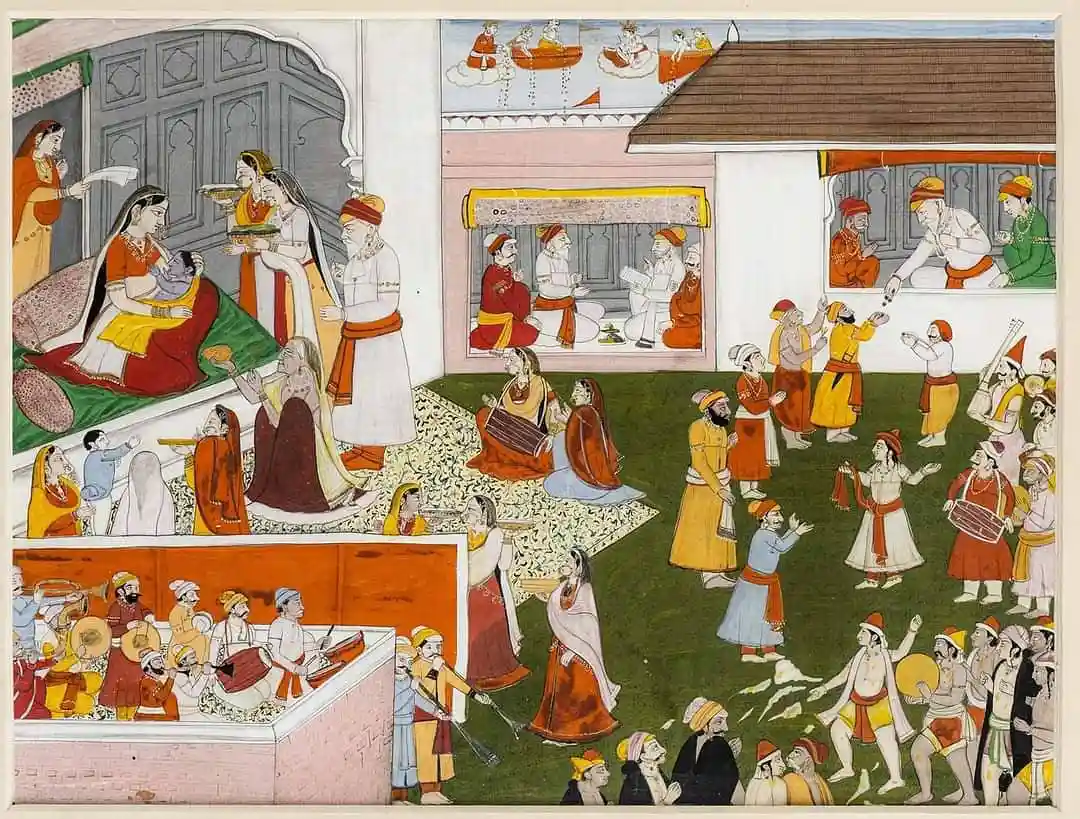 This child was the Supreme Krishna, the naughty and lovable Makhanchor, the slayer of demons, the beloved cowherd of the gopis and gopas, the eternal consort of Radharani, the annihilator of Kansa, the king of Dwarka and the expounder of the Bhagavad Gita. Even today we celebrate Janmashtami to commemorate the birth and reincarnation of this great avatar of Shri Hari.
वसुदेवसुतं देवं कंसचाणूरमर्दनम्।
देवकीपरमानन्दं कृष्णं वन्दे जगद्गुरुम् ||
Sanskrit Shlokas and Quotes for Janmashtami
I pray to (praise) Shri Krishna who is the son of Vasudev; the slayer of Kansa and Chanura; the one who provides untold, supreme joy to Devaki and the one who is the Guru of this entire universe.
Note: In the Bhagavad Gita Shlokas 4.7 & 4.8, Lord Krishna unequivocally states that:
Whenever Dharma starts fading into oblivion and Adharma increases, I manifest myself (the formless assumes form – an avataar of the Supreme takes birth). I take birth in every age to protect the virtuous, to annihilate the evil-doers and to establish (and re-establish) Dharma.
यदा यदा हि धर्मस्य ग्लानिर्भवति भारत ।
अभ्युत्थानमधर्मस्य तदात्मानं सृजाम्यहम् ॥
परित्राणाय साधूनां विनाशाय च दुष्कृताम् ।
धर्मसंस्थापनार्थाय सम्भवामि युगे युगे ॥
The Krishna avatar is understood in that context.

Add comment