


Join Cultural Samvaad’s WhatsApp Community
Shri Vishnu in his Varaha avatar (boar incarnation) is popularly regarded as the third among the Dashavatars (3rd avatar among 10 avatars or incarnations of Vishnu) and continues to be worshipped as the one who saved Bhudevi or Mother Earth and enabled life to flourish.
A Popular Version of the Story of Vishnu’s Varaha Avatar
Long, long ago at the end of a kalpa (an unimaginably long cycle of time in Indian tradition), there was a massive pralaya (floods and other cosmic events that destroy the earth) as per the natural order that sustains this universe. There was water all around and the earth was plunged into the seemingly endless oceans and surrounded by darkness. Shri Vishnu was resting peacefully on Adishesha (Sheshanaga or Ananta), deep in his yoganidra (yogic slumber – time for rest and rejuvenation).
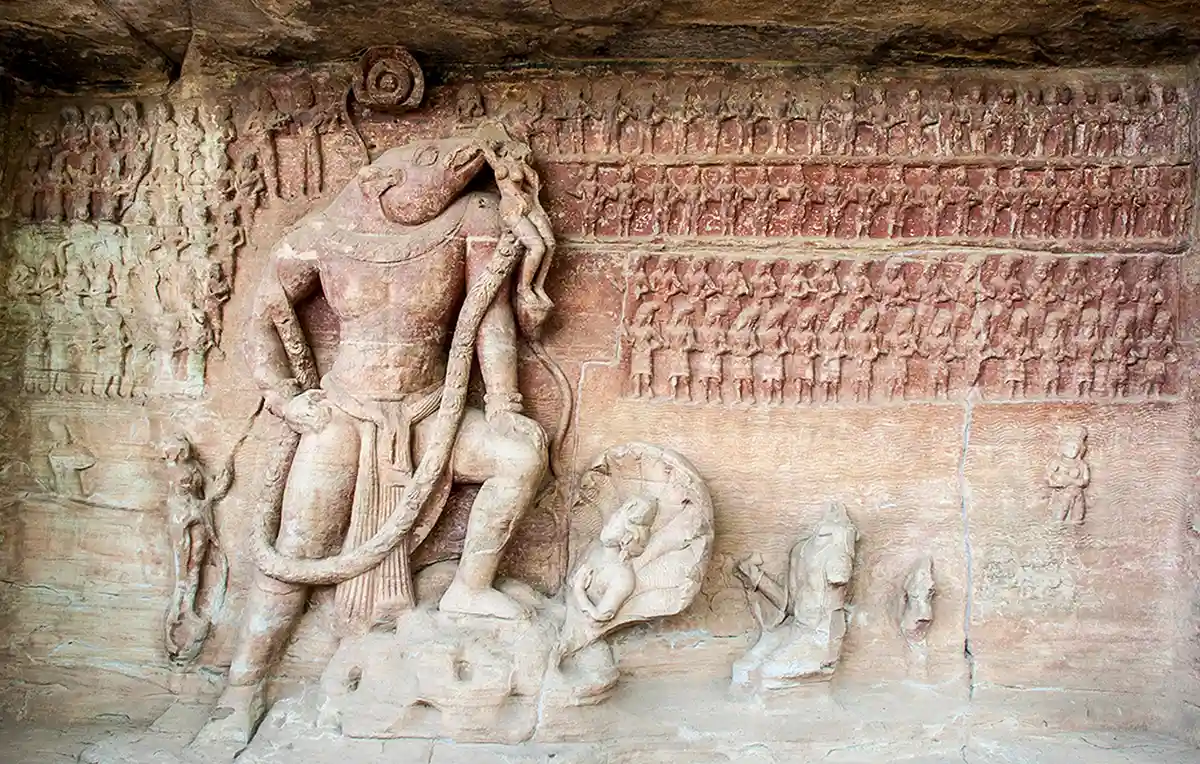
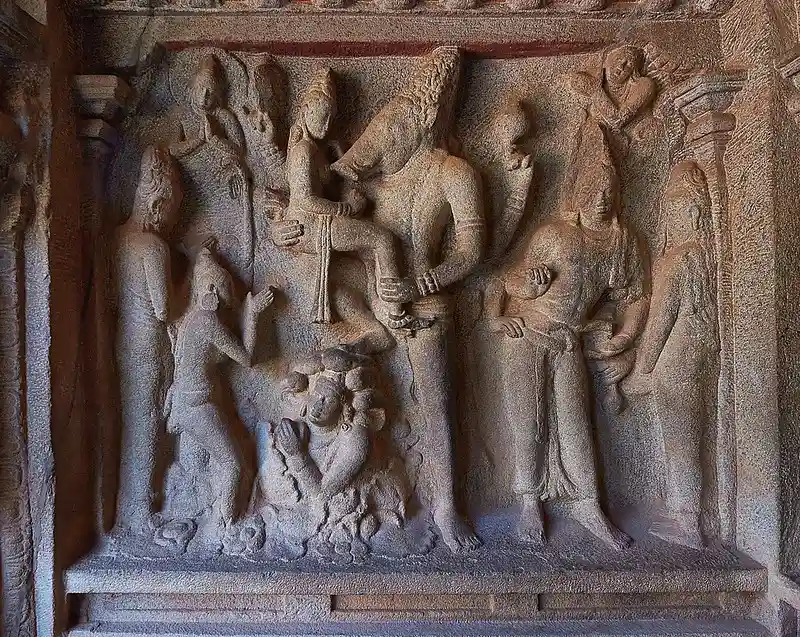
When it was time for the beginning of the new kalpa and creation to begin, Brahma emerged from Vishnu’s navel and commenced the herculean task. The universe came into being and so did the devatas and asuras. When it was time to populate the earth with flora and fauna and humans, Brahma realized that Prithvi Devi (Mother Earth) was still submerged under water. He remembered Narayana and prayed to him for help. Shri Hari took the form of a gigantic and terrifying boar. This self-effulgent Varaha Avatar of Vishnu had fiery eyes and glittering teeth that were harder than the hardest. He roared loudly, took one mighty leap and then dived into the oceans in search of mother earth. Varaha kept going deeper and deeper till he reached the place where the earth was resting. He lifted her up gently and started going up towards the surface.
In the meantime, the mighty asura king Hiranyaksha who was roaming around in search of the devatas to fight with them, realised that his only worthy opponent would be Shri Hari. He rushed to the oceans and saw Varaha Swami retrieving the earth. Hiranyaksha challenged him to a duel and said that Bhudevi (Goddess Earth) should be placed under his care. Varaha ignored the asura, brought up mother earth safely from the depths of the ocean and placed her in her natural position.
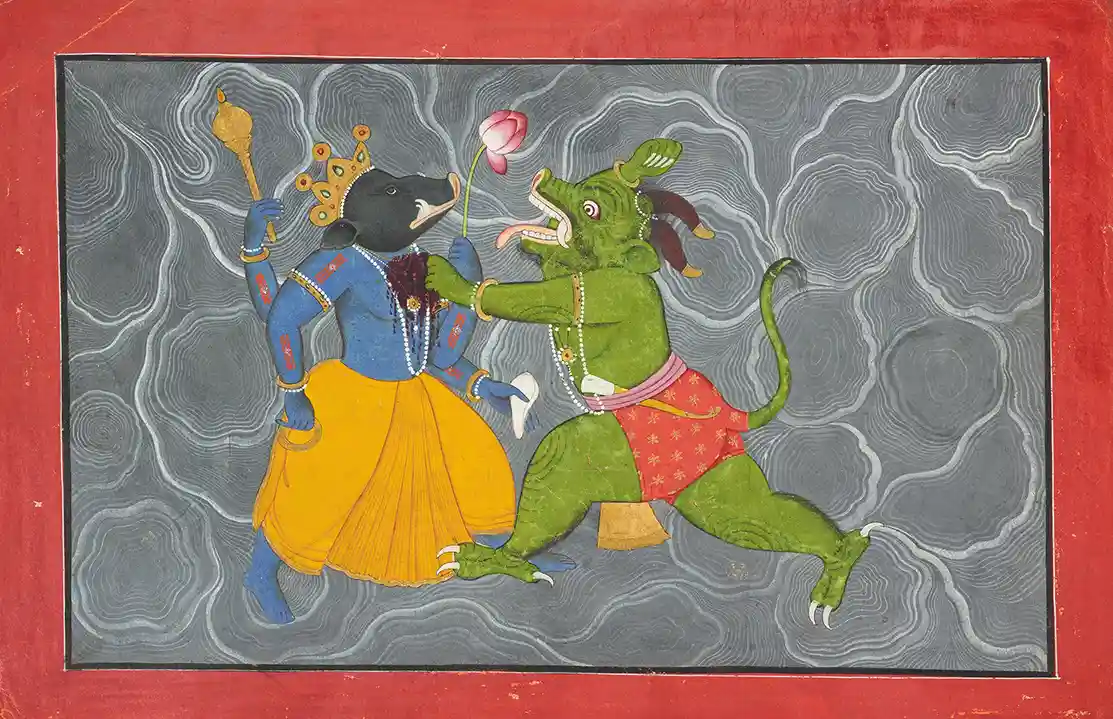
A fierce battle broke out between Hiranyaksha and Varaha Swami. Finally, just before twilight, Brahma reminded Shri Hari that he should kill the mighty asura before night. Varaha Swami annihilated Hiranyaksha with his mace and thus, saved the earth. Creation began in right earnest and life flourished all over again.
Evolution of the Story of the Varaha Avatar
The seeds of the Varaha Avatar can be traced to the Vedic literature. In the Rig Veda 1.61.7, it is mentioned that the mighty Vishnu tore apart a large mountain, killed the Varaha (boar) who lived behind the mountain and seized possession of his cooked rations. Many scholars are of the opinion that this is a reference to the famous story of the killing of Vritta by Indra. It is interesting to note that in this narrative, Varaha is the one who is annihilated, not the one who annihilates.
In the Taittiriya Samhita, the Taittiriya Brahmana and the Shatapatha Brahmana, it is Prajapati who saves the earth in his boar incarnation and not Vishnu. The Ramayana also speaks of Varaha as a form of Prajapati. However, the Mahabharata mentions the Varaha avatar of Vishnu that destroys Hiranyaksha.
The Puranas (almost unanimously) accept that Vishnu or Narayana assumes the form of a boar or Varaha though some of the older Puranas clearly maintain the link with Prajapati. This development of Vishnu as Varaha is not only correlated with his rise but also coupled with the identification and fusing of many aspects of Prajapati in the Vedic tradition and Narayana in later tradition, a discussion of which is beyond the scope of this note.
Multiple versions of the narrative of the Varaha Avatar are extant in the Mahabharata and the Puranas. In the Vana Parva in the Mahabharata, Varaha exterminates Narkasura and his followers with his sharp nails. The Bhagavata Purana describes the gigantic, mighty, Varaha and his story in a great bit of detail. It also mentions that Varaha appears from Brahma’s nostrils and that he also killed Hiranyaksha. Many popular retellings of the story mention that Hiranyaksha had hidden himself in the oceans with the earth, and Vishnu annihilated him thereby, saving Bhudevi (Goddess Earth). It is pertinent to state here that Vishnu is also recognised as Prithvipati (the husband of Mother Earth) in Puranic literature.
The Brahma Purana narrates another story in which Vishnu as Varaha rescues sacrifice (yajna – यज्ञ) from a daitya named Sindhusena who had hidden himself in the ocean.
Closing Remarks
The Varaha avatar of Vishnu has symbolically been linked with creation and the earth’s fertility. The rich iconographical repertoire of Varaha in India’s ancient caves and temples and moving manuscript illustrations attest to his popularity and the fact that he was worshipped widely. We hope to discuss his various forms in another piece.
ॐ वराहाय नमः |





Add comment