
Join Cultural Samvaad’s WhatsApp community
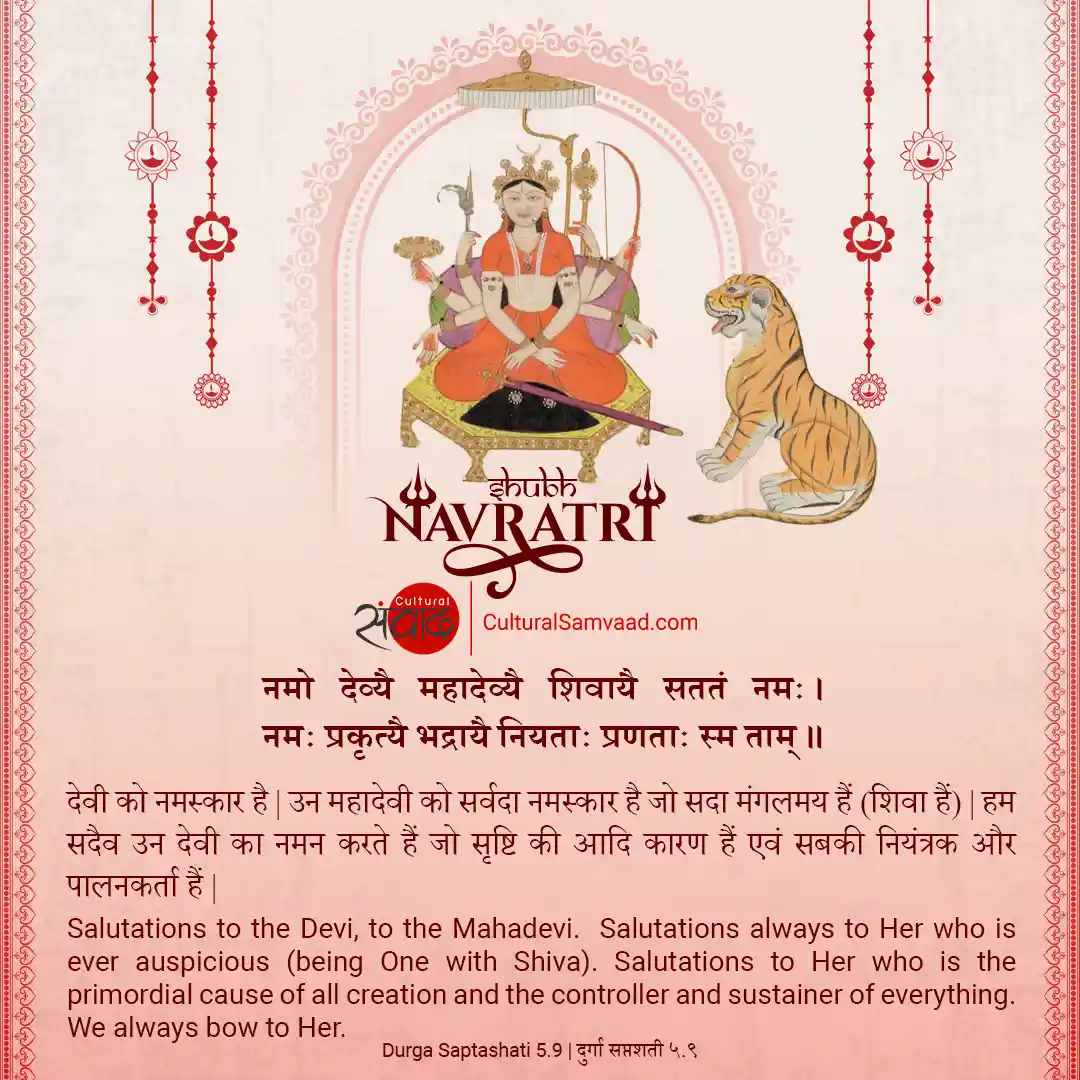
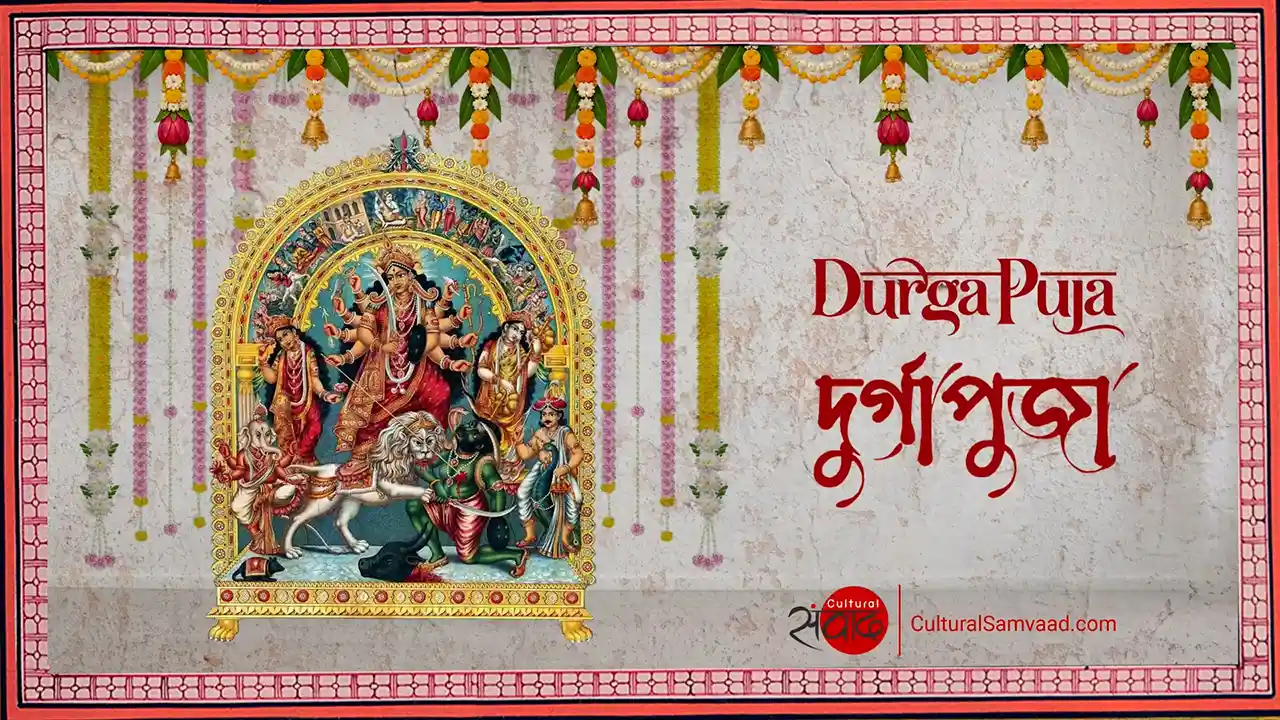
Navratri or Navaratri (literally nine nights) is a festival celebrated in India (primarily by Hindus) that honours the Devi, the Shakti, the indomitable Divine Feminine. The three most commonly known and revered forms in India of the Goddess are Durga, Lakshmi and Saraswati.
There are four Navratris during the course of a year. The most popular and widespread of these is the Ashwin Navratri which usually comes in the months of September/October and is synonymous with the worship of Maa Durga as she is fondly called. Chaitra Navratri, which falls in the months of March/April, is also observed by many devotees and marks the beginning of the new year in many regions of India. The other two Navratris are not observed by most lay devotees and are also referred to as gupt navratri.
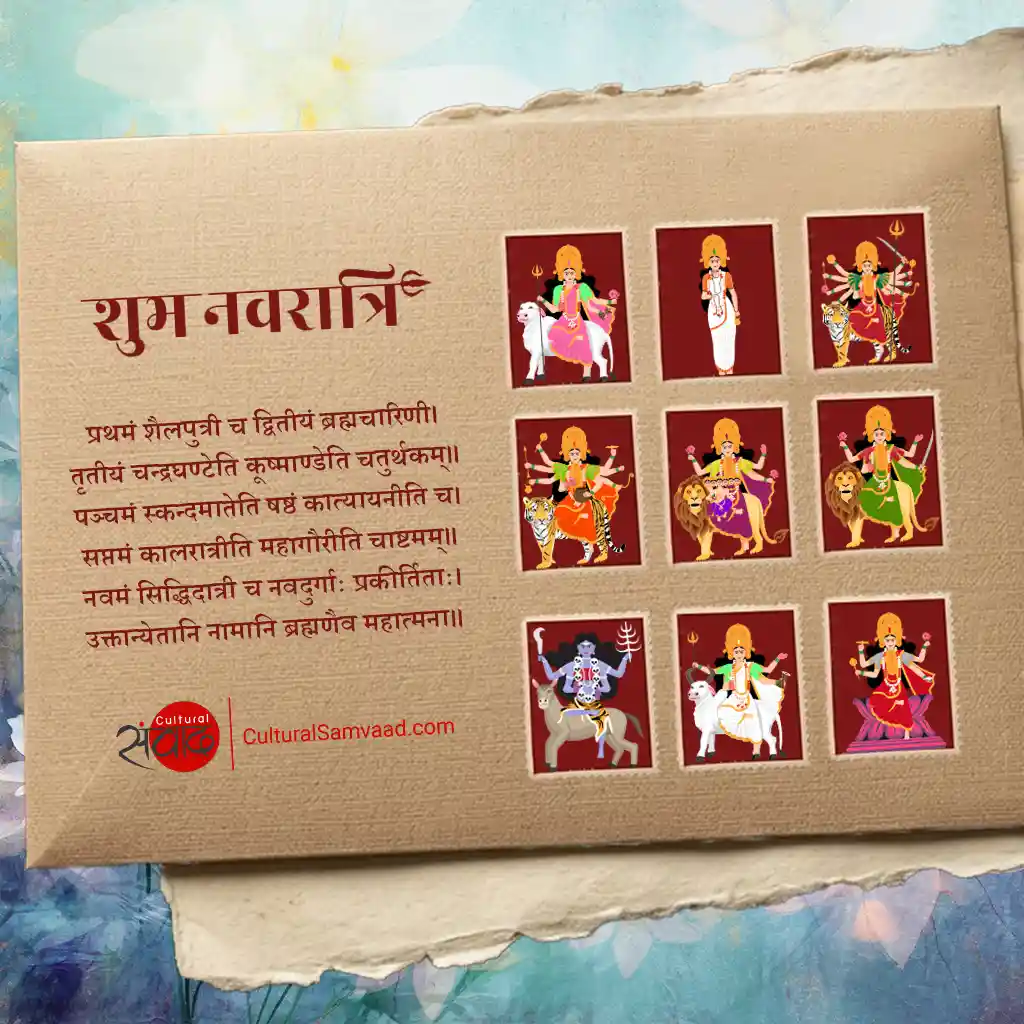
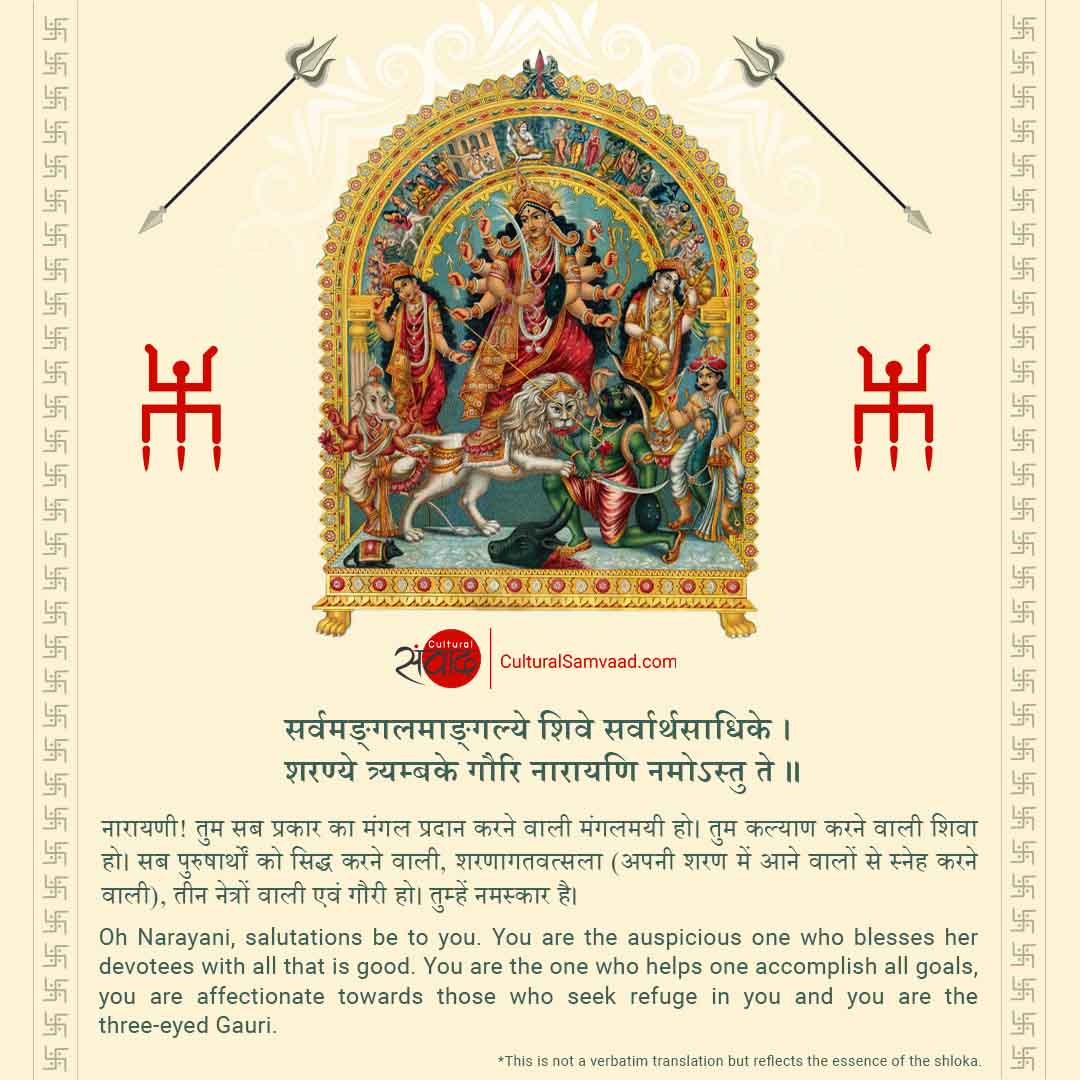
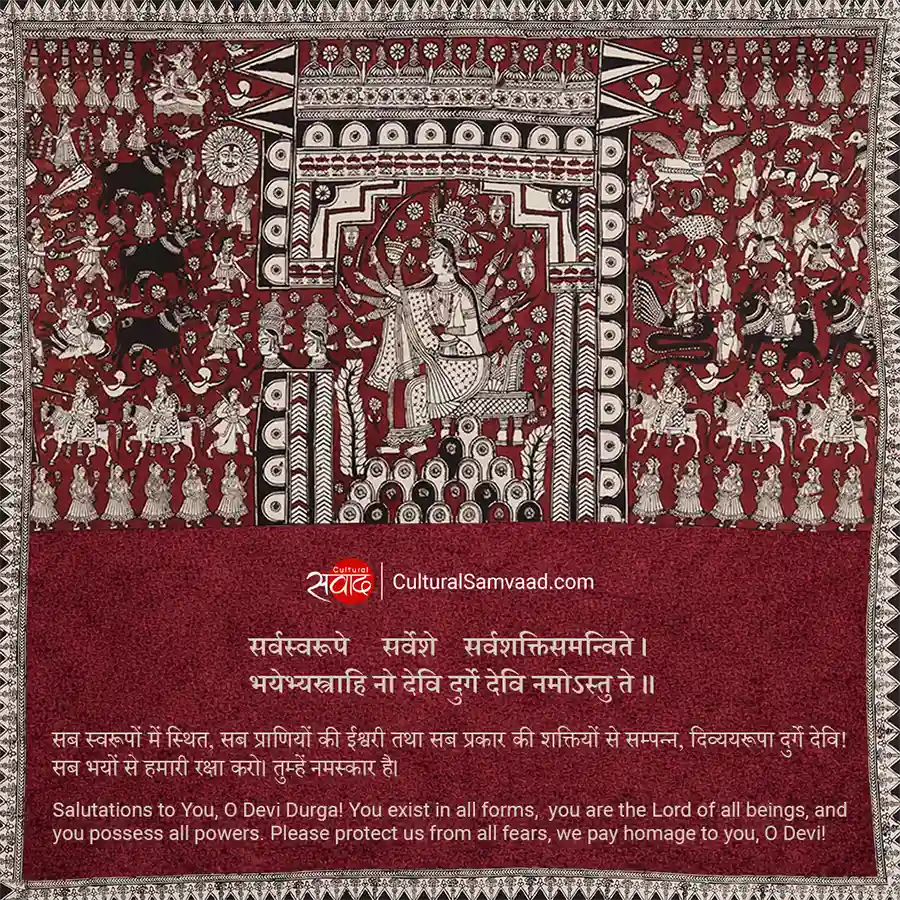
Navadurga Stotram – Sanskrit Shlokas with Meanings
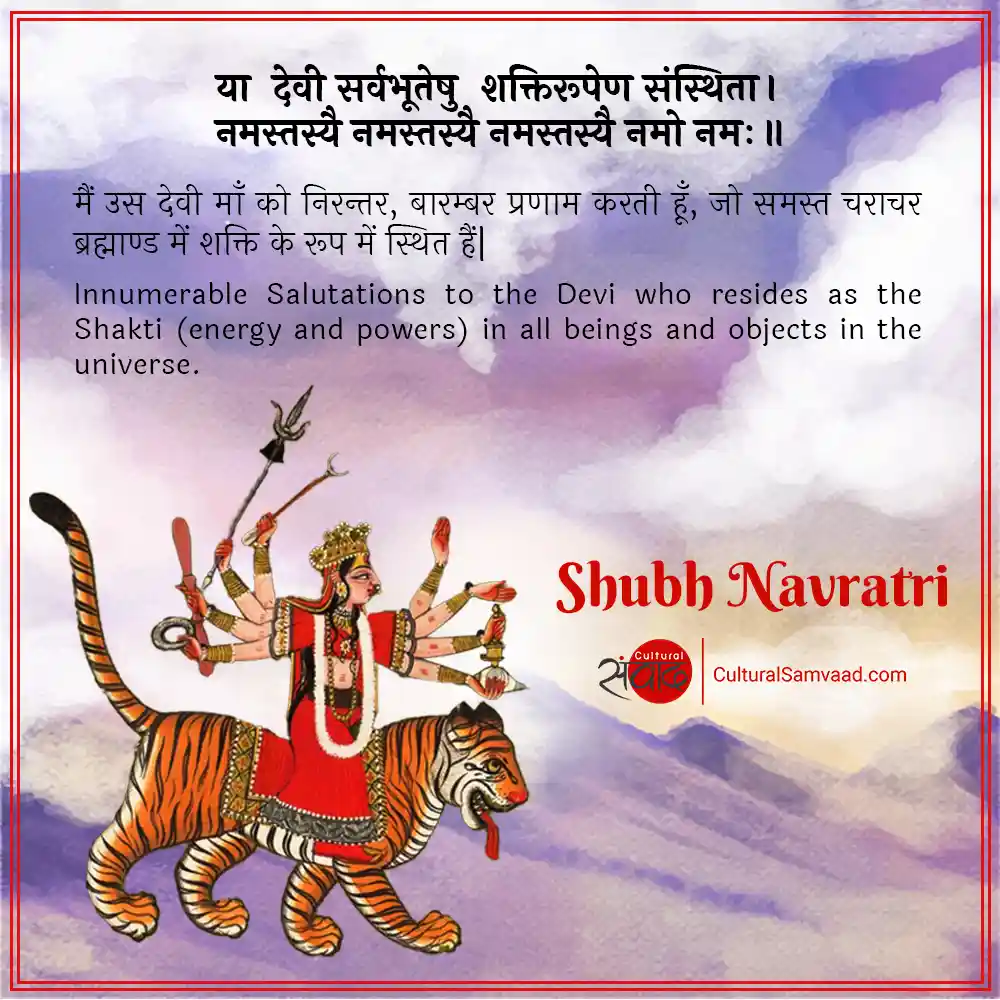
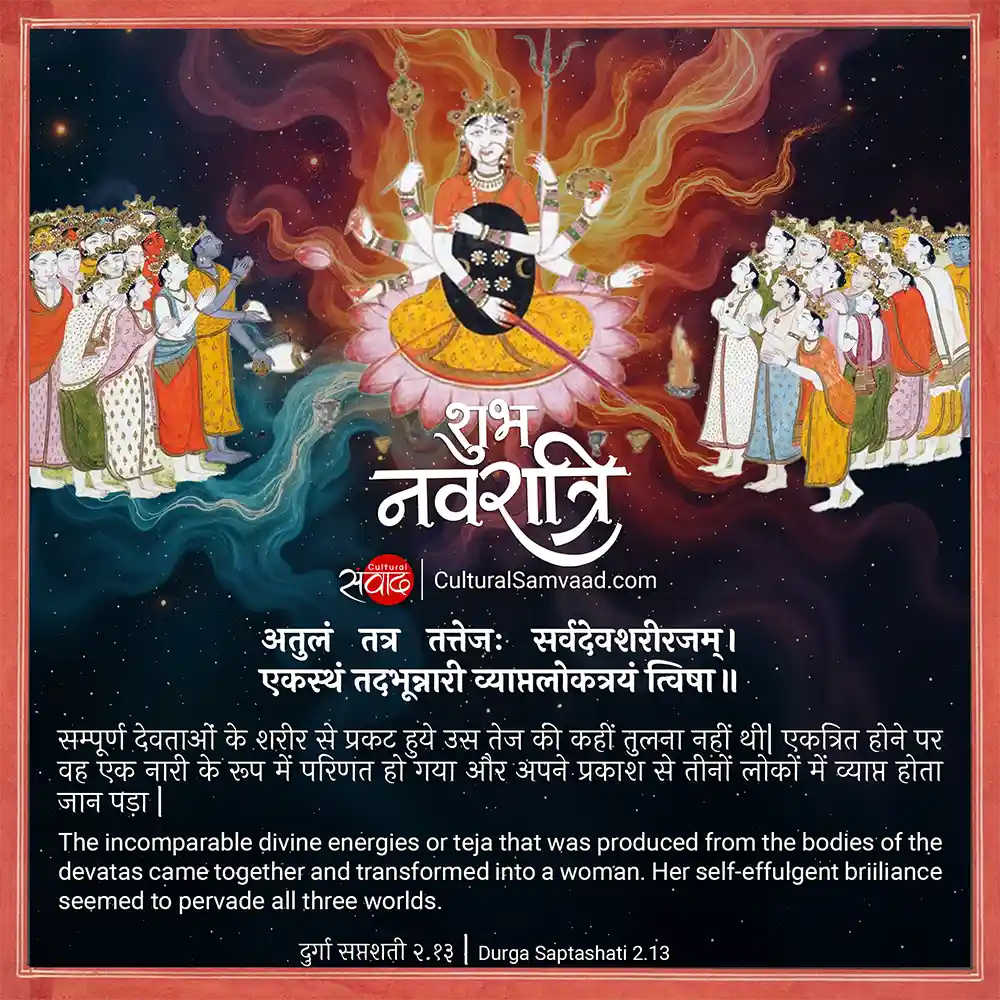
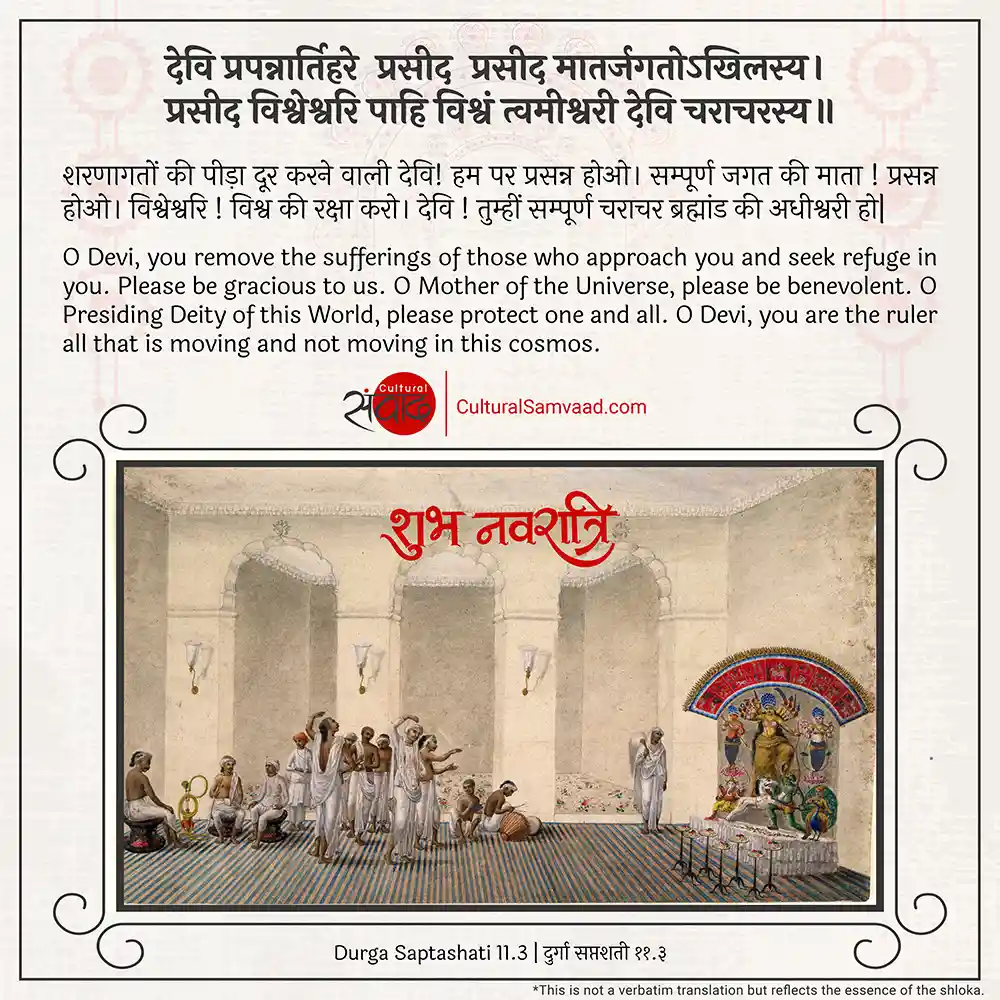
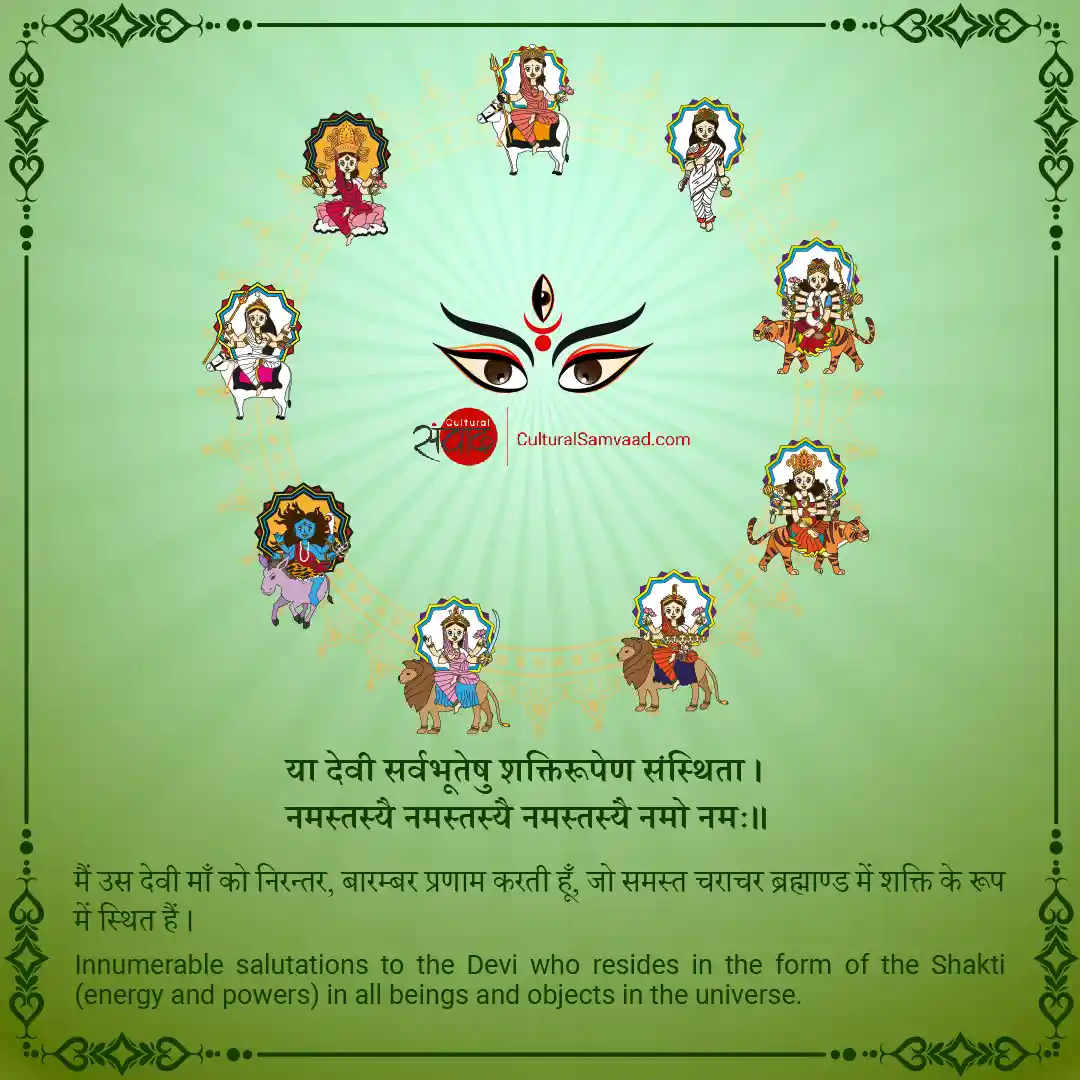
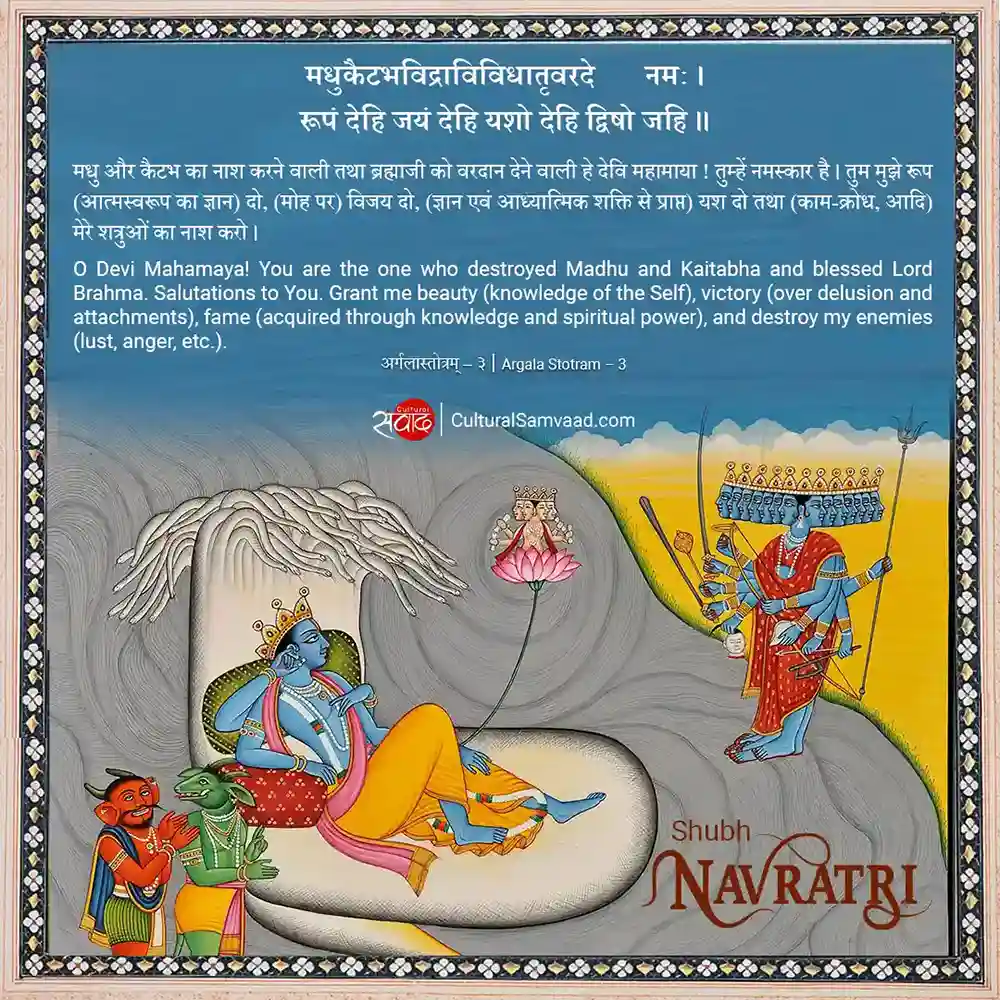
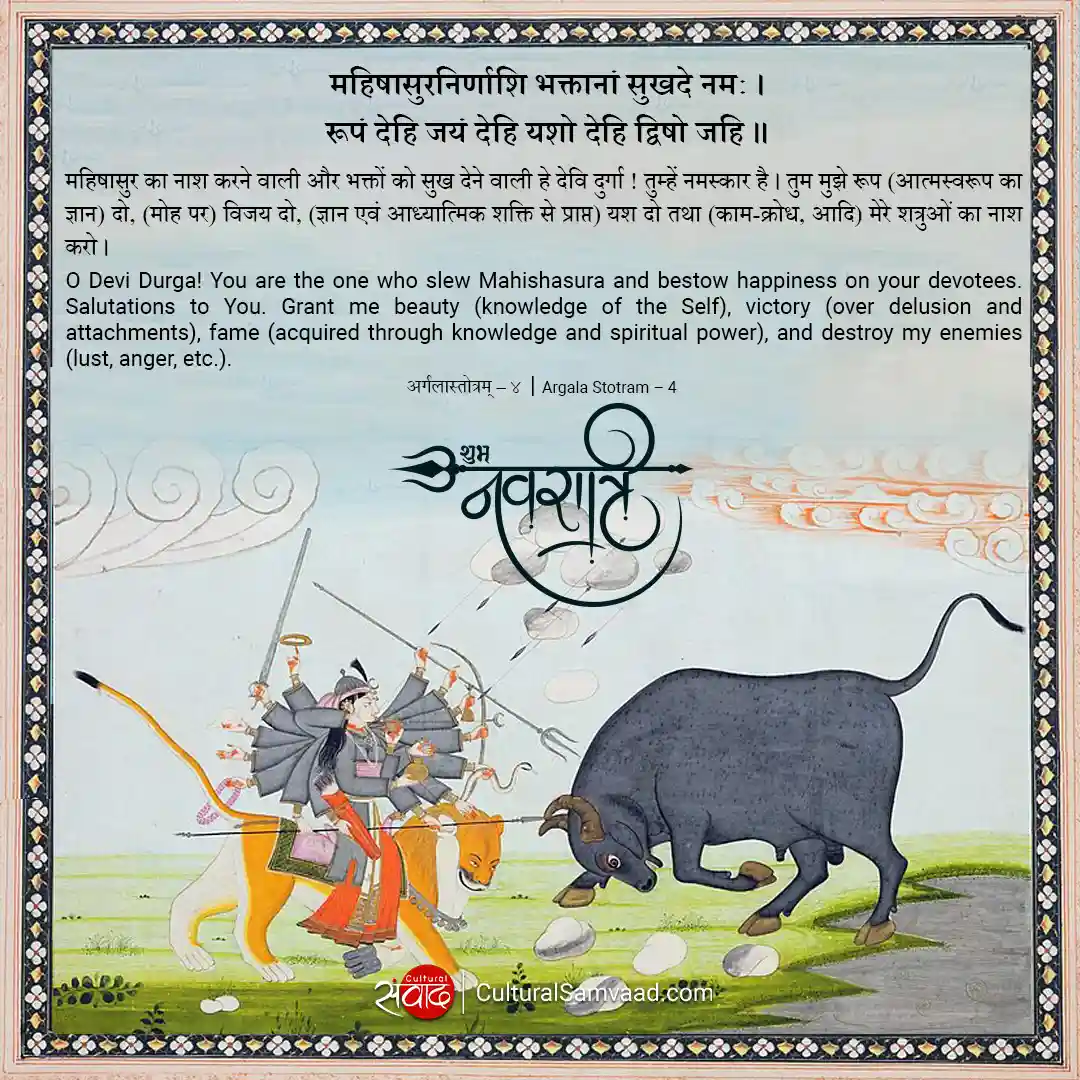
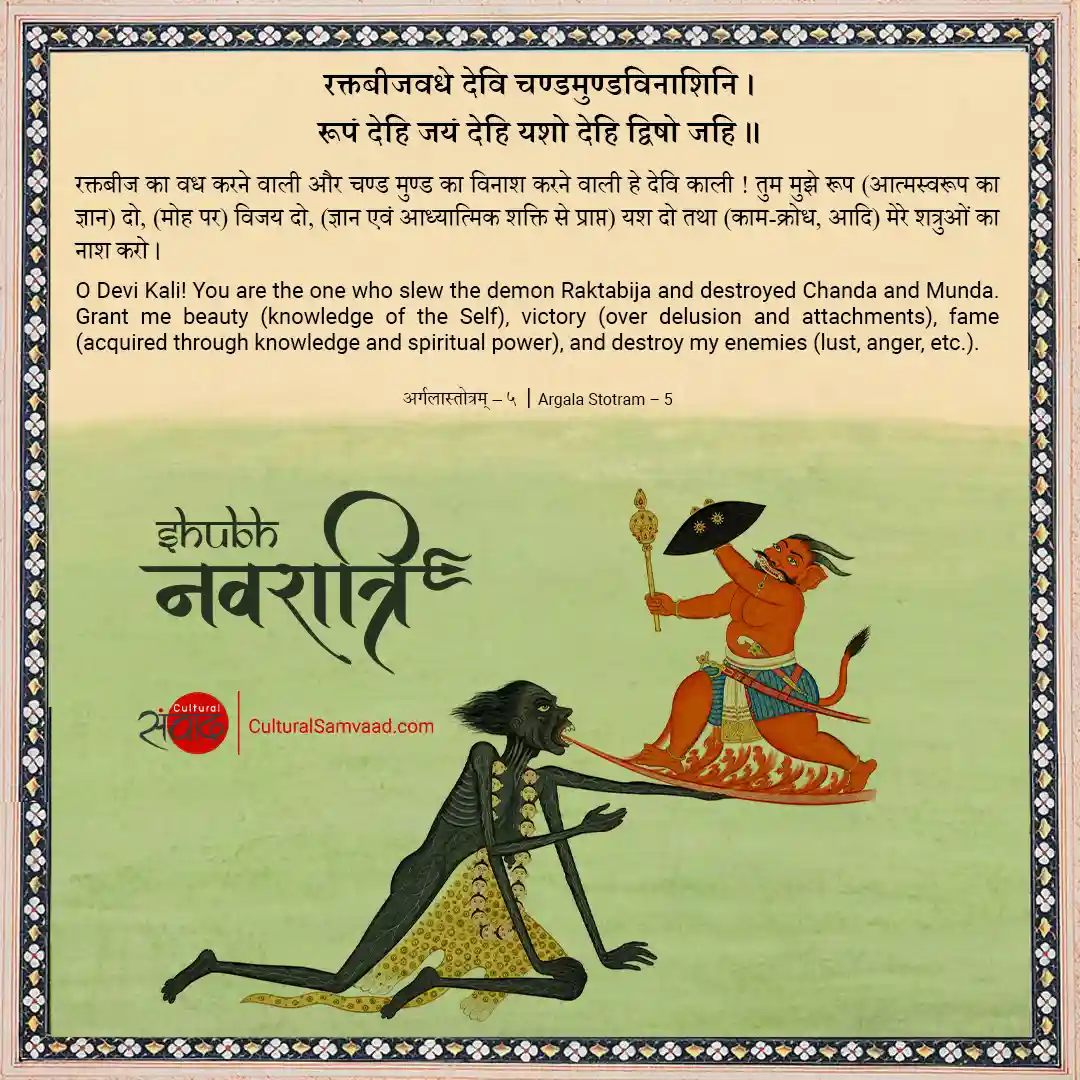
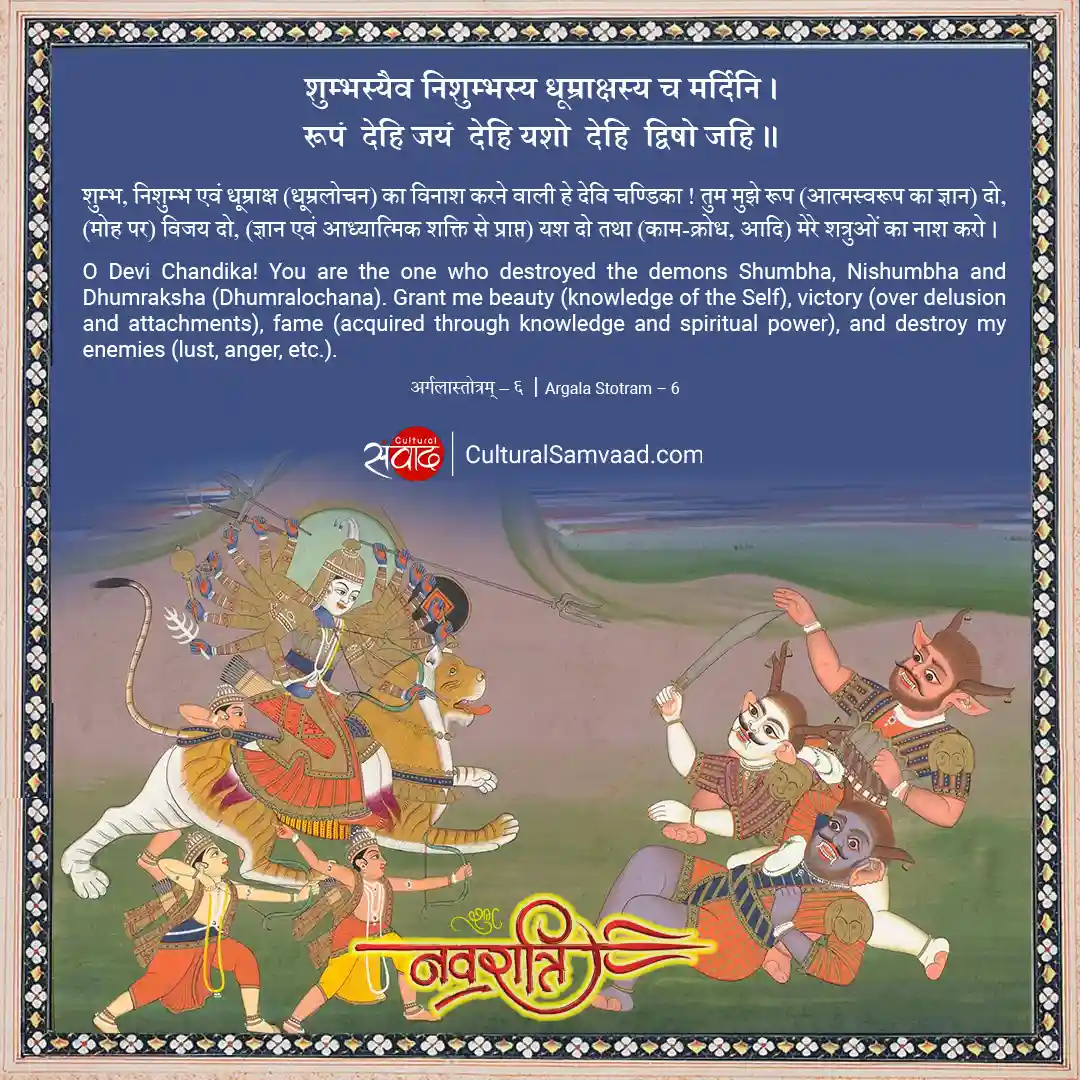
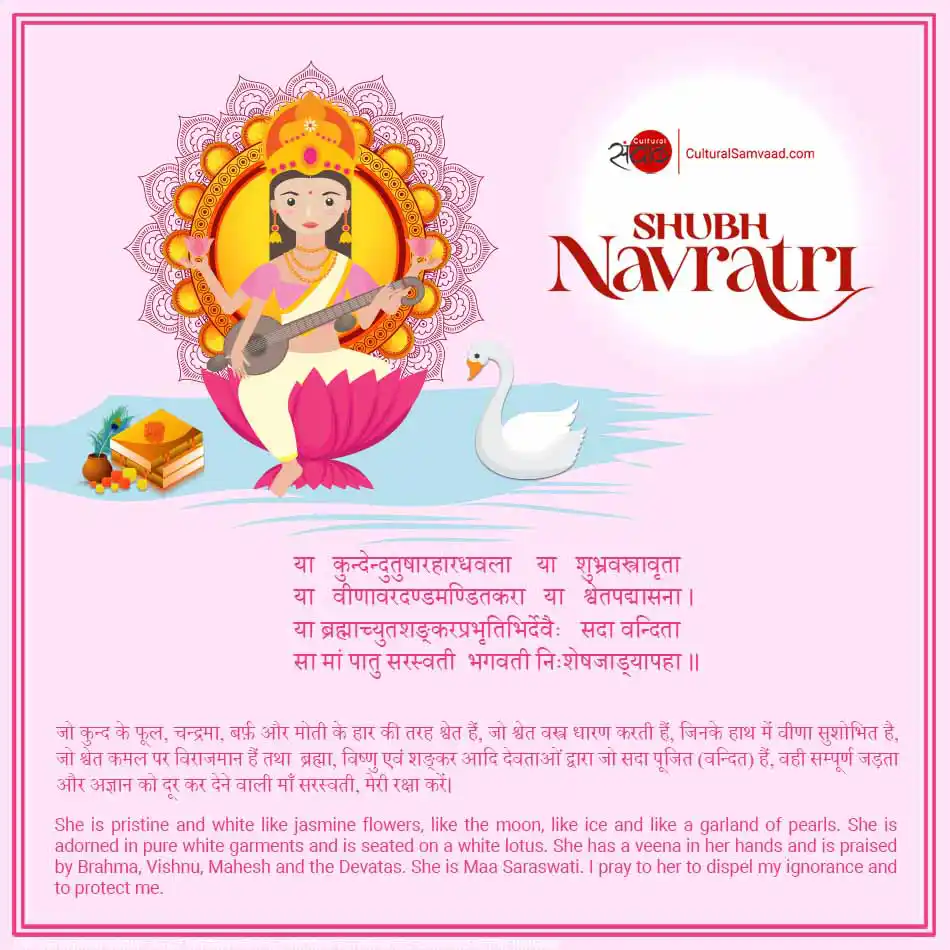
Team Cultural Samvaad has curated some popular shlokas in Sanskrit (with their meanings in Hindi and English) in praise of the Devi. They can also be used to greet your family, friends and colleagues on Navaratri.
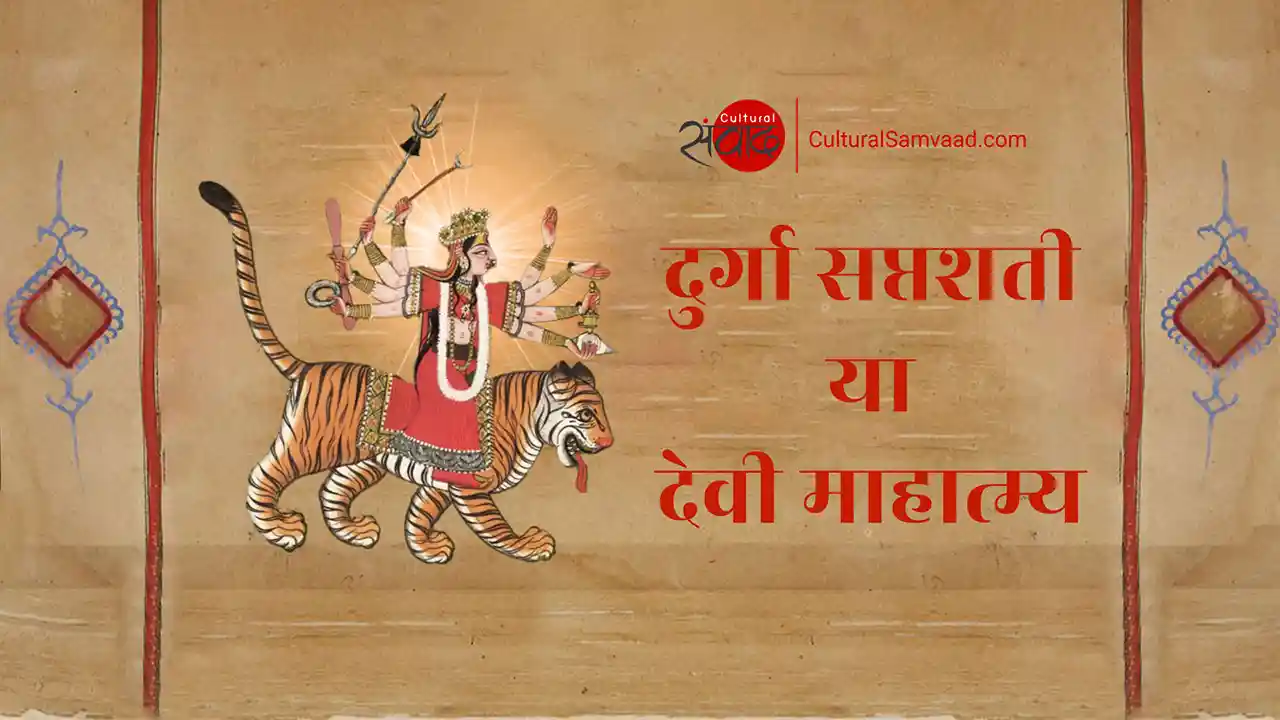
Read and Watch: Durga Saptashati
दुर्गा सप्तशती की कथा पढ़ें और देखें
Nava Durga – The 9 Forms of Durga
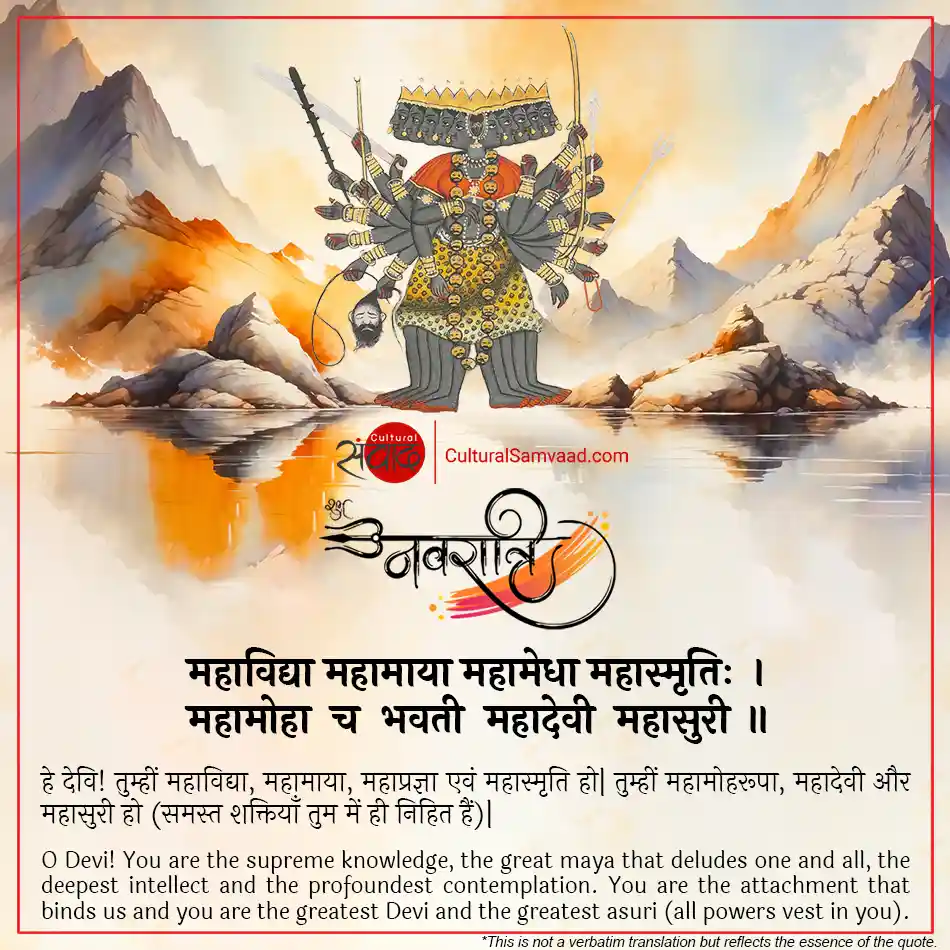
Prayers to the Many Forms of the Devi for Navaratri – रूपं देहि जयं देहि यशो देहि द्विषो जहि
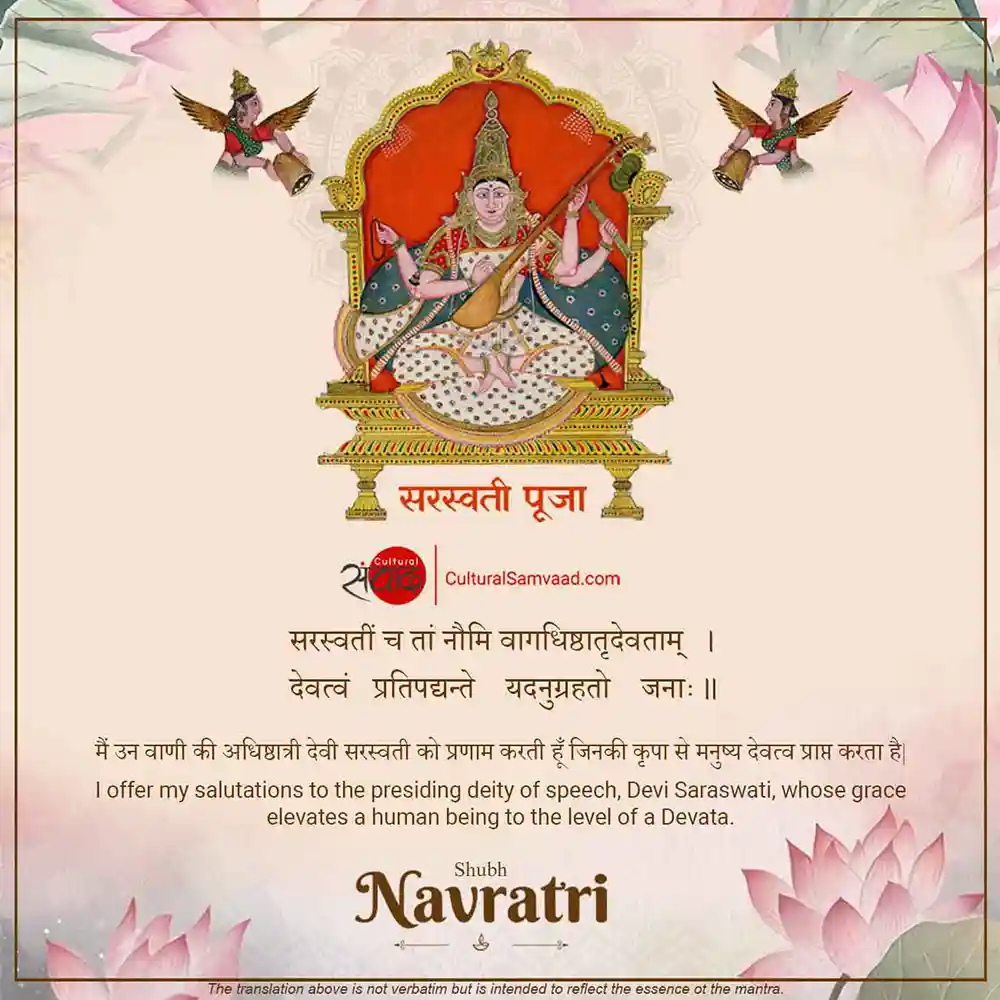
Saraswati Puja
Add comment