

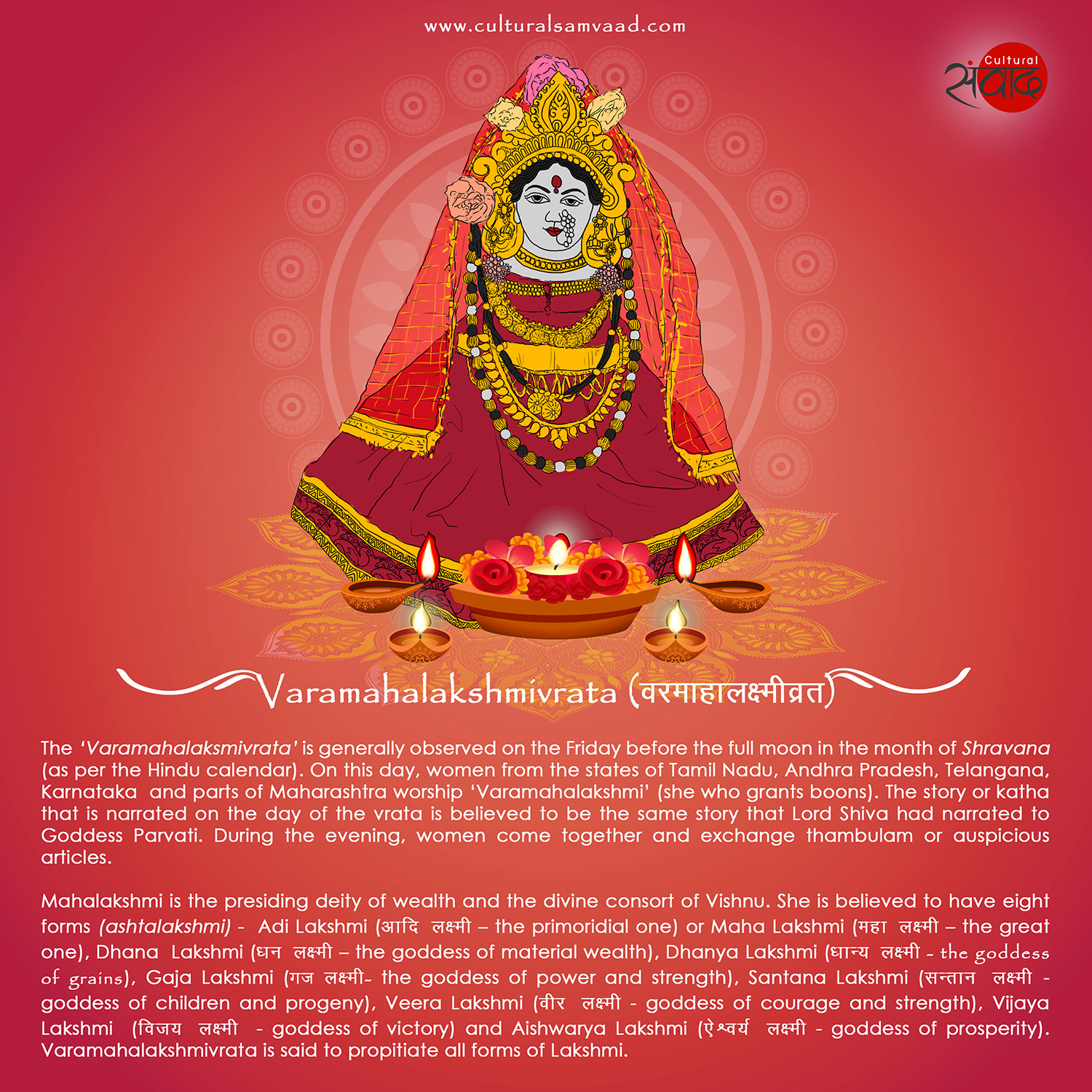
Varamahalaksmivrata
The ‘Varamahalaksmivrata’ is generally observed on the Friday before the full moon in the month of Shravana (as per the Hindu calendar). On this day, women from the states of Tamil Nadu, Andhra Pradesh, Telangana, Karnataka and parts of Maharashtra worship ‘Varamahalakshmi’ (she who grants boons). The story or kathathat is narrated on the day of the vrata is believed to be the same story that Lord Shiva had narrated to Goddess Parvati. During the evening, women come together and exchange thambulam or auspicious articles.
Mahalakshmi is the presiding deity of wealth and the divine consort of Vishnu. She is believed to have eight forms (ashtalakshmi) :
- Adi Lakshmi (आदि लक्ष्मी – the primoridial one) or Maha Lakshmi (महा लक्ष्मी – the great one),
- Dhana Lakshmi (धन लक्ष्मी – the goddess of material wealth),
- Dhanya Lakshmi (धान्य लक्ष्मी – the goddess of grains),
- Gaja Lakshmi (गज लक्ष्मी – the goddess of power and strength),
- Santana Lakshmi (सन्तान लक्ष्मी – goddess of children and progeny),
- Veera Lakshmi ( वीर लक्ष्मी – goddess of courage and strength),
- Vijaya Lakshmi (विजय लक्ष्मी – goddess of victory) and;
- Aishwarya Lakshmi ( ऐश्वर्य लक्ष्मी – goddess of prosperity).
Varamahalakshmivrata is said to propitiate all forms of Lakshmi.

Add comment