


The word ‘yoga’ (योग) comes from the Sanskrit verb ‘yuj’ (युज् ) which means to join. The earliest archaeological evidence of yogic postures comes from the Harappan civilisation and the earliest literary references to the term come from Vedic literature. Together they serve as testimony to the antiquity of yoga in the Indic civilisation and culture.
Join Cultural Samvaad’s WhatsApp Community
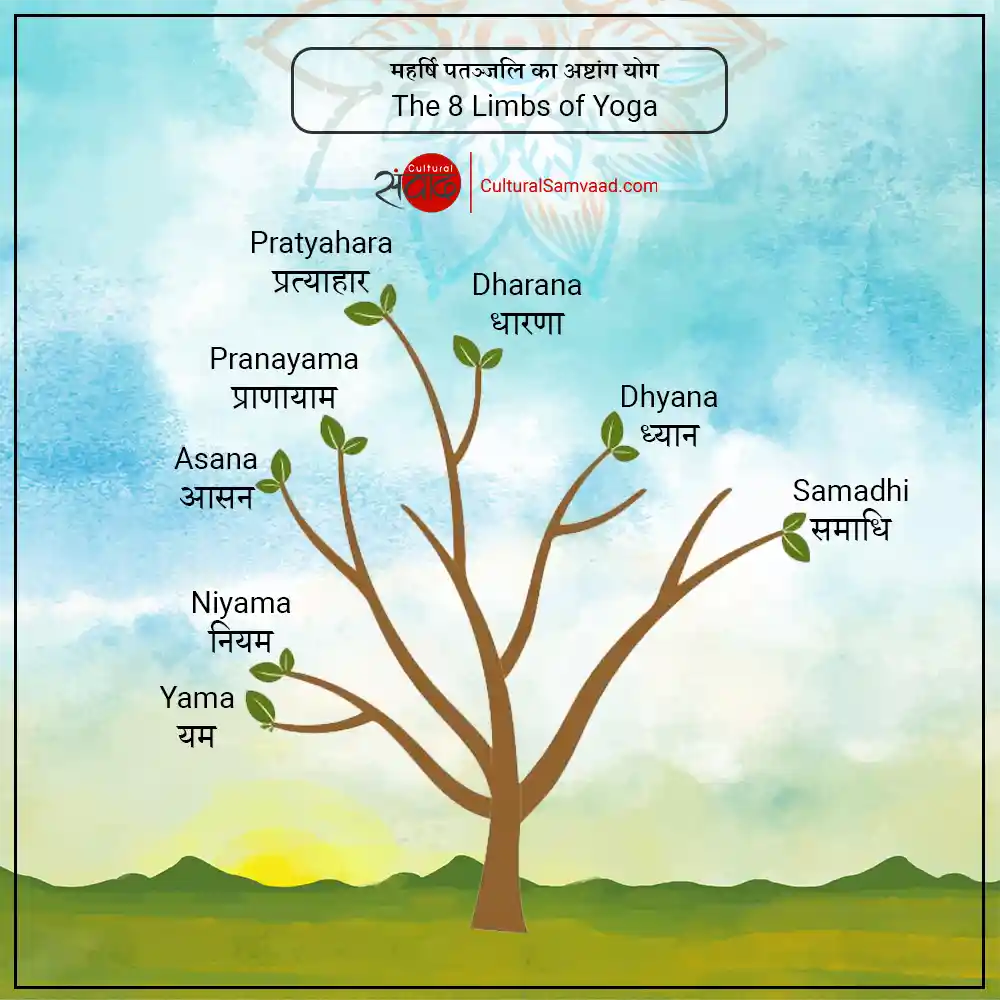
Yoga has been spoken of and defined variously from the Vedas to contemporary times and is sine qua non to all traditions of Indian origin including Hinduism, Buddhism and Jainism. Yoga is also regarded as one of the oldest and major schools of Indian philosophy or darshana (दर्शन) and the earliest extant work on Yoga darshan is Maharishi Patanjali’s ‘Yoga Sutra’ which was composed in the early centuries of the common era. Patanjali set out 8 limbs of yoga, i.e., the holistic system of Ashtanga Yoga which when practised leads to kaivalya or liberation.
Introduction to Patanjali’s Ashtanga Yoga
In our times, yoga has become synonymous with physical postures and breathing exercises and International Day of Yoga is celebrated on June 21 of every year. Team Cultural Samvaad has compiled some famous definitions of ‘Yoga’ in Sanskrit with meanings in English and Hindi.
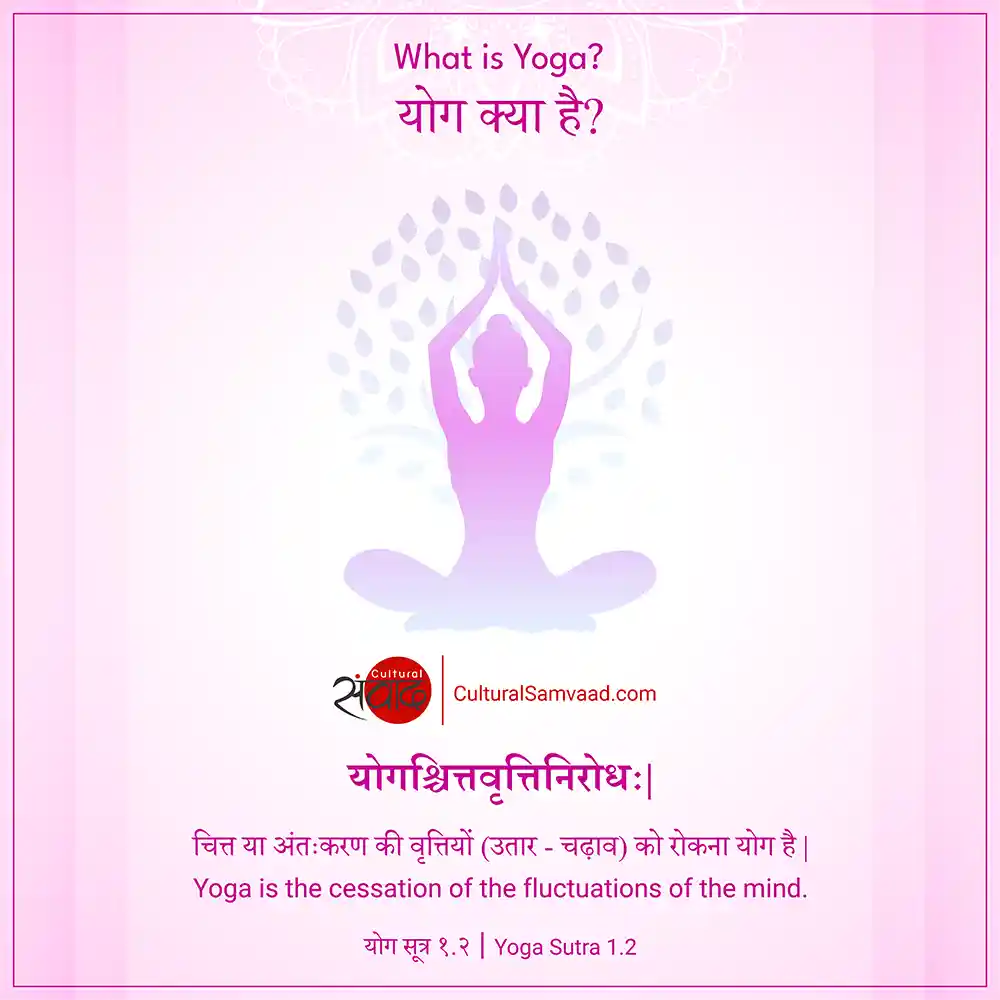
योगश्चित्तवृत्तिनिरोधः |
Yogaścittavṛttinirodhaḥ |
चित्त या अंतःकरण की वृत्तियों (उतार- चढ़ाव ) को रोकना योग है |
Yoga is the cessation of the fluctuations of the mind.
योग सूत्र १.२ | Yoga Sutra 1.2
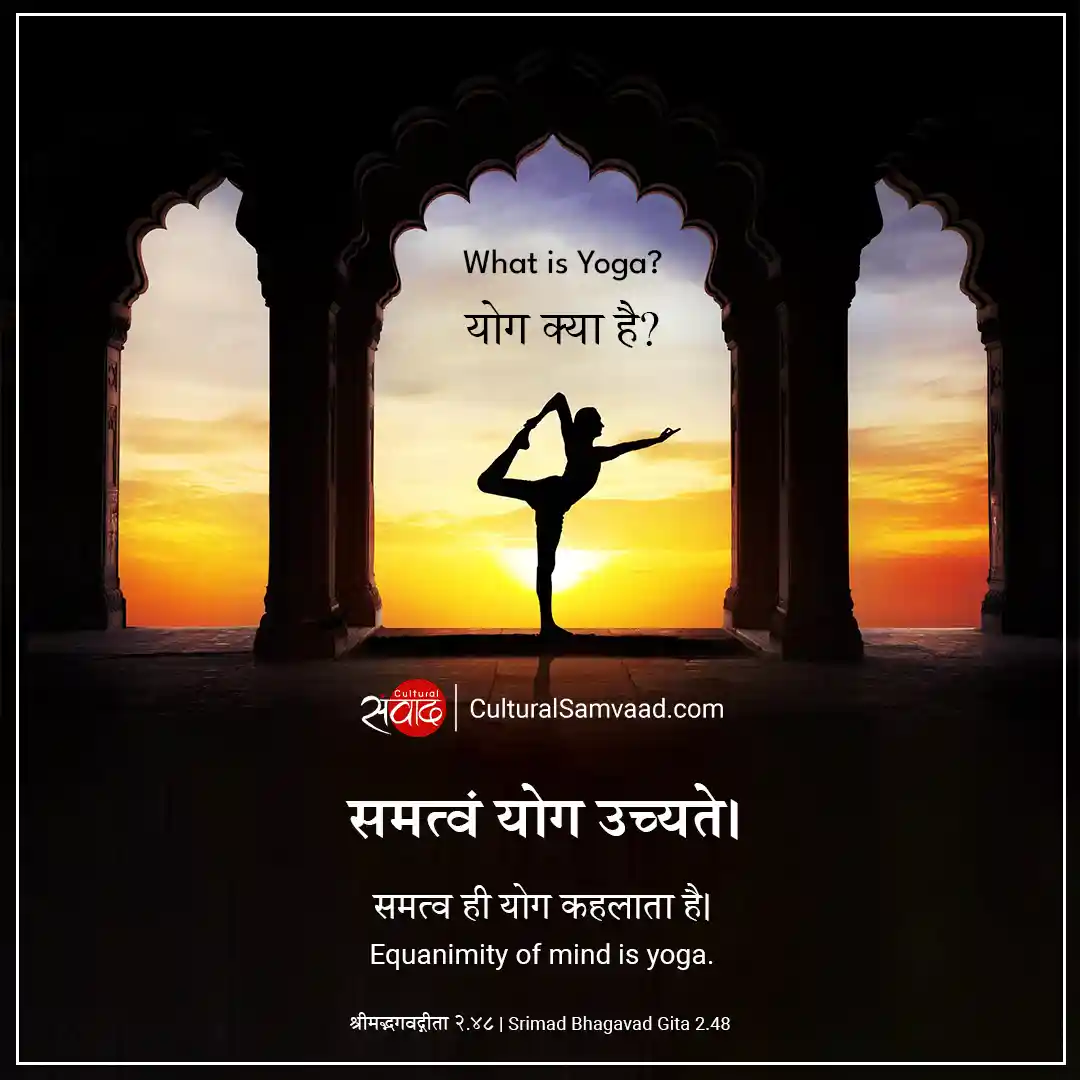
समत्वं योग उच्यते।
Samatvaṃ yoga ucyate|
समत्व ही योग कहलाता है।
Equanimity of mind is yoga.
श्रीमद्भगवद्गीता २.४८ | Srimad Bhagavad Gita 2.48
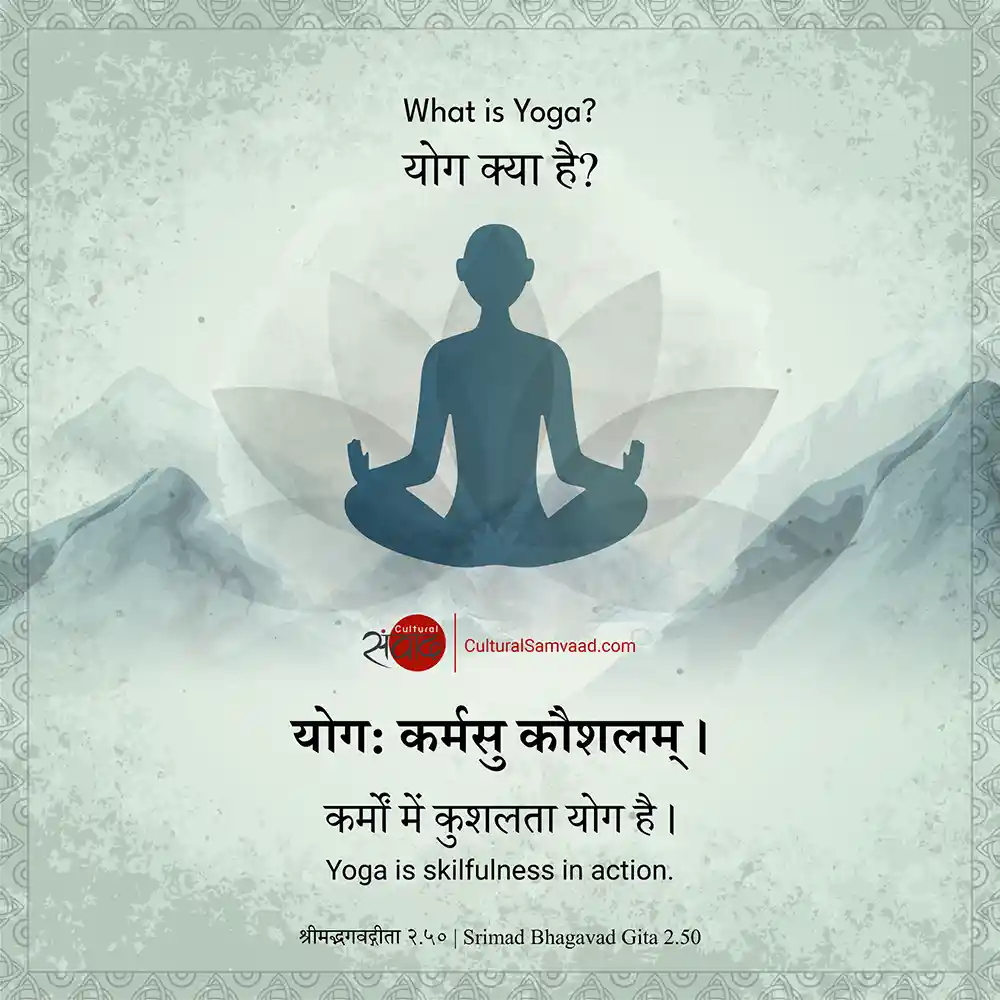
योग: कर्मसु कौशलम् ।
Yogah karmasu kauśalam |
कर्मों में कुशलता योग है।
Yoga is skilfulness in action.
श्रीमद्भगवद्गीता २.५० | Srimad Bhagavad Gita 2.50




Add comment